TL;DR:
- Managing large weddings requires proactive control through a well-structured timeline, a coordinated team, and practiced posing techniques. Proper planning, clear guest management, and teamwork produce calm, timeless images, especially when supported by technical consistency and fatigue management.
Managing large weddings is defined by one discipline above all others: proactive control. How photographers manage large weddings comes down to three interlocking pillars: a buffer-rich timeline, a coordinated team, and practised posing solutions that hold up under pressure. Rashpal-photography, which specialises in cinematic coverage of Asian weddings and cultural ceremonies, applies all three pillars on every large event. The difference between a gallery that feels timeless and one that feels rushed is almost always made in the planning stage, long before the first frame is captured.
How photographers manage large weddings: timeline planning that actually works
A well-structured timeline is the single most powerful tool a photographer carries into a large wedding. Buffer periods of 15–30 minutes between every major transition prevent the cascade of delays that derail group portraits and golden-hour shots. Without those buffers, one late arrival or an overrunning ceremony can compress the entire afternoon into a frantic scramble.
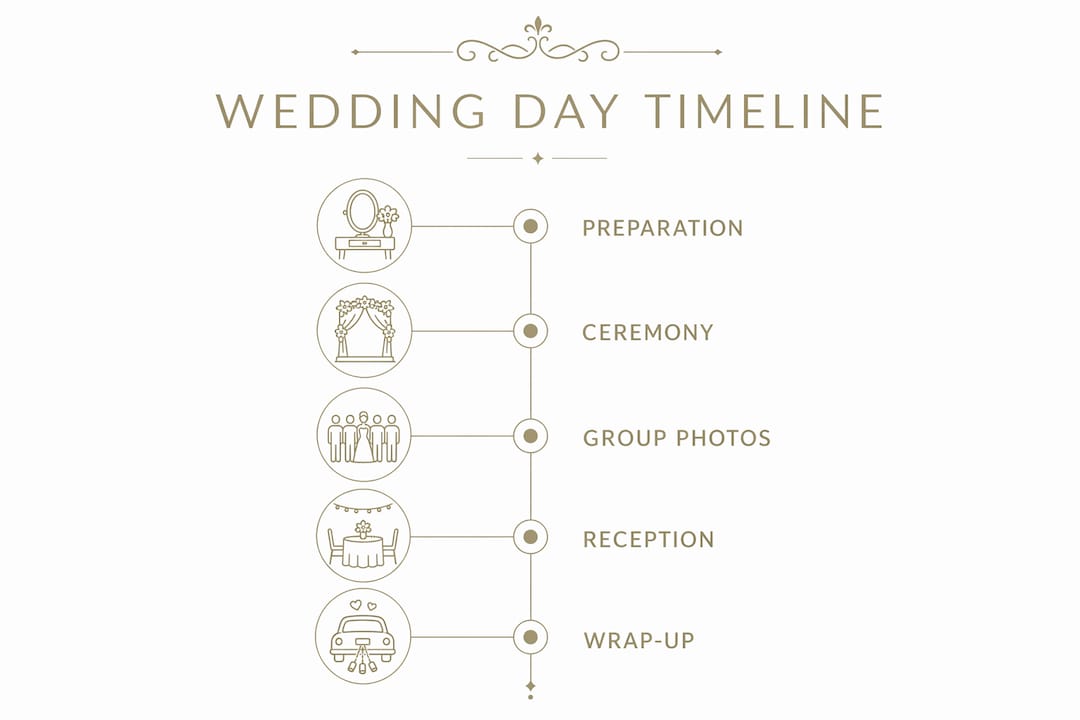
The ceremony itself acts as the fixed anchor point in any schedule. A 12-hour timeline typically allocates 4–5 hours before the ceremony and 5–6 hours after, treating everything else as satellite events that orbit that central moment. This structure gives the photographer clear blocks for bridal preparations, family formals, couple portraits, and reception coverage, each with breathing room built in.
Sharing the finalised timeline with every vendor is not optional. Sending the schedule to planners, DJs, and officiants synchronises the entire vendor team and reduces the drift that accumulates when each supplier operates on a different mental clock. A photographer who controls the timeline controls the day.
Pro Tip: Build a dedicated 20-minute block into the timeline specifically for wedding day logistics such as venue walk-throughs and lighting checks. This block costs nothing when the day runs smoothly and saves everything when it does not.
The table below shows a sample allocation for a 12-hour large wedding day, based on 2026 industry guidance.
| Time block | Duration | Purpose |
|---|---|---|
| Pre-ceremony preparations | 4–5 hours | Bridal suite, groom coverage, detail shots |
| Ceremony coverage | 1–2 hours | Fixed anchor point; no schedule movement |
| Family formals and group portraits | 45–60 minutes | Structured with wrangler support |
| Couple portraits | 30–45 minutes | Golden hour or chosen scenic location |
| Reception and evening coverage | 3–4 hours | Speeches, first dance, candid moments |
What is the best way to coordinate guests for group portraits?
Guest coordination is where large wedding photography either gains momentum or loses it entirely. A dedicated assistant acting as a wrangler enables the photographer to shoot one group while the next is already being assembled. This overlap strategy eliminates the dead time between shots, which is the primary reason guests drift away and energy collapses.
The subtractive method is the most efficient approach to sequencing group shots. Starting with the largest grouping and removing people layer by layer speeds the process by 25–30% compared to building each shot from scratch. Guests who are released early feel respected, and those remaining stay engaged because the session moves with purpose.
Clear, vocal instructions delivered with warmth keep large groups responsive. Name the specific individuals you need rather than gesturing vaguely at a crowd. Identifying two or three key family members in advance and briefing them before the session begins transforms them into allies rather than obstacles.
Here is a proven sequence for managing group portraits at a large wedding:
- Brief the wrangler before the ceremony ends, sharing the full shot list and the names of key family contacts.
- Begin with the largest family grouping immediately after the ceremony, while energy and attendance are at their peak.
- Use the subtractive method: photograph the full group, then release individuals layer by layer to create smaller configurations.
- Keep the wrangler assembling the next group while you shoot the current one, maintaining continuous momentum.
- Close with the wedding party and couple, saving the most relaxed and creative shots for last.
Pro Tip: Speak quietly but with authority when managing difficult relatives. The Professional Mirror technique works on the principle that most difficult behaviour reflects stress, and a calm photographer produces a calm group.
Do coordinated photography teams outperform solo shooters at large weddings?
A coordinated team outperforms a solo photographer at large weddings in every measurable way. The presence of a second shooter is near-mandatory for 12-hour wedding coverage because fatigue and simultaneous moments make single-camera coverage structurally inadequate. A solo photographer cannot capture the groom's reaction and the bride's entrance at the same moment. A team can.
Professional teams synchronise camera sensors and colour profiles to produce a gallery that reads as a single, coherent body of work. This technical consistency is what separates professional coverage from a collection of well-intentioned but mismatched images. Couples notice the difference when they view their gallery; so do wedding planners who recommend photographers to future clients.
"Technical consistency across photographers in a team distinguishes professional from amateur wedding photography for large events." — Institute of Photographers
The role structure within a team matters as much as its size. The lead photographer owns creative direction and client communication. The second shooter's role is to cover alternative angles, manage candid moments, and provide a safety net for critical shots. Divided responsibilities reduce cognitive load and allow each photographer to work with greater focus and less fatigue.
Key advantages of a coordinated team over a solo shooter:
- Simultaneous coverage: Two cameras capture parallel moments across different rooms or ceremony spaces.
- Consistent colour and exposure: Matched camera bodies and shared colour profiles produce a unified gallery.
- Reduced fatigue: Divided tasks allow each photographer to maintain technical quality throughout a 12-hour day.
- Client confidence: Couples feel supported by a visible, professional team rather than a single person managing everything alone.
Posing and scene-solving techniques for large weddings
Confident posing is a preparation problem, not a talent problem. Practising 3–4 core poses for every wedding segment is more effective than browsing social media for inspiration on the morning of the event. Methodical preparation means you arrive with solutions rather than questions.
The goal is to use positioning to solve scene challenges rather than waiting for clients to direct themselves. A couple standing in front of a busy venue entrance becomes a cinematic portrait when you reposition them at a 45-degree angle to the light source and compress the background with a longer focal length. The scene has not changed; your approach to it has. Guidance on styling editorial portraits offers a practical framework for developing this kind of spatial awareness before the wedding day.
Pro Tip: Prepare a physical or digital shot list organised by wedding segment, not by location. When the venue changes unexpectedly, your poses travel with you and your coverage remains consistent.
Core posing principles for large wedding photography:
- Prepare 3–4 poses per segment: bridal preparations, ceremony, couple portraits, and reception.
- Use the environment as a compositional tool rather than a backdrop to avoid.
- Practise pose solutions on engagement shoots so they feel natural on the wedding day.
- Prioritise poses that work across different body types and cultural dress, particularly for Asian ceremonies where attire varies significantly.
How do photographers manage fatigue and client communication?
Fatigue is the hidden threat to gallery quality at large weddings. Hydrating every 60–90 minutes, scheduling snacks, and changing footwear at the reception are not comfort measures. They are technical decisions that protect compositional quality in the final hours of a 12-hour shoot, when the most emotionally resonant moments often occur.
Client communication before the event is equally consequential. Pre-wedding questionnaires sent six weeks prior uncover hidden logistics: surprise performances, family dynamics, restricted access areas, and late schedule changes. Identifying these details early allows the photographer to build contingency into the timeline rather than improvising under pressure.
Micro-check-ins with the venue coordinator, catering manager, and DJ throughout the day keep the photographer ahead of transitions rather than reacting to them. A two-minute conversation with the catering team before the wedding breakfast begins can prevent a 20-minute gap in coverage when the first course arrives unexpectedly early.
Pro Tip: Pack a wedding photography workflow checklist in your camera bag covering hydration, battery changes, and card swaps at fixed intervals. Routine removes the mental load of remembering logistics during emotionally intense moments.
Key fatigue management practices for large wedding coverage:
- Hydrate every 60–90 minutes regardless of how busy the schedule feels.
- Change footwear at the reception to reset physical comfort for the evening hours.
- Eat a proper meal during the wedding breakfast, not just a snack between shots.
- Assign battery and memory card management to the second shooter to reduce the lead photographer's cognitive load.
Key takeaways
Effective large wedding photography requires a buffer-rich timeline, a coordinated team with matched technical settings, and practised posing solutions prepared well before the day.
| Point | Details |
|---|---|
| Buffer-rich timeline | Build 15–30 minute buffers between every major transition to prevent schedule collapse. |
| Subtractive group method | Start with the largest group and remove people layer by layer to cut portrait time by 25–30%. |
| Coordinated team coverage | Synchronise camera sensors and colour profiles across the team for a coherent final gallery. |
| Practised posing | Prepare 3–4 core poses per wedding segment before the day to deliver confident, consistent results. |
| Fatigue management | Hydrate every 60–90 minutes and change footwear at the reception to protect quality in the final hours. |
What I have learned from photographing large weddings
Large weddings teach you something that smaller events cannot: the gap between preparation and improvisation is visible in the final gallery. Every time I have arrived at a large Asian wedding with a fully briefed team, a shared timeline, and a practised shot list, the day has produced images that feel considered and calm. Every time I have relied on instinct alone, the pressure shows in the work.
The most common mistake I see from photographers new to large events is treating guest coordination as a soft skill rather than a technical one. Wrangling 200 guests for family formals is a logistical operation. It requires the same preparation as lighting or lens selection. Naming your key contacts in advance, briefing your wrangler before the ceremony ends, and sequencing your shot list from largest to smallest are decisions that belong in your pre-event planning, not your on-the-day thinking.
Artistic vision and logistical discipline are not in conflict. The most cinematic frames I have captured at large weddings came during moments the timeline protected, not moments I stumbled upon. When the schedule holds, you have the mental space to see the light, feel the emotion, and make a deliberate creative choice. That is where the timeless images live.
— Rashpal
Large wedding photography packages from Rashpal-photography
Rashpal-photography offers tailored coverage designed specifically for the scale and cultural richness of large Asian weddings. Whether you are planning a multi-ceremony event or a single full-day celebration, the right package provides the team depth and timeline structure that large events demand.
The Classic Investment package provides 14 hours of coverage with a coordinated professional team, an engagement shoot, and the full workflow support described throughout this guide. For couples whose celebration spans 12 hours, the Essentials Investment delivers the same team-led approach within a focused timeframe. Both packages include matched camera systems, a shared colour profile across the team, and pre-event consultation to map every transition before the day begins. View all wedding photography packages to find the right fit for your celebration.
FAQ
How many photographers do you need for a large wedding?
A large wedding requires at least two photographers. A second shooter is near-mandatory for 12-hour coverage to capture simultaneous moments and prevent quality decline from fatigue in the later hours.
How long should group portraits take at a large wedding?
A well-managed group portrait session for a large wedding party takes approximately 20 minutes when a dedicated wrangler is used. The subtractive method and overlapping group assembly keep momentum high and prevent guests from drifting away between shots.
What is the best way to build a large wedding photography timeline?
Treat the ceremony as the fixed anchor point and build outward with 15–30 minute buffers between every major transition. Share the finalised timeline with all vendors to synchronise the entire team.
How do photographers handle multiple ceremonies at one wedding?
Photographers handle multiple ceremonies by assigning clear roles to each team member and preparing a separate shot list for each ceremony segment. Pre-wedding questionnaires sent six weeks before the event uncover ceremony-specific logistics that would otherwise cause delays on the day.
How do you keep energy high during a long wedding shoot?
Hydrating every 60–90 minutes and changing footwear at the reception are the two most effective physical strategies. Dividing tasks between the lead photographer and second shooter reduces cognitive fatigue and protects creative quality through the final hours of coverage.