TL;DR:
- A wedding photography deposit is a non-refundable retainer that secures a photographer's services and covers opportunity costs. It typically ranges from 25% to 50% of the total package value, with the balance due before the wedding. Proper contracts clearly define these terms, payment methods, and cancellation policies to protect both parties.
A wedding photography deposit is defined as a non-refundable payment made upfront to secure a photographer's services for your chosen wedding date. Known formally as a "non-refundable retainer" in professional contracts, this booking fee compensates the photographer for reserving your date and declining all other enquiries for it. Deposits typically range from 25% to 50% of the total package value, with the remaining balance due closer to your wedding day. Understanding the wedding photography deposit explained in full gives you the confidence to sign contracts, protect your money, and build a strong working relationship with your photographer from the very first payment.
What is the typical payment structure for wedding photography?
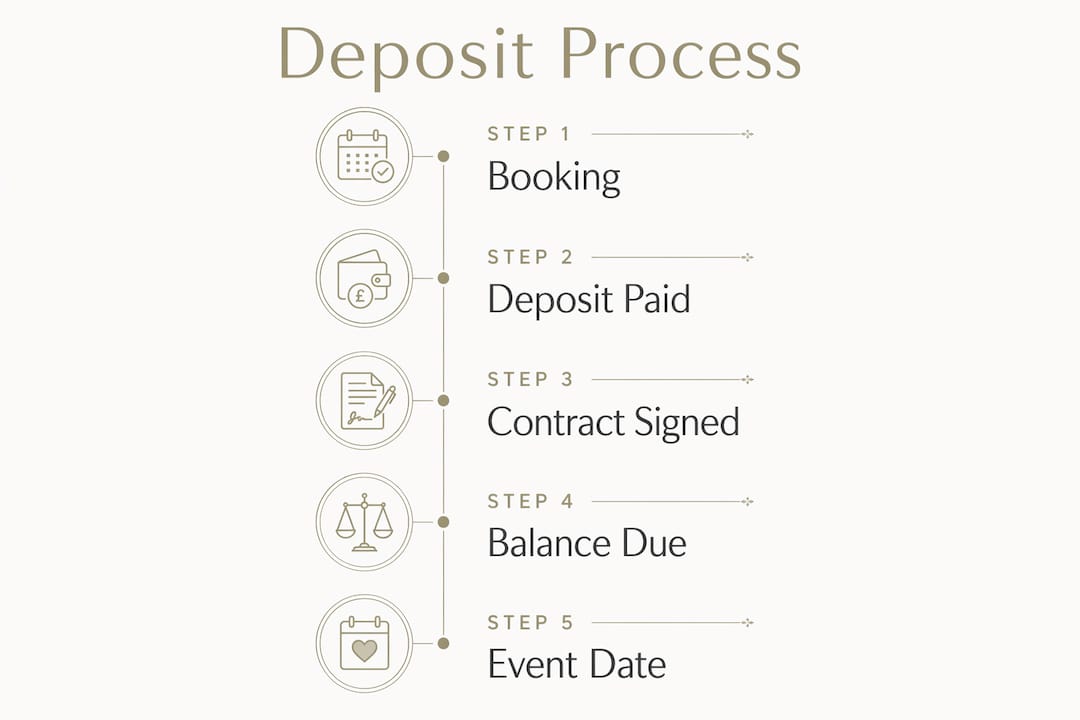
Wedding photography booking deposits typically range from 25% to 50% of the total package, with the balance due 14 to 30 days before the wedding. That structure exists because photographers need financial certainty well in advance of your day, and couples benefit from spreading the cost across several months.

For larger packages, a three-payment plan is common. Some professionals use a 30% retainer at booking, a 40% payment at six months out, and the final 30% at 30 days before the event. This approach suits couples investing in premium, full-day coverage and gives both parties clear milestones to work towards.
The table below illustrates the most common wedding photography payment structures you will encounter:
| Payment structure | Retainer at booking | Mid-point payment | Final balance due |
|---|---|---|---|
| Standard two-payment | 25–50% | None | 14–30 days before wedding |
| Three-payment plan | 30% | 40% at six months | 30% at 30 days before |
| Negotiated early-payment | Lower % | None | Earlier final date agreed |
Key points to note about each structure:
- Standard two-payment suits most couples booking packages of moderate value.
- Three-payment plans work well for larger investments, spreading financial commitment across the planning period.
- Negotiated structures allow flexibility, where vendors sometimes offer lower deposits in exchange for an earlier final payment date.
Missing a payment milestone can trigger late fees or, in serious cases, cancellation of your booking. Contracts should specify payment due dates, accepted payment methods, and late-payment consequences such as 5% late fees. Set calendar reminders for every payment date the moment you sign.
Why are photography deposits usually non-refundable?
The non-refundable nature of a retainer compensates the photographer for a very real financial loss. The moment your date is reserved, the photographer turns away every other enquiry for that day. Cancellations without a non-refundable retainer can cause cancellation rates of roughly 15–25%, leading to thousands in lost revenue annually. The retainer makes that risk manageable for the professional you are trusting with your wedding day.
The legal difference between a "deposit" and a "retainer"
The terminology in your contract matters more than most couples realise. Under UK consumer law, the word "deposit" can imply a refundable payment if the service is not delivered. Using "non-refundable retainer" in contracts removes that ambiguity and protects both parties from misunderstandings or legal claims. A well-drafted contract will always use the precise term.
The legal distinction between "deposit" and "retainer" greatly impacts contract enforceability and client understanding. If your contract simply says "deposit," ask your photographer to clarify in writing whether it is refundable under any circumstances.
Key contract terms to look for before you sign:
- Payment due dates for the retainer and all subsequent balances.
- Refund policy stating explicitly whether any portion is returnable and under what conditions.
- Cancellation consequences covering what happens if either party cancels.
- Rescheduling terms and any fees that apply if you change your wedding date.
- Late-payment penalties, typically a percentage fee applied after a grace period.
Cancellation buffers and your consumer rights
Photographers often allow a 14-day cancellation buffer after signing, during which clients can cancel with limited fees. Beyond that window, the retainer is non-refundable. This approach respects your consumer rights while protecting the photographer once the date is firmly locked in. Read this clause carefully before signing, and ask for it in writing if it is not already included.
Pro Tip: Ask your photographer to confirm the exact cancellation buffer period in the contract before you pay. A reputable professional will include this clause as standard.
What payment methods should couples use for a photography deposit?
The payment method you choose affects how protected you are if something goes wrong. Most photographers use Stripe, HoneyBook, or Dubsado to process payments, providing chargeback protection and payment tracking. These platforms create a clear digital record of every transaction, which is invaluable if a dispute arises.
Bank transfers or cash payments lack chargeback protection, increasing risk for clients and vendors alike. If a photographer insists on cash only, treat that as a warning sign worth investigating before you commit.
Follow these steps to pay your retainer safely:
- Sign the contract first. Never transfer money before a written contract is in place. The contract is your legal protection.
- Use a traceable payment method. Stripe, credit card, or a platform like HoneyBook creates a digital record and offers chargeback rights.
- Request a receipt immediately. A professional photographer will send written confirmation of your payment within 24 hours.
- Save all correspondence. Keep emails, contracts, and receipts in one folder. You may need them if plans change.
- Check the payment platform's dispute process. Know in advance how to raise a dispute if the service is not delivered as agreed.
Pro Tip: Paying by credit card through a platform like Stripe gives you Section 75 protection under UK consumer law for purchases over £100. This is one of the strongest financial safeguards available to you as a couple.
Contracts demanding full upfront payment unfairly transfer all financial risk to clients and are considered poor practice. A photographer asking for 100% of fees before your wedding day is a red flag. Reputable professionals structure payments to align with service milestones, not to maximise their own security at your expense.
How can couples manage deposit agreements and avoid common pitfalls?
Managing your photography deposit agreement well starts with reading the contract in full before you sign anything. Most couples skim contracts and later feel surprised by terms they agreed to. The contract is not a formality. It is the document that governs your entire booking.
Some photographers permit one reschedule within 12 months subject to availability, with fees applying for any subsequent changes. Knowing this before you book means you can plan around it rather than discover it at an inconvenient moment.
Practical steps to protect yourself throughout the booking process:
- Check for partial payment schedules. A contract requiring 100% upfront is a red flag. Standard practice involves a non-refundable retainer at booking and a final balance later.
- Understand the rescheduling policy. Confirm whether changing your date costs extra and how much notice you must give.
- Set payment reminders. Add every due date to your calendar the day you sign. Late payments can trigger fees or cancellation.
- Communicate openly. If your circumstances change, contact your photographer early. Most professionals will work with you if you give them time to respond.
- Keep a paper trail. Save every email, receipt, and contract amendment in a dedicated folder.
The wedding photography workflow for Asian weddings often involves multi-day ceremonies, which can affect payment structures. If your celebration spans more than one day, confirm with your photographer how the retainer applies across each event.
Pro Tip: If you are unsure about any contract clause, ask your photographer to explain it in plain language. A professional who values your relationship will welcome the question rather than deflect it.
Key takeaways
A wedding photography deposit is a non-refundable retainer that secures your date, compensates the photographer for opportunity costs, and forms the legal foundation of your booking agreement.
| Point | Details |
|---|---|
| Deposit amount | Retainers typically range from 25% to 50% of the total package value. |
| Payment structure | Larger packages often use a three-payment plan spread across the booking period. |
| Non-refundable retainer | Use this precise term in contracts to avoid refundability confusion under UK law. |
| Secure payment methods | Stripe, HoneyBook, and Dubsado offer chargeback protection; cash and bank transfers do not. |
| Contract red flags | Full upfront payment requests shift all financial risk to you and are considered poor practice. |
Why I believe most couples misread their photography contracts
Couples come to me having already signed contracts they have not fully read. That is not a criticism. Wedding planning is a whirlwind of decisions, and a legal document feels less urgent than choosing flowers or a venue. But the photography contract is the one document that directly governs your money and your memories.
The most common misunderstanding I see is couples believing the retainer is refundable if they cancel. The word "deposit" carries that implication in everyday life. In a photography contract, it rarely does. Requiring a retainer is not greed. It is a sustainable business practice that significantly lowers client cancellation rates and allows photographers to invest fully in your day.
What I find most telling is the difference in experience between couples who ask questions before signing and those who do not. The ones who ask arrive at their wedding day relaxed and trusting. They know what they paid for, when the balance is due, and what happens if plans change. That clarity creates a far better working relationship, and it shows in the images.
My advice is simple. Read every clause. Ask every question. A photographer who is right for you will welcome that conversation. The deposit is not just a financial transaction. It is the first act of mutual commitment between you and the person you are trusting to document one of the most significant days of your life.
— Rashpal
How Rashpal-photography structures deposits and bookings
At Rashpal-photography, every booking begins with a clearly written contract and a non-refundable retainer that secures your date with complete transparency. There are no hidden fees, no ambiguous terms, and no request for full payment upfront.

Each package page outlines the exact payment structure so you know what to expect before you commit. Whether you are drawn to the Classic Investment package for a full-day Asian wedding celebration or the Essentials Investment for a beautifully covered 12-hour day, the deposit terms are stated clearly from the outset. Rashpal-photography believes that financial clarity is part of the luxury experience. Get in touch for a personalised consultation and a quote tailored to your wedding.
FAQ
What does a wedding photography deposit cover?
A wedding photography deposit, formally called a non-refundable retainer, covers the photographer's opportunity cost of reserving your date and declining other bookings. It does not typically cover any deliverables until the final balance is paid.
How much is a photography deposit for a wedding?
Photography deposits for weddings typically range from 25% to 50% of the total package value, with the balance due 14 to 30 days before the wedding date.
Is a wedding photography deposit refundable?
In most professional contracts, the retainer is non-refundable. Some photographers offer a 14-day cancellation buffer after signing, during which a partial refund may apply, but beyond that window the retainer is retained.
What payment method is safest for a photography deposit?
Paying through platforms such as Stripe or HoneyBook is the safest option, as these provide chargeback protection and a clear digital payment record. Cash and direct bank transfers offer no chargeback rights under UK consumer law.
What should a photography contract include about deposits?
A photography contract should specify the retainer amount, all payment due dates, accepted payment methods, late-payment penalties, and a clear cancellation and rescheduling policy with explicit refund terms.