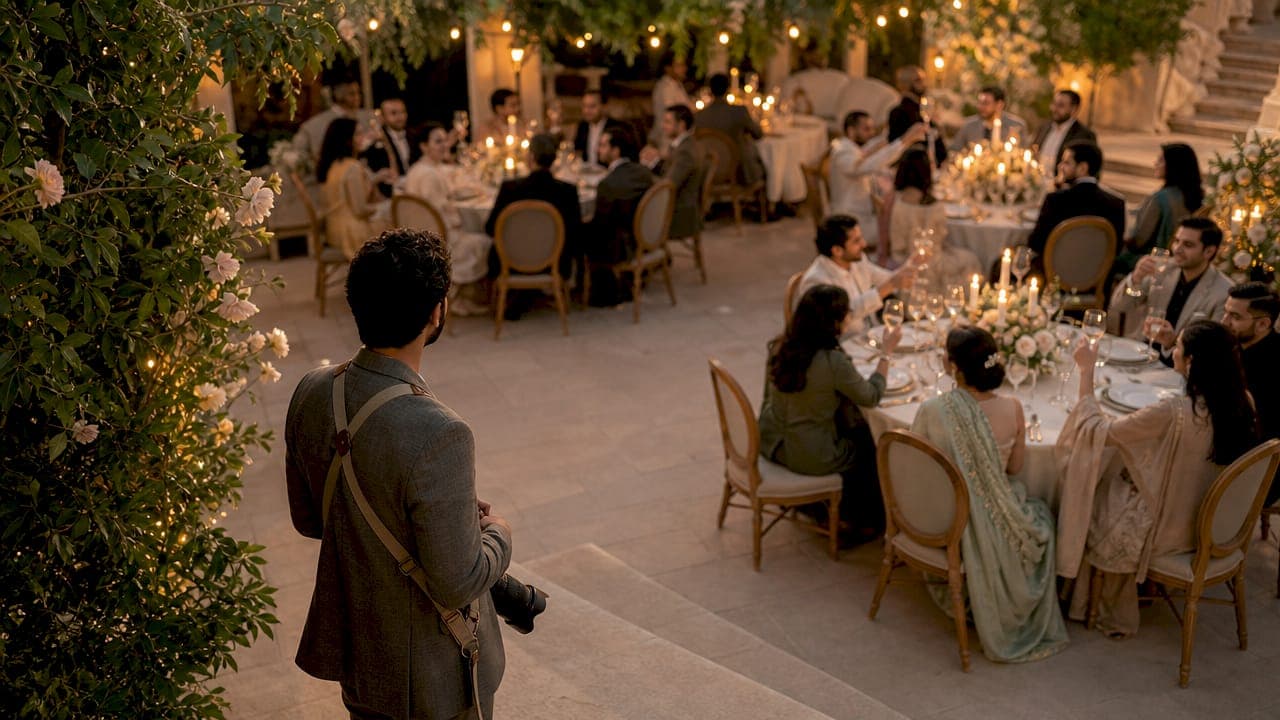
TL;DR:
- Candid reception photography captures spontaneous moments that reflect genuine emotions during weddings. Preparation, strategic timing, and clear communication are essential for authentic, memorable images. Skilled photographers anticipate moments, use natural positioning, and build rapport to create effortless photographs.
Candid reception photography is defined as the art of capturing unposed, spontaneous moments during your wedding celebration, preserving the genuine emotions that staged portraits simply cannot replicate. This guide to candid reception shots gives you the practical knowledge to work with your photographer, plan your timeline, and create the conditions where real, breathtaking moments can unfold naturally. Photojournalistic technique sits at the heart of this approach, and understanding it helps you make informed decisions long before your wedding day. Professional photographers typically deliver 100–200+ images from reception coverage alone. That volume reflects just how rich a well-planned reception can be for authentic storytelling.
What does a guide to candid reception shots actually require?
Successful candid reception photography demands preparation, not luck. True candid wedding photos are created intentionally, built on a foundation of thoughtful timelines and a photographer who is already positioned before the moment arrives. Without that groundwork, even the most talented photographer will miss the fleeting, cinematic instants that define a reception.
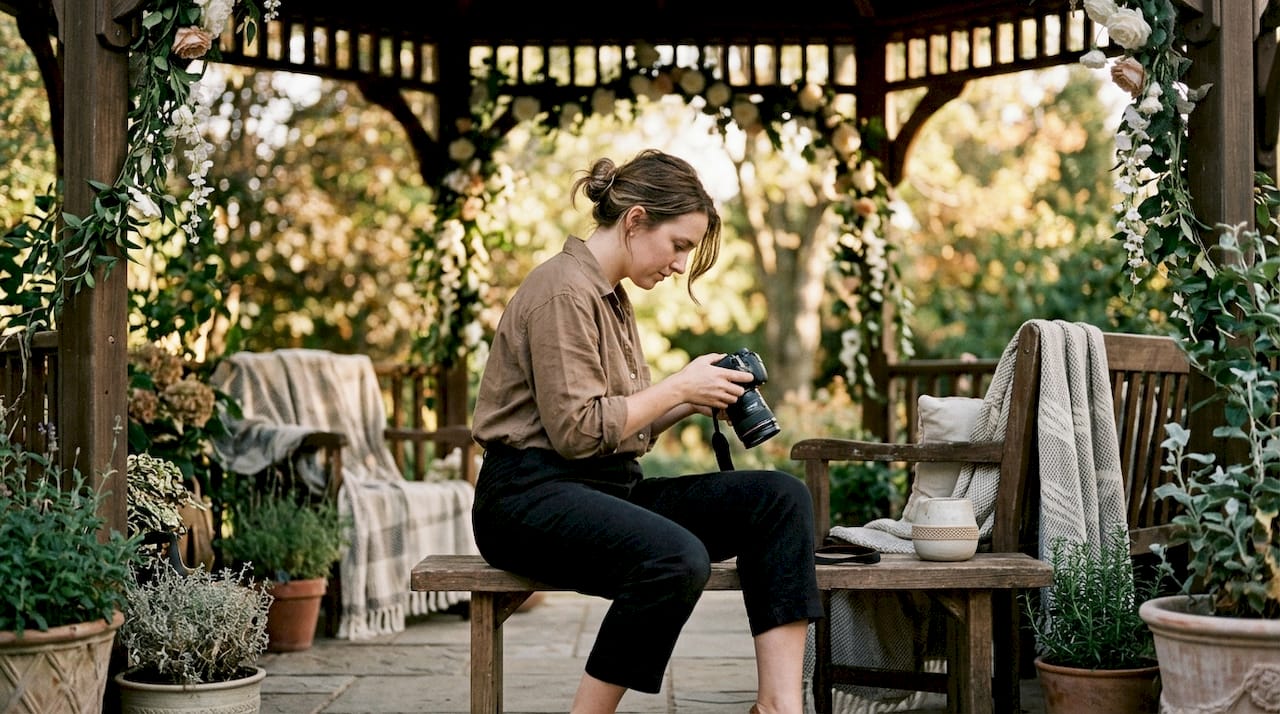
The technical prerequisites are equally demanding. Mastery of off-camera flash and rapid adaptation to changing light conditions is non-negotiable for reception work. Reception venues shift from warm candlelight during dinner to coloured spotlights on the dance floor within minutes, and a photographer who cannot adjust in real time will produce flat, unflattering results.
Essential tools and settings for candid reception photography:
- A fast prime lens (50mm or 85mm) for low-light sharpness without intrusive flash
- Off-camera flash with a diffuser to soften harsh shadows in dim rooms
- A second camera body loaded with a wide-angle lens for dance floor energy
- High ISO capability (modern full-frame sensors handle this well) for ambient-light moments
- Silent or quiet shutter mode to avoid drawing attention during speeches
Venue lighting considerations at a glance:
| Lighting type | Challenge | Solution |
|---|---|---|
| Candlelight | Very low output, warm colour cast | Wide aperture, high ISO, no flash |
| String lights | Uneven coverage, romantic but dim | Bounce flash, slow sync |
| Coloured spotlights | Skin tones shift dramatically | Gel flash to match ambient colour |
| Overhead fluorescents | Flat, unflattering on faces | Off-camera flash to add dimension |
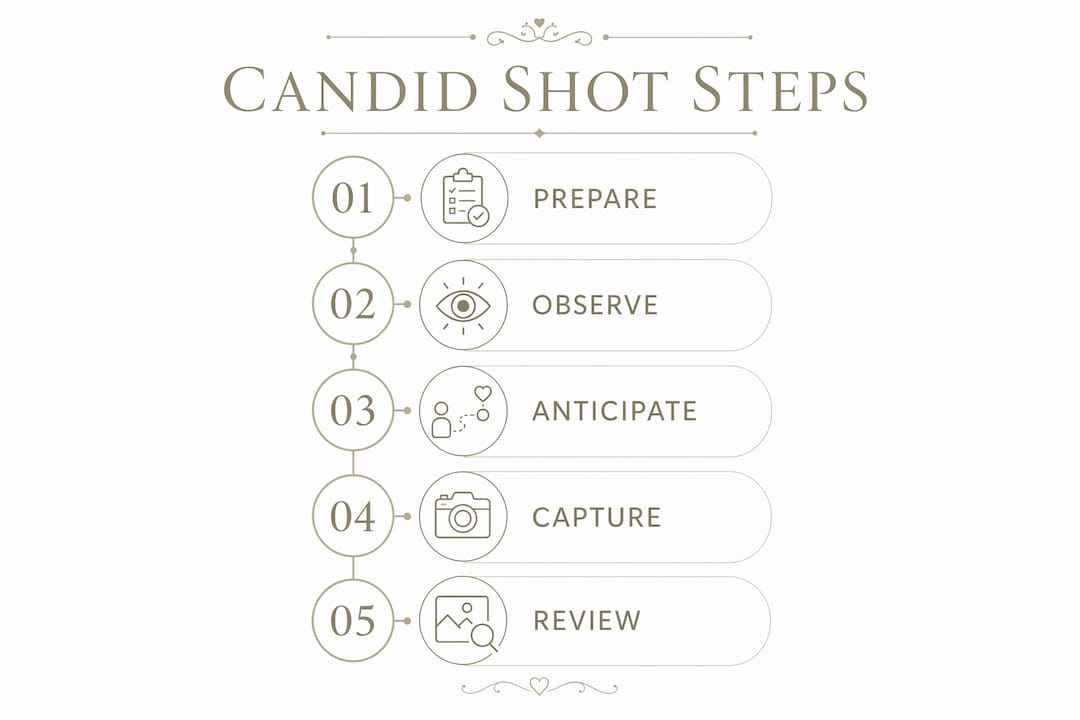
Pro Tip: Arrive at least 30 minutes before guests to walk the venue, test your camera settings in each lighting zone, and identify the three or four positions that give you clean sightlines to the top table, dance floor, and entrance.
How should you plan your reception timeline for candid shots?
A relaxed, unhurried timeline is the single greatest gift you can give your photographer. Experts recommend allocating 45–60 minutes for the core initial reception block, covering entrances, first dances, and early guest mingling. That breathing room allows real interactions to develop rather than forcing your photographer to sprint between staged moments.
Structure your timeline around these key phases, in order:
- Grand entrance. Position your photographer at the door before you arrive. The raw joy on guests' faces as you enter is unrepeatable.
- Welcome drinks and mingling. This unstructured period produces some of the best candid reception moments of the entire day. Guests are relaxed, conversations are flowing, and nobody is watching the camera.
- Speeches. Brief your photographer on which guests are most likely to react visibly. Tears, laughter, and disbelief all make extraordinary images.
- Dinner service. Build in a 10-minute buffer between courses. These quiet pauses are where intimate, tender moments between couples and families emerge.
- First dance and open floor. Keep the transition from dinner to dancing brisk. A long gap kills the energy that makes dance floor shots electric.
Communicating your priorities clearly to your photographer before the day is not optional. Tell them which guests matter most, which moments are non-negotiable, and which parts of the evening you want documented with a lighter touch. That conversation shapes every positioning decision they make.
Pro Tip: Build a 20-minute unstructured cocktail period into your timeline specifically for candid photography. No announcements, no formal activities. Just guests talking, laughing, and being themselves.
Blending formal portraits with candid coverage also requires sequencing. Complete your formal family portraits before the reception begins, so your photographer is entirely free to move through the room and capture authentic wedding moments without being pulled away at critical junctures.
What techniques do photographers use to capture genuine candid moments?
Anticipation is the defining skill in candid moment photography techniques. A skilled photographer reads the room constantly, watching for the slight lean-in before a laugh, the grandmother reaching for a tissue during a speech, the flower girl spinning on the dance floor. They are positioned and focused before the moment peaks, not reacting after it has passed.
Positioning is equally deliberate. The most effective candid shots come from the periphery of a scene, not the centre. Standing slightly to the side of a group, using a longer focal length, and keeping the camera at a natural height all reduce the psychological impact of the photographer's presence. Guests stop noticing the camera within 20–30 minutes when a photographer moves quietly and confidently.
Blending candid shots with light prompts produces images that are both natural and flattering. A gentle suggestion to "walk towards the garden together" or "grab a drink and chat" gives couples and guests a direction without stiffening their expressions. The result looks entirely unposed because the interaction itself is genuine.
"The richest candid moments often occur in the transitions between formal events, not during the events themselves. The relief after a speech, the first steps onto the dance floor, the quiet moment a couple shares between courses. These are the images that last a lifetime." — Rashpal-photography
The best candid photos emerge in transitions between formal reception events, capturing authentic relief and emotion. A photographer who steps away during dinner to check their phone will miss the moment a father squeezes his daughter's hand across the table.
Common pitfalls to avoid:
- Over-directing guests until every expression looks rehearsed
- Shooting from the same position for extended periods, creating repetitive angles
- Using flash indiscriminately during speeches, which breaks the emotional atmosphere
- Neglecting background control, placing beautiful moments in front of cluttered or distracting settings
- Overshooting at low moments and missing the peak of high-energy scenes
How do you troubleshoot common candid reception photography challenges?
Low light, fast movement, and unpredictable guest behaviour are the three consistent challenges in candid wedding photography. Each has a clear solution when you plan for it in advance.
Low light is the most frequent obstacle. Wide apertures (f/1.8 or f/2.8) combined with elevated ISO settings allow a photographer to work in candlelit rooms without intrusive flash. Off-camera flash, when used with a diffuser and bounced off a white ceiling, adds light without the harsh, flat look of direct on-camera flash.
Spending 20–30 minutes socialising before raising the camera encourages natural guest behaviour throughout the evening. Guests who have spoken with your photographer as a person, rather than encountering them only as a figure behind a lens, relax far more quickly. That rapport produces visibly more natural expressions in every frame.
Practical solutions for common reception challenges:
- Fast-moving subjects on the dance floor: Use a shutter speed of at least 1/200s and continuous autofocus to freeze motion cleanly
- Unpredictable guest behaviour: Observe rather than direct; let interactions develop and move in only when the moment is forming
- Crowded dance floor shots: The packed dance floor is best captured within the first 10–15 minutes after it opens, when energy is highest and guests are most animated
- Missed moments: Brief your photographer on VIP guests and must-have moments in writing before the day, not on the morning itself
Pro Tip: Give your photographer a printed list of five to eight must-have candid moments and the names of three to four key guests to watch. This removes ambiguity and lets them focus entirely on reading the room.
Quality always outweighs quantity in candid photography. A photographer who fires 800 frames across an evening and delivers 40 extraordinary images has served you far better than one who delivers 400 mediocre ones. Discuss your expectations around candid moments at Asian weddings and cultural ceremonies specifically, where the emotional peaks can differ significantly from Western reception formats.
Key takeaways
Candid reception photography requires intentional planning, strategic positioning, and clear communication between couples and their photographer to produce genuinely authentic images.
| Point | Details |
|---|---|
| Intention over luck | True candid shots are built on planned timelines and advance photographer positioning, not chance. |
| Timeline breathing room | Allocate 45–60 minutes for core reception events to give real moments space to develop naturally. |
| Transitions are gold | The richest candid images emerge between formal events, not during them. |
| Rapport accelerates results | A photographer who socialises early helps guests relax, producing more natural expressions throughout. |
| Dance floor timing | Capture packed dance floor energy within the first 10–15 minutes after the floor opens. |
What I have learned from years of candid reception photography
Every couple I work with asks the same question: "How do you get those natural shots?" The honest answer is that nothing about them is accidental. The moments look effortless because the groundwork was laid hours, sometimes days, before the shutter clicked.
The most powerful thing I have observed is this: genuine emotion emerges when couples stop thinking about the camera and focus entirely on each other and their guests. My role is to create the conditions where that happens. That means arriving early, moving quietly, and building a rapport with your family and friends before I ever raise the lens. When guests see me as part of the celebration rather than an observer of it, their behaviour changes completely.
I also believe strongly in the blend of photojournalistic photography and gentle guidance. Pure documentary work can leave couples with beautiful but occasionally unflattering frames. A light prompt, offered naturally, gives the image both authenticity and elegance. That balance is where the most timeless wedding photography lives.
Trust your photographer. Give them your priorities clearly, then let them work. The couples who are most present on their wedding day always have the most extraordinary photographs to show for it.
— Rashpal
Wedding photography packages from Rashpal-photography
Rashpal-photography offers a range of carefully considered packages designed to cover your entire wedding day, from the first preparations through to the final moments on the dance floor.
The Classic Investment package provides 14 hours of continuous coverage, giving your photographer the time and freedom to capture every candid moment as it unfolds across your reception. For couples who want extended, multi-day coverage of elaborate cultural ceremonies, the Elite Investment package spans 16–18 hours across two days. Each package is built around the philosophy that the most meaningful wedding images are both planned and genuinely felt. View the full range of wedding photography packages to find the coverage that fits your day.
FAQ
What are candid reception shots?
Candid reception shots are unposed, spontaneous photographs taken during your wedding reception that capture genuine emotions and interactions as they naturally occur. They differ from formal portraits in that subjects are rarely aware the camera is pointed at them.
How many candid photos should I expect from my reception?
Professional photographers typically deliver between 100 and 200+ high-quality images from reception coverage, combining candid and formal shots. The exact number depends on the length of your reception and the package you choose.
When is the best time to capture candid shots at a reception?
The richest candid moments occur during transitions between formal events, such as immediately after speeches or as guests move from dinner to the dance floor. The dance floor itself is best photographed within the first 10–15 minutes after it opens.
How do I help my guests look natural in candid photos?
Ask your photographer to spend time socialising with guests before raising the camera. Research shows that 20–30 minutes of early rapport-building encourages guests to behave naturally, producing visibly more relaxed and authentic expressions throughout the evening.
Do I need to brief my photographer before the reception?
A written list of five to eight must-have moments and the names of key guests to watch removes ambiguity and allows your photographer to focus entirely on reading the room. Clear communication before the day is one of the most effective ways to improve your candid photography results.