TL;DR:
- Candid photography captures unposed, authentic moments that reveal genuine emotions and relationships. These images deepen memories and evoke stronger emotional responses through natural expression and timing. Building unscheduled time into your wedding day and selecting a comfortable, observant photographer enhances the collection's candid storytelling.
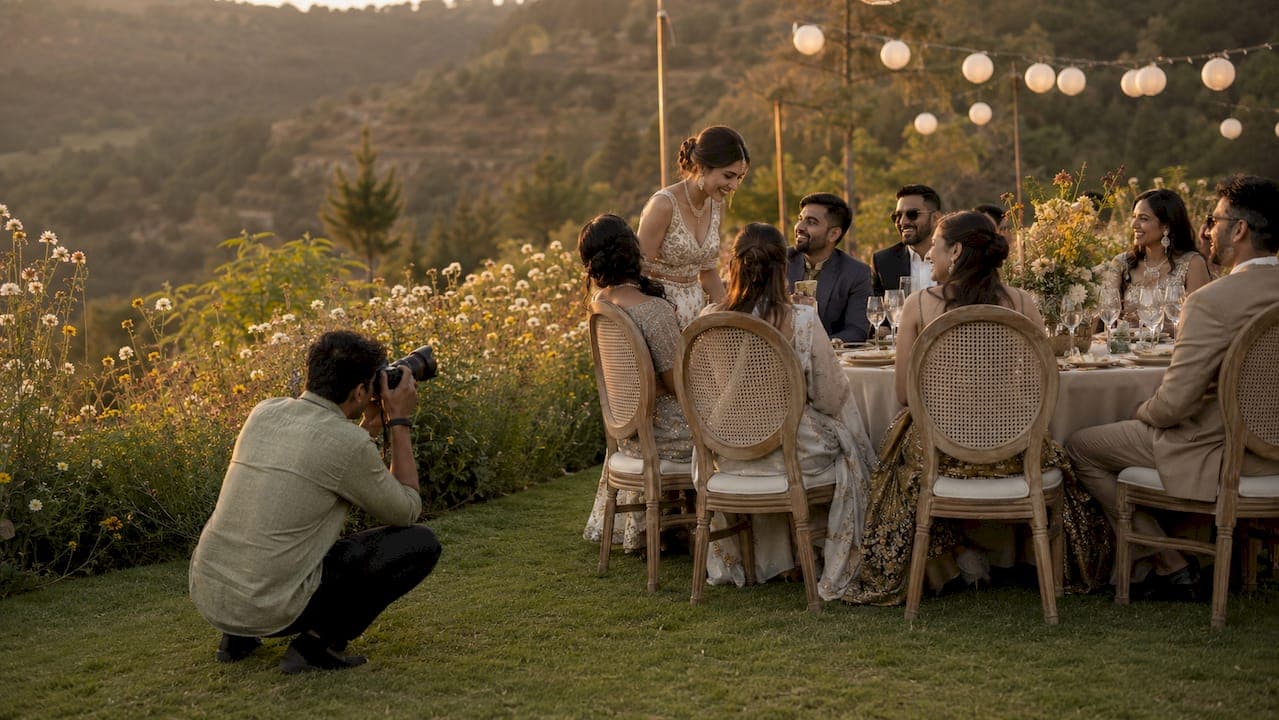
Candid photography is defined as the capture of unposed, natural moments in which subjects are unaware of or undistracted by the camera, producing images that offer a more honest representation than staged portraits. At weddings and cultural ceremonies, the significance of candid moments extends far beyond aesthetics. These spontaneous frames preserve the emotional truth of your day: the trembling hands during vows, a grandmother's quiet tears, the laughter that erupts before the first dance. Posed photography has its place, but it is the unguarded, unrehearsed instants that couples return to again and again, years after the celebration has ended.
Why candid moments carry such emotional power
The emotional weight of candid photography is rooted in authenticity. Psychological research confirms that partners value candid images as proof of genuine comfort and trust, not simply as pleasing compositions. When a subject is unaware of the lens, they cannot perform for it. What remains is the real person, in a real moment, expressing something that no amount of direction can manufacture.
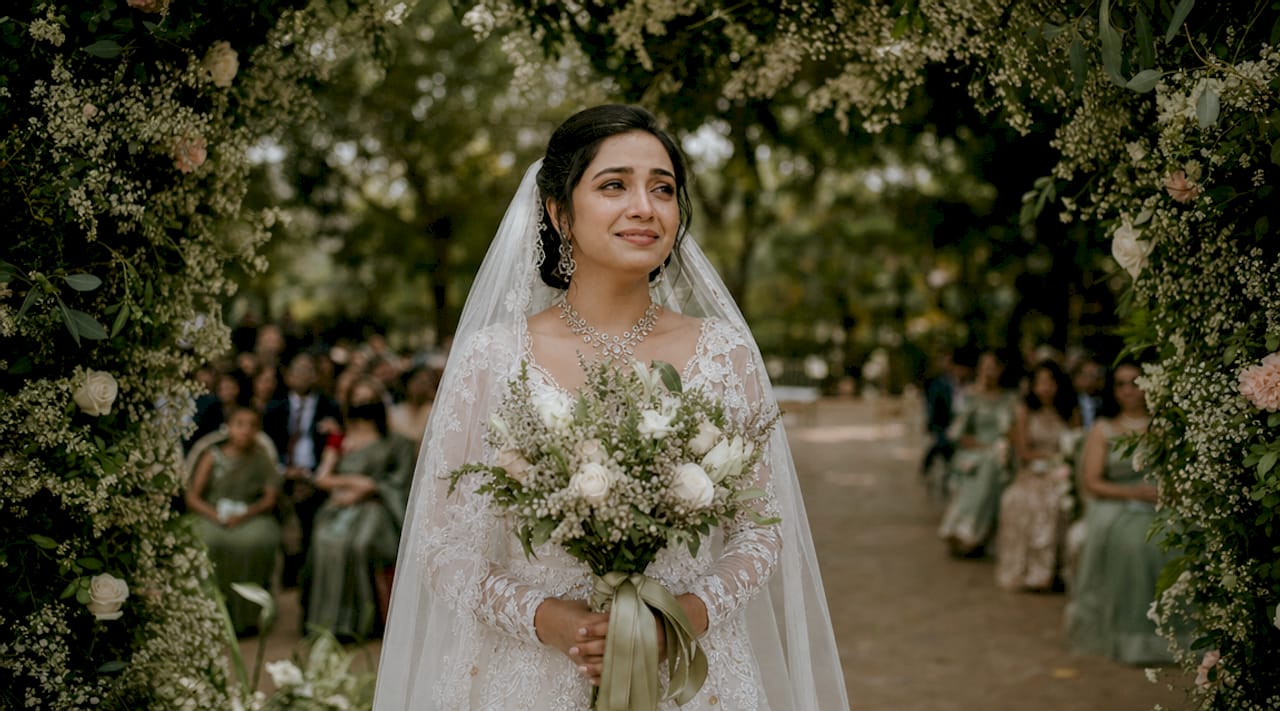
This distinction matters enormously for wedding photography. Posed portraits communicate elegance and intention. Candid images communicate presence. The two serve different emotional purposes, and the most resonant wedding albums contain both. However, it is the candid frames that tend to produce the strongest reactions when couples revisit their galleries months or years later.
Behavioural research also links candid images to stronger empathic responses in viewers. When guests, parents, or friends look at your wedding photographs, unposed images draw them into the scene more viscerally than formal portraits. They feel the moment rather than simply observing it.
The benefits of candid shots in this context are clear:
- They preserve micro-expressions and fleeting gestures that vanish within seconds
- They document the emotional atmosphere of the day, not just its visual appearance
- They capture the relationships between people, not just the people themselves
- They age gracefully, because genuine emotion never looks dated
Pro Tip: Ask your photographer to spend at least thirty minutes during the reception simply observing, without directing anyone. The frames captured during this undirected time are frequently the most treasured in the final gallery.
How candid photography enhances memory recall at weddings
The neuroscience behind why candid moments matter is compelling. Wedding days are among the most emotionally charged experiences in a person's life, and emotional events trigger dopamine and oxytocin release in the brain, which significantly deepens memory encoding. This means that photographs taken during moments of genuine emotional intensity do not simply document what happened. They actively reconstruct the feeling of being there when you look at them again.
Neuroscientists Kevin LaBar and Roberto Cabeza established that emotional arousal enhances long-term memory consolidation. Applied to wedding photography, this means that a candid image of your partner laughing uncontrollably during the speeches will trigger a richer, more multi-sensory memory than a formally posed portrait taken moments later. The emotional context encoded at the time of the original experience is reactivated by the image.
"Images prioritising expression and timing over pixel-perfect clarity better trigger memory reconstruction and emotional resonance for couples." — Practitioner insight on candid photography
This is why a slightly blurred, imperfectly exposed candid frame can feel more meaningful than a technically flawless portrait. The emotional rhythm of the moment is preserved in the image, and the brain responds to that rhythm rather than to photographic precision.
The cross-media effect reinforces this further. Couples who have both photographs and video from their wedding day benefit from multiple sensory cues that activate different memory systems simultaneously. When a candid photograph is paired with the sound of a song or a voice captured on video, the memory recall becomes richer and more complete.
| Memory trigger | Effect on recall |
|---|---|
| Candid photograph of emotional moment | Reactivates emotional context and sensory detail |
| Formally posed portrait | Confirms visual record but triggers limited emotional recall |
| Candid photograph paired with video | Activates multiple memory systems for deeper, more vivid recall |
| Technically imperfect but expressive image | Preserves emotional rhythm, often more resonant than polished alternatives |
Candid vs posed photography: what is the real difference?
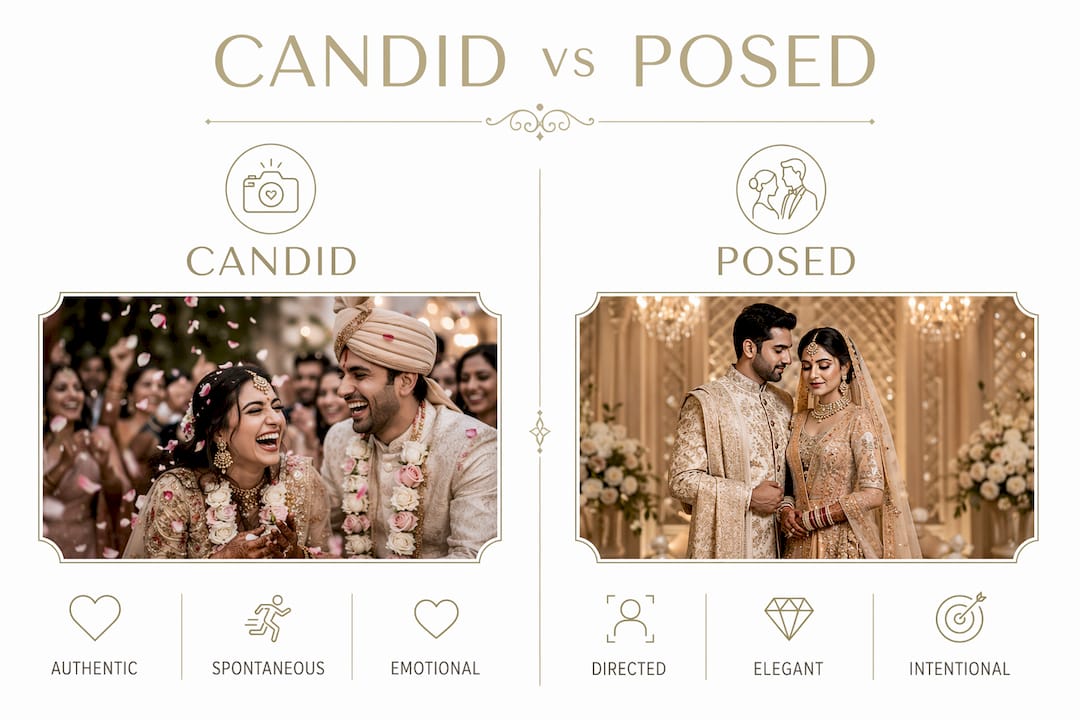
The distinction between candid and posed photography is frequently misunderstood, even by couples who have researched the topic thoroughly. True candid photography captures moments that unfold naturally, without staging or direction. Images that look candid but are directed by a photographer lack the genuine emotional rhythm of real, unguarded moments. This is a critical distinction when choosing how you want your wedding day documented.
Posed photography requires the photographer to direct subjects: where to stand, where to look, how to hold one another. The results can be breathtaking and are particularly valuable for formal family portraits, bridal party images, and editorial-style couple portraits. The limitation is that direction inevitably introduces a degree of self-consciousness, which the camera records faithfully.
Candid photography, by contrast, requires the photographer to minimise their presence. Too much direction detracts from authentic captures, because the moment a subject becomes aware they are being observed and assessed, they begin to perform. The photographer's role shifts from director to witness.
Many photographers discuss ratios, suggesting a 70/30 or 80/20 split between candid and posed coverage. These numbers are less useful than they appear. What matters is not the proportion but the quality of undirected time built into the day's schedule. A wedding with thirty minutes of genuine undirected time will yield more emotionally powerful candid frames than one where the photographer attempts to capture candid moments between back-to-back posed sessions.
Pro Tip: When planning your wedding day timeline, build in at least two periods of twenty minutes or more where no photography is formally scheduled. These gaps allow your photographer to observe and capture the natural interactions that define the emotional character of your day.
How to encourage candid moments at your wedding or event
Creating the conditions for authentic candid photography is a collaborative process between you and your photographer. The environment you create, the relationships you nurture, and the expectations you set all influence the quality of the unposed images you will receive. Here is how to approach this thoughtfully:
-
Choose a photographer whose presence feels natural to you. Comfort with your photographer is the single most important factor in candid photography. If you feel observed or judged, that tension appears in every frame. Meet your photographer before the wedding day, ideally during an engagement shoot, to build genuine rapport.
-
Communicate your priorities clearly before the day. Tell your photographer which relationships and moments matter most to you. A father and daughter who rarely see one another, a group of childhood friends reuniting, the quiet moment before you walk down the aisle. These are the frames worth prioritising.
-
Avoid over-scheduling your day. A tightly choreographed timeline leaves no room for the spontaneous interactions that produce the most moving candid images. Build breathing space into your programme.
-
Establish consent and expectations with your guests. Emotional safety and consent are foundational to ethical candid photography. Let guests know that a photographer will be moving through the event unobtrusively. This transparency protects privacy and creates a more relaxed atmosphere.
-
Trust the process. The importance of spontaneous moments lies precisely in their unpredictability. Resist the urge to orchestrate every frame. The images that will move you most deeply in ten years are the ones you did not plan.
For further practical guidance, this resource on preparing for candid wedding photos offers useful preparation advice from a practitioner's perspective.
Key takeaways
Candid photography captures genuine emotional truth that posed portraits cannot replicate, making it the most enduring and personally resonant element of any wedding or event photography collection.
| Point | Details |
|---|---|
| Candid photography defined | Unposed, natural captures that offer a more honest representation than staged portraits. |
| Emotional power | Candid images trigger stronger empathic responses and preserve authentic relationship dynamics. |
| Memory and neuroscience | Emotionally charged candid frames reactivate dopamine and oxytocin responses, deepening memory recall. |
| Candid vs posed balance | Undirected time in the schedule, not a fixed ratio, determines the quality of candid coverage. |
| Creating the conditions | Photographer rapport, flexible scheduling, and clear communication all foster authentic candid moments. |
Why I believe candid photography is the soul of wedding documentation
After years of photographing Asian weddings and cultural ceremonies across London and beyond, I have come to a firm conclusion: the images couples treasure most are almost never the ones we planned. They are the ones that simply happened while I was present and paying attention.
There is a common misunderstanding I encounter regularly. Couples sometimes believe that candid photography means the photographer is simply wandering without purpose, hoping for something interesting to occur. The reality is the opposite. Authentic candid photography demands heightened awareness, anticipation, and an understanding of human behaviour that takes years to develop. You are not waiting for moments. You are reading the room, recognising the emotional signals that precede a moment, and positioning yourself to receive it.
What I find most rewarding is the reaction when couples first see their galleries. The posed portraits receive admiration. The candid frames receive recognition. There is a profound difference between the two. One says "we looked beautiful." The other says "that was us, exactly as we were, on the most important day of our lives." That is the candid photography value that no technical specification can quantify.
— Rashpal
Capture your story with Rashpal-photography
At Rashpal-photography, the blend of photojournalistic observation and guided portraiture is central to every wedding package offered. The approach prioritises undirected time alongside formal portrait sessions, ensuring that the emotional candid moments in storytelling are never sacrificed for the sake of a rigid schedule. Whether you are planning an intimate ceremony or a multi-day cultural celebration, the wedding photography packages are designed to give your photographer the freedom and time to capture your day as it truly unfolds. For couples seeking the most comprehensive coverage, the premium wedding collection spans two full days, ensuring no moment of genuine connection goes undocumented.
FAQ
What is the significance of candid moments in photography?
Candid moments capture genuine, unposed emotions and interactions that posed photography cannot replicate. Their significance lies in preserving the authentic emotional truth of an event, which is what couples and families return to most meaningfully over time.
Are candid photos better than posed photos at weddings?
Neither style is superior in isolation. Candid photography captures emotional authenticity and spontaneous connection, while posed photography provides formal, composed portraits. The most complete wedding galleries combine both approaches thoughtfully.
How do candid photos affect memory recall?
Emotionally charged candid images reactivate the dopamine and oxytocin responses associated with the original experience, producing richer and more vivid memory recall than formally posed portraits taken in lower-emotion contexts.
How can I help my photographer capture more candid moments?
Build unscheduled time into your wedding day programme, choose a photographer with whom you feel genuinely comfortable, and communicate in advance which relationships and moments carry the most emotional weight for you.
Is candid photography ethical at weddings and events?
Candid photography at weddings is ethical when conducted with transparency and consent. Informing guests that a photographer will be moving unobtrusively through the event creates a relaxed atmosphere and protects the privacy and dignity of everyone present.
Recommended
- Essentials Investment (12 hours) Rashpal Bhachu | Rp photography Wedding Photographer, Uxbridge, UK
- Classic Investment (14 Hours, 1 day, Engagement Shoot) Rashpal Bhachu | Rp photography Wedding Photographer, Uxbridge, UK
- The Minimalist Investment (8 Hours) Rashpal Bhachu | Rp photography Wedding Photographer, Uxbridge, UK
- Gold Engagement Shoot Rashpal Bhachu | Engagement shoots Wedding Photographer, Uxbridge, UK