TL;DR:
- Candid moments in Asian weddings capture genuine emotions across multiple events, creating lifelong memories.
- Understanding the wedding flow helps photographers anticipate key emotional peaks for authentic coverage.
- Proper equipment and techniques ensure spontaneous moments are captured clearly without disrupting the celebration.
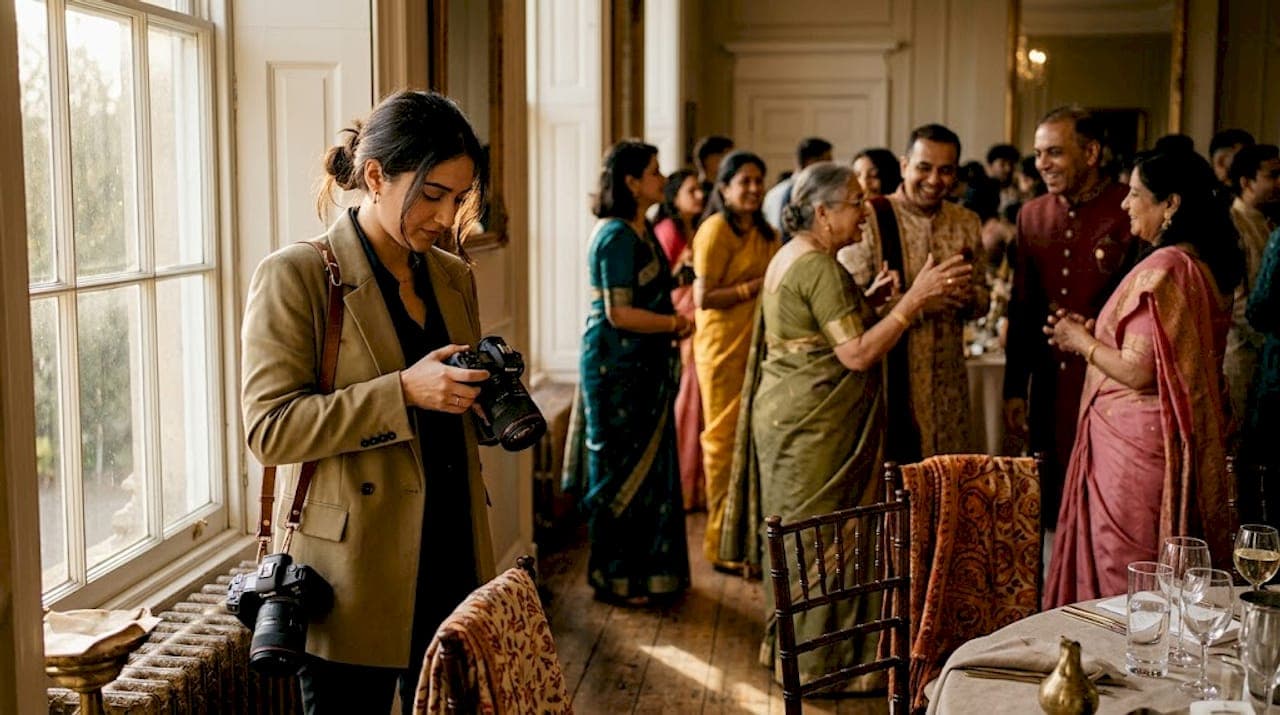
There is a particular kind of heartbreak that arrives quietly, weeks after the wedding, when you scroll through your album and realise the laughter during the haldi, the tears on your mother's face during the pheras, and the spontaneous dancing at the sangeet simply were not captured. 67% of 2026 couples prefer documentary-style candid photography over posed portraits, and 38% specifically regret not having more authentic guest images. This guide covers everything you need to anticipate, shoot, and refine candid images that genuinely reflect the spirit of your wedding day.
Table of Contents
- Understanding why candid moments matter in Asian weddings
- Anticipating key moments: Knowing your wedding ceremony flow
- Getting the right tools: Cameras, lenses, and settings for candid shots
- Mastering the art: Techniques for capturing genuine reactions and details
- Reviewing, selecting, and sharing your favourite candid images
- Our perspective: Why true candid wedding photography is storytelling at its best
- Capture your candid moments with expert guidance
- Frequently asked questions
Key Takeaways
| Point | Details |
|---|---|
| Plan for key emotional moments | Identifying cultural rituals and important phases in advance is the first step toward authentic candid photography. |
| Use the right gear and settings | Fast primes, discreet focus modes, and silent shooting help capture natural moments in any environment. |
| Focus on reactions and details | Prioritise expressions and interactions among guests and family, as well as meaningful symbolic elements. |
| Select meaningful images afterwards | Collaborate with your photographer to cull and curate the candid images that best narrate your wedding story. |
Understanding why candid moments matter in Asian weddings
Posed portraits are beautiful, but they rarely make you cry when you look at them ten years later. The images that stop you mid-scroll are the ones where something real was happening: your grandmother pressing her forehead to yours, your bridesmaids dissolving into laughter, your father straightening his sherwani with quiet pride. These unscripted instants carry the emotional weight that defines a truly memorable wedding album.
Asian weddings are particularly rich territory for candid photography because they unfold across multiple days and events, each with its own emotional register. The playful chaos of the haldi, the regal procession of the baraat, the sacred stillness of the pheras, and the joyful abandon of the sangeet all offer entirely different moods and opportunities. Capturing the beauty of an Asian wedding requires a photographer who understands this layered, multi-event structure intimately.
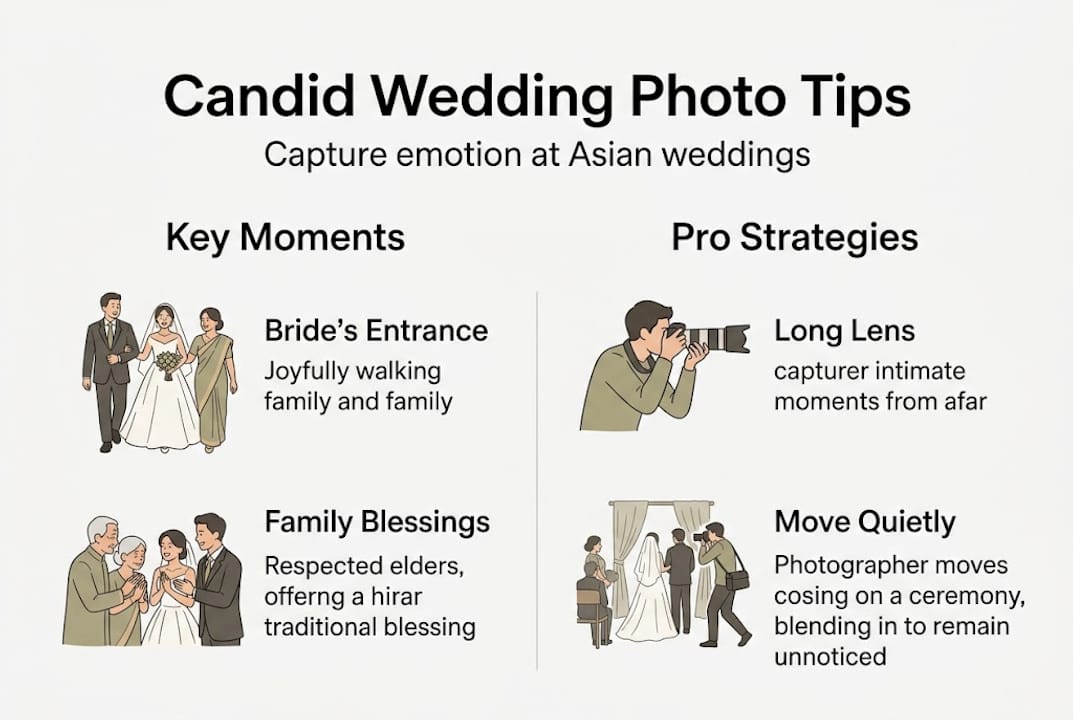
Cultural rituals like pheras, milni, baraat, and sangeet feature peak emotions that define memories, and these moments are often fleeting. A skilled photographer must read the room constantly, anticipating the next surge of feeling before it arrives. The right wedding photography approach can mean the difference between a collection of pretty pictures and a living, breathing visual story.
Key reasons why candid moments carry such weight in Asian wedding albums:
- Multi-generational gatherings create rare emotional intersections between elders, parents, and younger family members
- Ritual participation draws out genuine reactions that cannot be replicated in a studio
- Extended timelines across multiple events allow for a richer, more varied narrative
- Community and collective joy produce expressions of warmth and belonging that posed shots simply cannot replicate
"The most treasured images are rarely the ones where everyone was looking at the camera. They are the ones where everyone forgot the camera existed."
Anticipating key moments: Knowing your wedding ceremony flow
Understanding the emotional arc of your wedding day is one of the most powerful tools available to you and your photographer. When you know when the tears are likely to fall and where the laughter will erupt, you can position yourselves and your team to capture it all with grace and precision.
Learning the wedding day flow and cultural rituals like pheras, milni, baraat, and sangeet allows a photographer to predict emotions seconds before they peak. This is not guesswork; it is informed preparation built on experience and cultural understanding.
Here is a practical breakdown of the key phases and their emotional peaks:
- Getting ready — Intimate, reflective moments between the bride and her closest family; tears, laughter, and quiet tenderness
- Baraat arrival — High energy, collective excitement, and the groom's family at their most expressive
- Milni ceremony — Emotional family introductions, often producing genuine surprise and warmth
- Haldi — Playful chaos and unguarded laughter; one of the richest sources of candid images
- Pheras — Sacred and deeply emotional; parents and elders often show their most vulnerable expressions here
- Sangeet — Spontaneous dancing, group performances, and uninhibited joy
- Reception — Toasts, first dances, and quiet moments between the couple amid the celebration
| Wedding event | Emotional peak | Best candid opportunity |
|---|---|---|
| Baraat | Collective excitement | Wide shots of procession, groom's expression |
| Haldi | Playful laughter | Close-ups of reactions during application |
| Pheras | Sacred emotion | Parents' faces, couple's expressions |
| Milni | Warm reunion | Family embraces, tearful greetings |
| Sangeet | Uninhibited joy | Dance floor candids, group reactions |
| Reception | Intimate connection | Couple's quiet moments, guest toasts |
Explore traditional Asian photography settings for further inspiration on how location and ritual intersect. For groom preparation ideas, our groom preparations guide offers detailed advice on capturing those quieter, reflective moments before the ceremony begins.
Pro Tip: Share a detailed timeline with your photographer at least two weeks before the wedding. Include the specific order of rituals, the names of key family members, and any moments that hold particular personal significance. This level of preparation allows your photographer to move with intention rather than reaction.
For a beautiful real-world example of how this preparation translates into imagery, see Nikesh and Sejal's Hindu wedding at Parklands Quendon Hall.
Getting the right tools: Cameras, lenses, and settings for candid shots
Technical mastery and emotional intelligence work together in candid photography. Once you have mapped the emotional landscape of your day, the right equipment ensures that no fleeting moment is lost to blur, noise, or missed focus.
Using Aperture Priority or Manual mode with Auto ISO, a shutter speed above 1/250s, fast prime lenses at f/1.4 to 2.8, and continuous autofocus forms the technical foundation for reliable candid capture. For low-light sangeet events, HSS flash or LED fill lighting combined with silent shooting mode keeps the atmosphere undisturbed while still producing sharp, luminous images.
Essential gear considerations for Asian wedding candid photography:
- Camera body — A full-frame mirrorless body with dual memory card slots and strong high-ISO performance (Sony A7 series, Nikon Z series, Canon R series)
- Prime lenses — 35mm for environmental context, 50mm for natural perspective, 85mm for intimate compression without intrusion
- Silent shooting mode — Critical during pheras and other sacred moments where shutter noise would be disruptive
- Spare batteries and cards — Multi-day events demand redundancy; running out of power mid-ceremony is not an option
- LED panel or HSS flash — For dimly lit mandap settings or evening sangeet celebrations
| Scenario | Recommended settings | Key consideration |
|---|---|---|
| Bright outdoor baraat | f/2.8, 1/1000s, ISO 200 | Freeze fast movement |
| Indoor mandap (pheras) | f/1.8, 1/250s, ISO 3200 | Silent mode essential |
| Evening sangeet | f/2.0, 1/320s, ISO 6400 | LED fill for colour accuracy |
| Haldi (natural light) | f/2.0, 1/500s, ISO 400 | Fast shutter for laughter |
Pro Tip: If you are camera shy or concerned about your guests feeling self-conscious, ask your photographer to use a longer focal length such as the 85mm or 135mm. Shooting from a respectful distance produces natural expressions and eliminates the stiffness that comes from feeling observed.
Mastering the art: Techniques for capturing genuine reactions and details
With your kit sorted, the real craft lies in how you move through the day. Exceptional candid photography is less about pressing the shutter at the right moment and more about creating the conditions in which genuine moments can unfold freely.
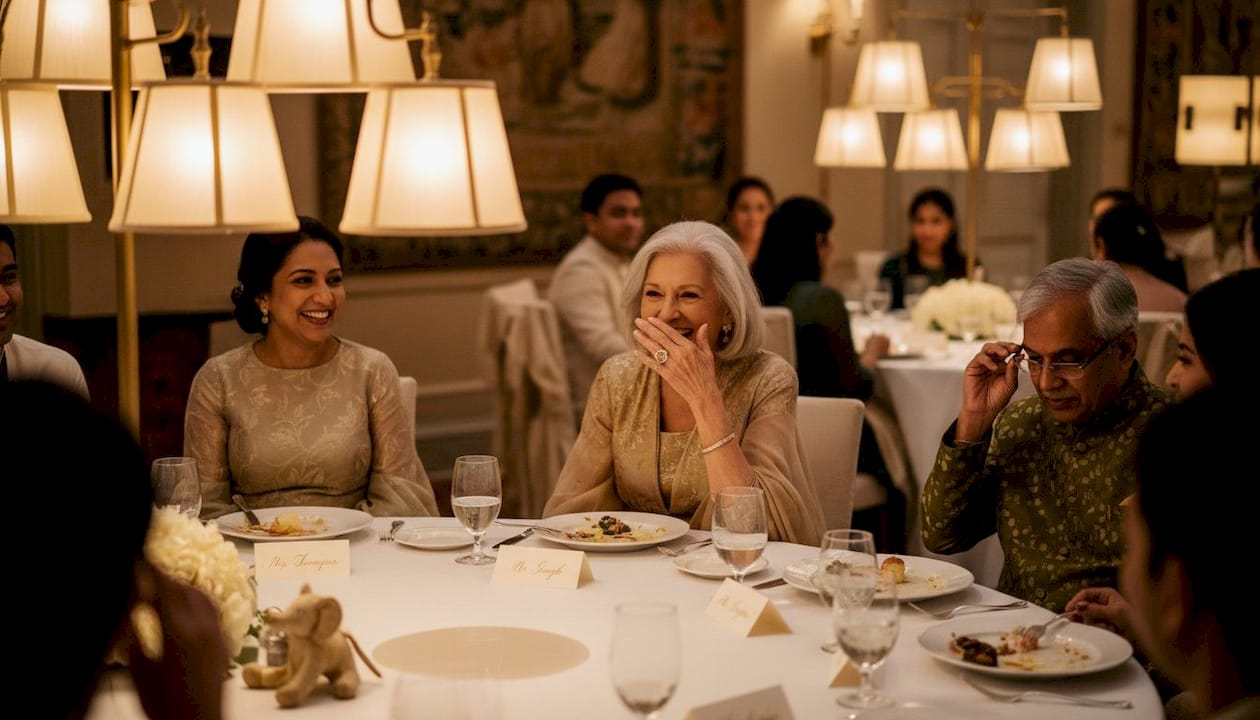
Focusing on family and guest expressions, such as parents tearing up or guests laughing, alongside macro details of henna and jewellery, and using multiple angles from wide to medium to tight creates a layered visual narrative that feels complete and cinematic.
Follow these steps to consistently capture authentic reactions:
- Blend into the environment — Arrive early, dress appropriately for the culture, and move quietly so guests stop noticing you
- Anticipate, do not chase — Position yourself where emotion is about to happen, not where it just occurred
- Work the periphery — The most expressive reactions often come from guests watching the couple, not from the couple themselves
- Use burst mode selectively — For fast-moving moments like baraat dancing or the exchange of garlands, burst mode captures the peak expression within a sequence
- Capture the details between moments — The intricate henna on a bride's palm, the sacred fire's glow, a grandmother's bangles: these details contextualise the larger story
Key detail shots that elevate an Asian wedding album:
- Macro henna and jewellery — Intricate, culturally specific, and visually stunning
- Sacred fire during pheras — Warm, atmospheric, and symbolically powerful
- Floral arrangements and ritual objects — Marigold garlands, diyas, and sindoor trays add visual richness
- Fabric and embroidery — The lehenga's embroidery or the sherwani's detailing deserve close attention
"The space between rituals is where the real story lives. A mother adjusting her daughter's dupatta, a groom stealing a quiet breath before the baraat begins: these are the images that endure."
For couples considering coverage options, the Essentials Investment package includes extended hours specifically designed to capture this full emotional arc, from intimate preparations through to the final celebrations.
Reviewing, selecting, and sharing your favourite candid images
Once the last dance is over and the cameras are off, thoughtful reviewing and selection ensures your favourite candid memories live on with the clarity and presence they deserve.
Photographers typically deliver 400 to 800 edited images selected from 1,500 to 3,000 raw captures, and 42% of couples wish they had booked a second shooter to increase the variety of perspectives. Understanding this process helps you collaborate more effectively with your photographer during the selection stage.
Here is a practical approach to reviewing your gallery:
- View the full gallery as a story first — Resist the urge to star individual images immediately; experience the narrative flow from beginning to end
- Group by event — Organise images by ceremony phase to identify which moments were captured most richly
- Prioritise emotion over technical perfection — A slightly soft image of your mother weeping during the pheras is more valuable than a technically flawless portrait where nobody is feeling anything
- Collaborate with your photographer — They will have strong instincts about which images carry the most narrative weight; trust their perspective
- Create a shortlist of 50 to 100 hero images — These become the foundation for your album, prints, and framed series
Pro Tip: When reviewing thousands of images, work in sessions of no longer than 45 minutes. Visual fatigue causes you to overlook genuinely moving images that you would otherwise treasure. Return to the gallery fresh the following day before making final selections.
Options for sharing and preserving your candid images beautifully:
- Bespoke printed albums — The most enduring format; high-quality paper and binding transform digital files into heirloom objects
- Framed series — A curated selection of five to seven images displayed together tells a complete story on your wall
- Digital gallery sharing — Password-protected online galleries allow family members across the world to experience the day
- Social media highlights — A thoughtfully curated selection of ten to fifteen images captures the spirit of the day for wider sharing
The Minimalist Investment package offers a refined approach for couples seeking focused, beautifully edited coverage across a single-day celebration.
Our perspective: Why true candid wedding photography is storytelling at its best
After years of photographing Asian weddings across London and beyond, we have noticed something consistent: the images that couples return to most often are never the ones that required the most direction. They are the ones where we stepped back, held our breath, and simply bore witness.
There is a tendency, particularly in wedding photography, to conflate control with quality. Couples sometimes arrive at their wedding day with an exhaustive shot list, a rigid timeline, and an anxiety that if something is not planned, it will not be captured. We understand that impulse completely. But the truth, as we have seen it play out across hundreds of ceremonies, is that the most extraordinary images emerge from trust, not control.
The documentary experience of a wedding like Nikesh and Sejal's illustrates this beautifully. The images that defined their album were not the ones we planned. They were the ones that arrived unexpectedly: a fleeting glance, a spontaneous embrace, a moment of quiet amid the celebration.
Our challenge to you is this: communicate your priorities clearly to your photographer, then release the need to manage every frame. Give your guests permission to be themselves. Let the rituals unfold at their own pace. The camera will find the moments worth keeping, but only if those moments are allowed to exist freely.
Candid wedding photography, at its finest, is not a technique. It is a philosophy of presence and attentiveness, and it produces images that feel less like photographs and more like memories you can hold in your hands.
Capture your candid moments with expert guidance
If you are ready to ensure your wedding memories are captured naturally and beautifully, partnering with experienced professionals transforms your photo story from a collection of images into a genuine visual legacy.
At Rashpal Photography, we specialise in the kind of attentive, culturally informed documentary storytelling that Asian weddings deserve. Our Essentials Investment package provides twelve hours of dedicated coverage, ensuring every phase of your celebration is documented with artistry and care. Browse our weddings portfolio to see how we approach candid storytelling across a range of ceremonies and traditions, and explore our detailed pricing to find the package that best reflects your vision. We would love to discuss your day and how we can tell your story.
Frequently asked questions
Which rituals create the most candid photo opportunities in Asian weddings?
Key rituals such as pheras, haldi, baraat, and sangeet typically provide the most spontaneous and emotionally rich moments, as each carries its own distinct energy and cultural significance.
What camera settings are ideal for capturing candid shots indoors?
A fast prime lens at f/1.4 to 2.8, shutter speed above 1/250s, and ISO 1600 to 6400 on a full-frame camera deliver reliable results in low-light ceremonies without disrupting the atmosphere.
How many candid photos should I expect to receive from my wedding?
Most couples receive 400 to 800 finished images carefully selected and edited from 1,500 to 3,000 raw captures taken throughout the day.
Is it necessary to have a second photographer for candid wedding photos?
While not essential, 42% of couples wish they had booked a second shooter, as an additional perspective significantly increases the variety and emotional depth of the final gallery, particularly across multi-event Asian weddings.
How can I make my guests more comfortable in front of the camera for candid shots?
Ask your photographer to blend naturally into events, use silent shooting mode, and engage warmly with guests throughout the day, creating an atmosphere where everyone feels relaxed and unobserved.
Recommended
- Capturing the beauty of an Asian wedding Rashpal Photography | Wedding Photographer Uxbridge, UK
- Traditional Asian Photography Scenes/Settings Rashpal Photography | Wedding Photographer Uxbridge, UK
- Top Asian Wedding Photography: Behind the Scenes Rashpal Photography | Wedding Photographer Uxbridge, UK
- Top Tips For Camera Shy Couples Rashpal Photography | Wedding Photographer Uxbridge, UK