TL;DR:
- An evening couple shoot uses golden hour, blue hour, and nightfall to create romantic portraits with cinematic lighting. Preparation involves selecting locations with visual variety and understanding light behavior at the chosen time, while prompts and natural interactions foster genuine intimacy. Weather and lighting changes are assets that can add mood and depth, making the session both dynamic and rewarding.
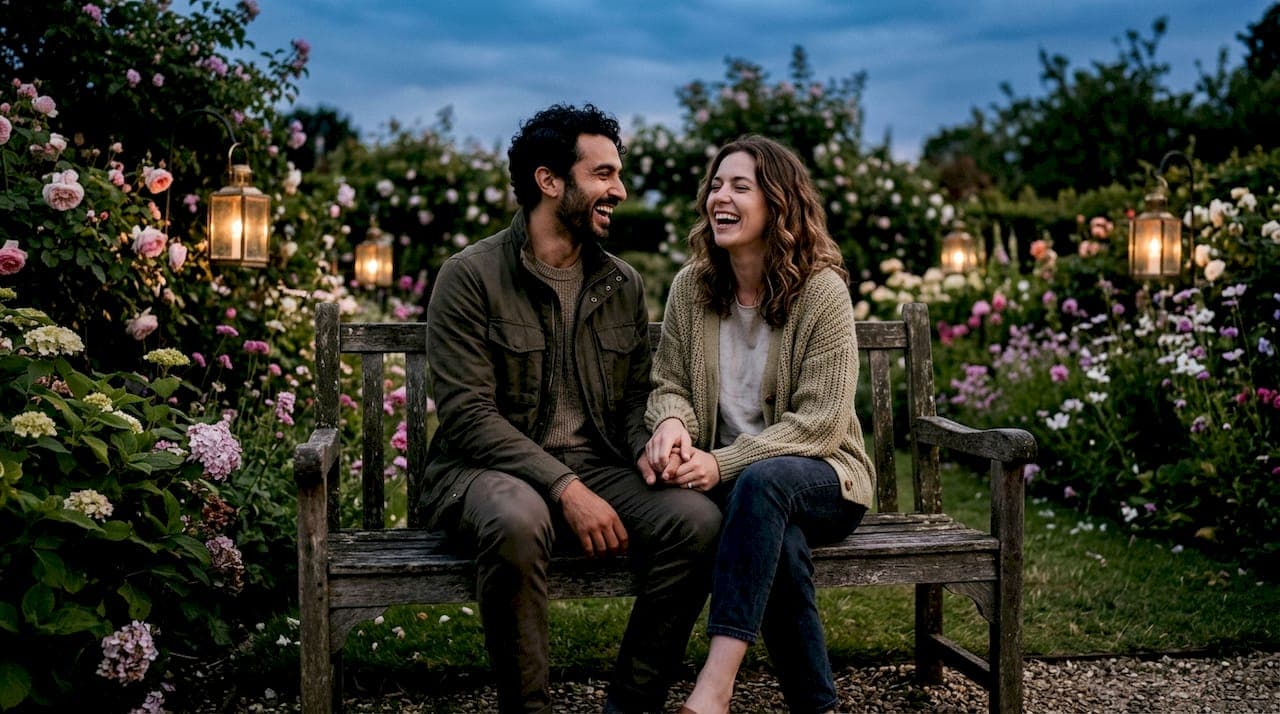
An evening couple shoot is defined as a pre-wedding photography session timed to harness the soft, directional light of golden hour, blue hour, and nightfall to create cinematic, romantic portraits. The right approach combines location scouting, lighting technique, posing prompts, and wardrobe choices into a single, coherent creative vision. Rashpal-photography has refined this process across countless sessions, blending photojournalistic instinct with guided direction to produce images that feel both timeless and deeply personal. This guide gives you the practical knowledge to walk into your session with confidence, knowing exactly what to expect and how to prepare.
What makes a great evening couple shoot guide?
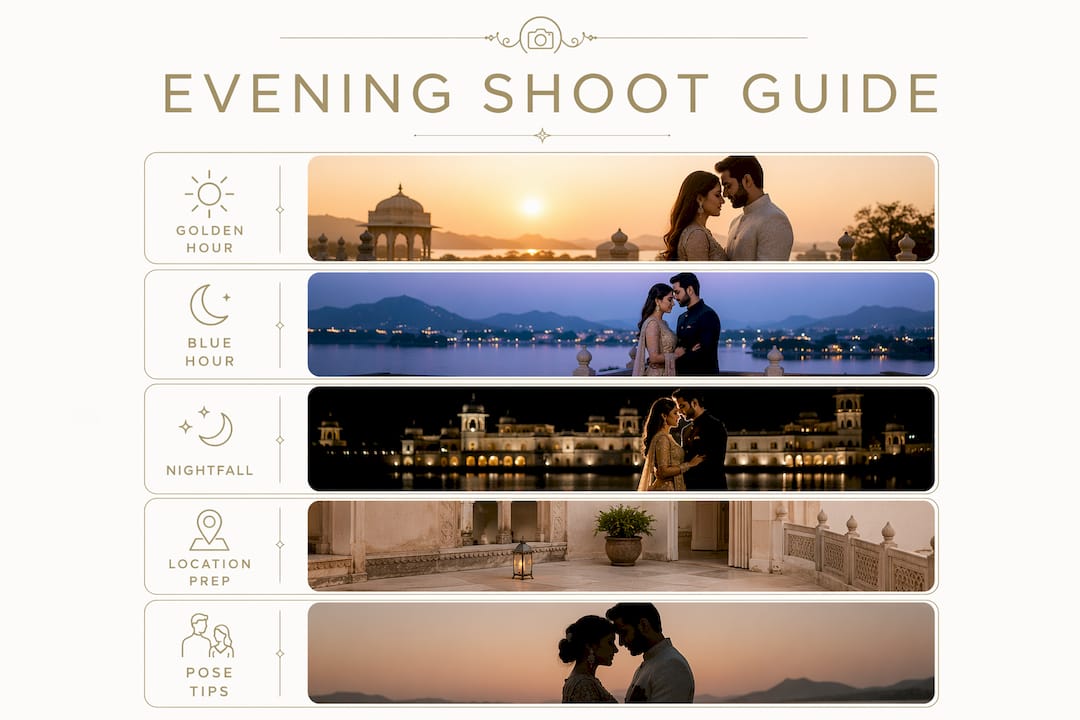
The most effective evening sessions are built on three pillars: light, location, and connection. Get all three right, and the resulting images carry an emotional weight that daytime portraits rarely achieve. The soft, warm tones of golden hour wrap subjects in flattering light, while the cooler, more mysterious quality of blue hour adds depth and mood. Nightfall, with its ambient city glow or candlelit warmth, creates an entirely different register of intimacy. Understanding how these three phases work gives you a clear framework for planning your session from start to finish.
Timing is the single most critical variable. Golden hour begins roughly 30–60 minutes before sunset, blue hour follows for approximately 20–30 minutes, and nightfall sets in after that. A well-planned session can move through all three phases within two hours, giving you a rich variety of looks from a single location. Rashpal-photography structures evening engagement sessions to capture this full arc, ensuring couples leave with images that span warmth, romance, and drama.
How do you choose the best location for an evening shoot?
Location selection defines the visual language of your entire session. Scout every site at the exact time of day you plan to shoot, because evening lighting changes dramatically within minutes and a spot that looks beautiful at noon can feel flat or harsh by 7PM.
The strongest locations offer multiple distinct backgrounds within easy walking distance. This variety allows you to shift the mood between frames without losing momentum. Consider these qualities when evaluating a site:
- Architectural interest: bridges, colonnades, ornate doorways, and lit facades create natural framing and visual depth.
- Natural light sources: riverside reflections, open skies, and tree canopies filter light beautifully during golden hour.
- Ambient artificial lighting: lanterns, café string lights, and city streetlamps add warmth and atmosphere once natural light fades.
- Textural contrast: cobblestones, brick walls, and manicured gardens provide visual richness that complements soft evening tones.
- Space for movement: wide open areas allow for walking shots and dynamic compositions that feel alive rather than staged.
Urban settings reward couples who embrace their energy. A riverside promenade at dusk, for example, offers golden reflections on the water, architectural backdrops, and the warm glow of city lights as evening deepens. Gardens and parkland work beautifully during golden hour but require supplementary lighting once blue hour arrives.
Pro Tip: Visit your chosen location on a weekday evening before your shoot date. Note where the sun sets relative to key backdrops, identify any artificial light sources that switch on at dusk, and time how long each phase of light lasts. This single reconnaissance visit can transform your session.
What lighting techniques create the most romantic evening photos?
Lighting is the craft at the heart of every memorable evening portrait. Backlighting during golden hour creates a luminous rim light effect that traces the outline of a couple's silhouettes, adding an ethereal, cinematic quality that front-lit images simply cannot replicate. Position your couple between the camera and the setting sun, expose for their faces, and the result is a portrait that glows.
As light levels drop, the instinct is to slow the shutter speed. Resist it. Raising the ISO rather than lowering shutter speed preserves sharpness and prevents motion blur, which becomes a real risk when couples are moving naturally. A fast prime lens, ideally at f/1.4 or f/2.0, gathers light efficiently and produces the creamy background separation that makes evening portraits feel so intimate.
The following techniques form the core toolkit for low-light couple photography:
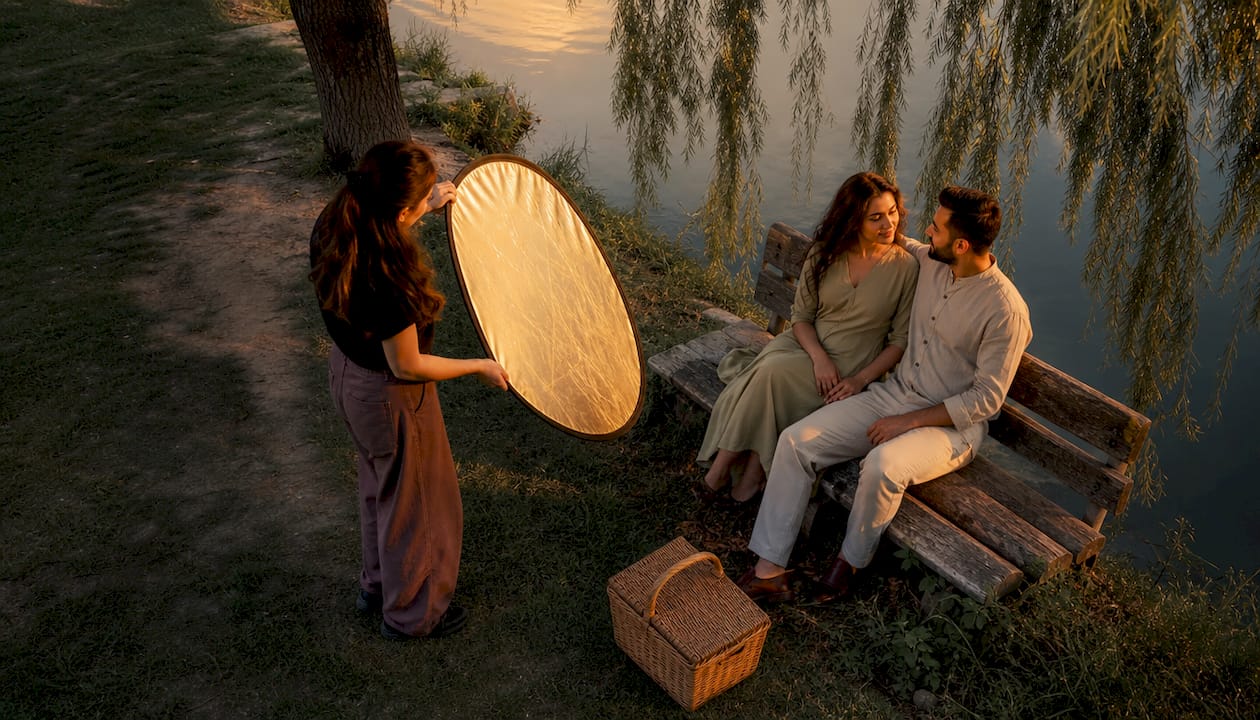
- Reflectors and white surfaces: bouncing available light onto your subjects lifts shadows and warms skin tones without introducing artificial colour casts.
- Flash and ambient balance: expose for the background first, then apply a low-power flash to illuminate the couple subtly, preserving the evening atmosphere rather than overpowering it.
- LED fairy lights: battery-powered fairy lights with diffusion maintain a warm colour temperature of approximately 2,200K–2,700K, replicating candlelight without sacrificing clarity.
- Embracing shadows: shadows add emotional depth and intimacy to evening images. Rather than eliminating them, use them to frame faces and create contrast that draws the eye.
Pro Tip: Carry a small, foldable reflector in silver on one side and gold on the other. The silver side lifts shadows cleanly during blue hour, while the gold side adds warmth during golden hour when you want to intensify that honeyed light.
How do you get natural, intimate poses during an evening session?
The most beautiful couple photographs are not posed. They are prompted. Prompts and natural interactions consistently produce more authentic, emotionally resonant images than static position commands. The difference between a stiff portrait and a genuinely moving one is almost always the quality of direction the photographer provides.
A structured warm-up period at the start of the session is non-negotiable. Spend the first 10–15 minutes walking, talking, and exploring the location together before any serious shooting begins. This dissolves self-consciousness and allows genuine chemistry to surface. For couples who feel nervous in front of a camera, the tips for camera-shy couples approach of focusing on interaction rather than performance makes an immediate difference.
The most effective prompts for evening sessions include:
- The slow walk: ask the couple to walk towards you, talking about something that made them laugh recently. The movement and conversation produce natural expressions and fluid body language.
- The whisper: one partner whispers something only the other can hear. The reaction, whether laughter, a smile, or a tender look, is always genuine.
- The slow hug: ask them to hold each other as if they have not seen each other in a week. This produces genuine physical closeness and relaxed body language.
- Forehead touch: ask them to close their eyes and rest their foreheads together. This creates an intimate, still moment that photographs beautifully in soft evening light.
- The look back: as they walk away, ask one partner to glance back over their shoulder. This simple movement creates a sense of narrative and spontaneity.
Pro Tip: Direct gently rather than rigidly. Give a prompt, step back, and let the moment develop for 10–15 seconds before shooting. The best frame rarely comes in the first second after direction.
For a deeper library of couple photoshoot poses, Rashpal-photography's 2026 inspiration guide offers a comprehensive visual reference.
What outfits work best for an evening couple shoot?
Wardrobe choices shape how your images feel before a single frame is captured. The colours and textures you wear interact directly with the quality of evening light, and the wrong choices can undermine even the most beautiful location and lighting setup.
Soft, muted tones photograph exceptionally well in warm evening light. Dusty rose, sage green, ivory, camel, and deep navy all absorb and reflect golden and blue hour tones with elegance. Coordinate your outfits tonally rather than matching exactly. Two people in identical colours can look uniform rather than romantic. Instead, choose a shared palette and let each outfit express individual personality within it.
Key wardrobe principles for evening sessions:
- Avoid busy patterns: fine stripes, small checks, and intricate prints create visual noise that distracts from faces and expressions.
- Layer for comfort: evening temperatures drop, and a well-chosen jacket, wrap, or shawl adds both warmth and visual interest to your images.
- Choose movement: fabrics that flow, such as chiffon, silk, or linen, respond beautifully to evening breezes and add a sense of life to portraits.
- Consider light-reflective details: subtle embellishment, metallic thread, or a delicate necklace catches evening light and adds dimension without overwhelming the frame.
- Prioritise comfort: if you feel restricted or self-conscious in an outfit, it will show. Wear something you feel genuinely confident in.
For editorial-inspired styling advice, the guide on styling wedding portraits offers detailed direction on creating a cohesive, photogenic look.
How do you handle common challenges during an evening shoot?
Evening sessions present specific practical challenges that, when anticipated, become manageable and even creatively rewarding. The most common issues are rapidly changing light, unexpected weather, and the risk of motion blur in low-light conditions.
Light moves fast during the golden and blue hour transition. A scene that looks perfect at 7:45PM can look entirely different by 8:00PM. Prioritise your most important shots for the earlier, warmer phase of light, and use the cooler blue hour for moodier, more atmospheric frames. Communicate this plan with your photographer in advance so the session flows without hesitation.
"Overcast skies act as a natural softbox, diffusing light evenly across subjects and eliminating harsh shadows. Rain creates reflective surfaces on pavements and roads that add a cinematic, romantic quality to evening images. Weather that feels inconvenient often produces the most memorable photographs."
Weather unpredictability is not a threat to a great session. Overcast conditions produce beautifully even, flattering light that is often superior to direct sun. Rain transforms urban locations with reflective puddles and a moody atmosphere that no studio can replicate. Embrace the conditions rather than fighting them.
Practical steps to protect your session:
- Confirm timing with your photographer at least 48 hours before the shoot to account for seasonal sunset variations.
- Arrive 20 minutes early to settle into the location and begin the warm-up period before the best light arrives.
- Bring a small umbrella that can double as a prop if rain arrives unexpectedly.
- Trust the process: the more relaxed you are, the more genuine your expressions will be. Your photographer's role is to handle the technical decisions so you can simply be present with each other.
Key takeaways
A successful evening couple shoot depends on timing your session across golden hour, blue hour, and nightfall while combining strong location choices, considered lighting technique, and natural posing prompts.
| Point | Details |
|---|---|
| Time your session carefully | Plan to move through golden hour, blue hour, and nightfall for maximum variety. |
| Scout locations in advance | Visit your site at the planned shoot time to understand how light behaves there. |
| Use backlighting and ISO | Backlight during golden hour for rim light; raise ISO rather than slowing the shutter as light fades. |
| Prompt, do not pose | Use interaction-based prompts like whispers and slow hugs to capture genuine emotion. |
| Dress for the light | Choose muted, tonal outfits in flowing fabrics that complement warm and cool evening tones. |
What I have learned from years of evening sessions
After photographing countless couples in the fading light of golden hour and the quiet glow of blue hour, the lesson that stays with me most is this: the technical decisions matter far less than the atmosphere you create. I can adjust ISO, position a reflector, and balance flash in seconds. What takes longer, and what produces the most extraordinary images, is the moment a couple forgets the camera is there.
I have shot sessions in driving rain on London bridges where the reflections on wet stone produced images more cinematic than anything a dry evening could have offered. I have watched couples who arrived nervous and stiff dissolve into genuine laughter within 15 minutes of walking and talking. The backlighting technique, where I position the couple against the setting sun and expose for their faces, never fails to produce something that feels almost painterly. That warm rim of light around two people who love each other is, to me, one of the most beautiful things a camera can record.
My honest advice is to trust your photographer's direction, arrive with an open mind about weather and light, and resist the urge to rehearse poses in the mirror beforehand. The images that couples treasure most are never the ones where they looked most "correct." They are the ones where they looked most themselves.
— Rashpal
Plan your evening session with Rashpal-photography
Rashpal-photography offers a range of engagement shoot packages designed specifically for couples who want to make the most of evening light, romantic locations, and the full arc from golden hour through to nightfall.
Each session is tailored to your chosen location, the season, and the mood you want to create, whether that is cinematic and dramatic or soft and intimate. Rashpal-photography's approach combines photojournalistic instinct with gentle direction, so you feel relaxed throughout and the images reflect who you genuinely are as a couple. For couples wanting extended coverage across both daytime and evening, the classic engagement package offers a full day of creative collaboration. Get in touch to discuss your vision and secure your preferred date.
FAQ
What is the best time for an evening couple shoot?
The ideal window begins 30–60 minutes before sunset for golden hour, followed by blue hour for approximately 20–30 minutes. Planning a two-hour session captures all three phases of evening light.
How do I avoid blurry photos in low light?
Raise your camera's ISO rather than lowering the shutter speed as light fades. Pairing a high ISO with a fast prime lens at f/1.4 or f/2.0 maintains sharpness without introducing motion blur.
What should we wear for an evening couple shoot?
Choose muted, tonal colours such as dusty rose, sage, ivory, or deep navy in flowing fabrics. Coordinate your outfits within a shared palette rather than matching exactly, and layer for warmth as temperatures drop.
Can we shoot in overcast or rainy weather?
Overcast skies produce even, flattering light that eliminates harsh shadows, and rain creates reflective surfaces that add a cinematic quality to urban locations. Both conditions are genuinely advantageous for romantic evening photography.
How do we look natural in front of the camera?
Focus on interacting with each other rather than performing for the lens. Prompts such as whispering, slow hugs, and walking while talking produce genuine expressions far more reliably than rehearsed poses.