TL;DR:
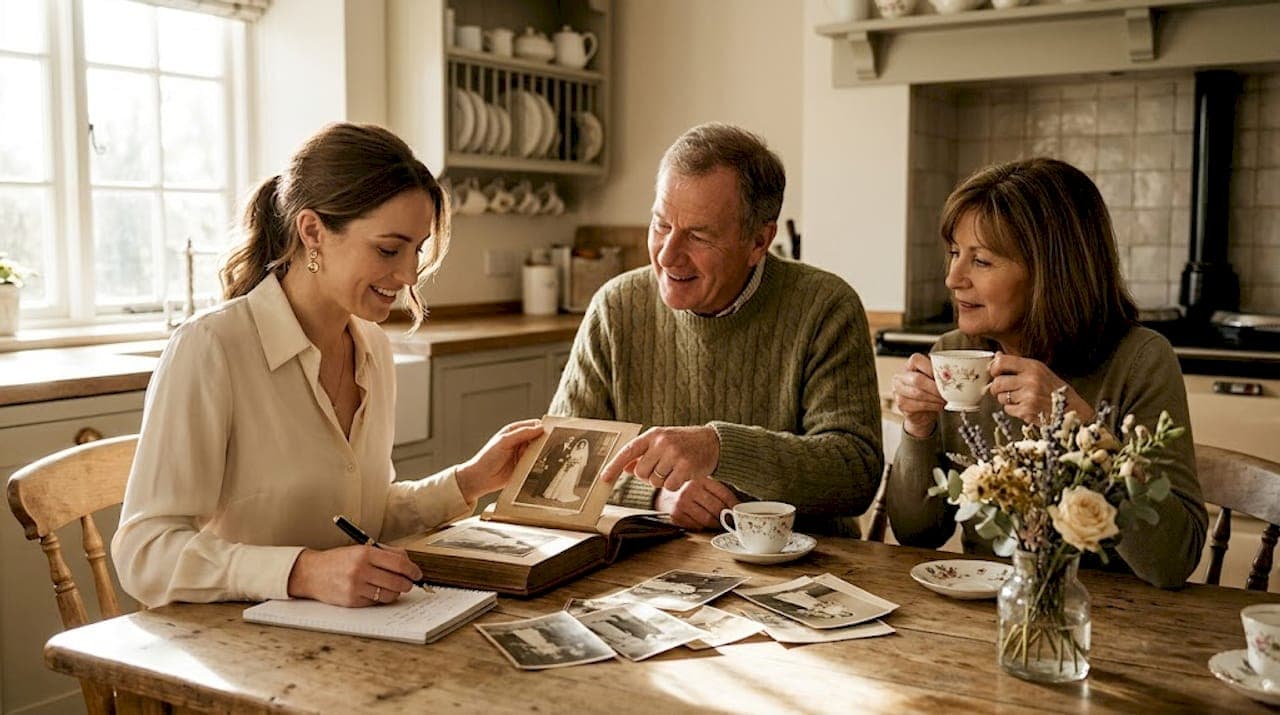
- Documenting wedding traditions preserves their cultural meaning and supports intergenerational storytelling.
- Combining written notes, audio recordings, and photographs creates the most comprehensive and lasting archive.
Wedding traditions do not preserve themselves. That is the quiet reality most families discover too late, when the elder who once led the ceremony has passed and no one can quite recall the sequence of the ritual, the meaning of a particular blessing, or the reason a specific flower was always woven into the bride's hair. Understanding why document wedding traditions matters is not merely a sentimental concern. It is a practical, urgent act of cultural stewardship that shapes the stories your children and grandchildren will be able to tell.
Table of Contents
- Key takeaways
- Why documenting wedding traditions matters
- The real cost of undocumented rituals
- How to document wedding traditions effectively
- Organising and sharing your wedding archive
- My perspective on why this work is irreplaceable
- Preserve your traditions with professional photography
- Common questions
Key takeaways
| Point | Details |
|---|---|
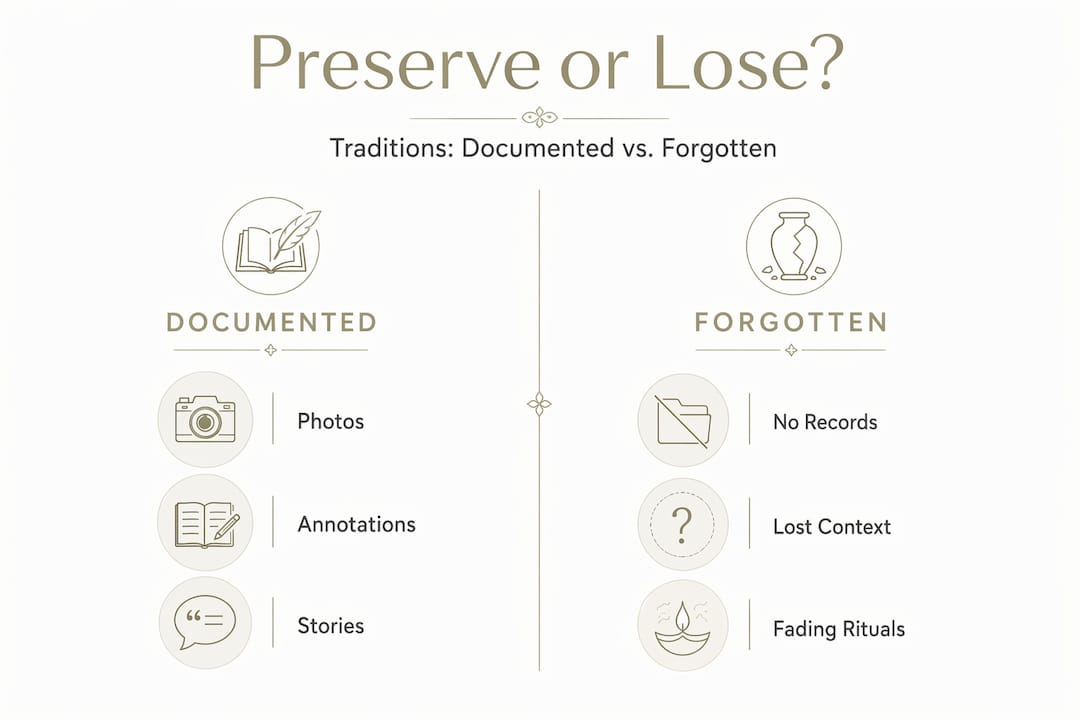
| Traditions fade without records | Cultural and social shifts can render inherited wedding practices forgotten within a single generation. |
| Intangible elements need capturing | Photographs alone cannot preserve the emotional meaning, social context, or spoken stories that give rituals their depth. |
| Multimedia works best | Combining written notes, audio recordings, and high-resolution photography creates the most complete archive. |
| Multicultural weddings need context | Brief written explanations for each ritual help guests and future family members understand and emotionally connect. |
| Organised digital archives last | Structured digital vaults with searchable records keep wedding traditions accessible and shareable across generations. |
Why documenting wedding traditions matters
Wedding traditions are far more than ceremony. They encompass the intricate rituals performed the night before a union, the particular way a veil is placed, the songs sung only by the women of a household, the symbolic foods shared at a reception table. Each of these carries layered meaning accumulated over generations.
"Photos cannot capture the layered cultural meanings a ritual carries; recording elders' explanations and emotional experiences is essential for authentic preservation."
The types of traditions worth recording span a wide spectrum:
- Rituals and ceremonies: pre-wedding blessings, binding rites, anointing practices, processional customs
- Attire and adornment: specific garments with symbolic significance, jewellery passed through lineage, the meaning of particular colours
- Music and song: traditional melodies, call-and-response chants, instruments reserved for ceremonial use
- Roles and responsibilities: who walks beside the bride, who ties the knot, whose blessing is sought first
- Symbolic objects: candles, flowers, grains, threads, and their particular ceremonial functions
These elements connect generations to a shared cultural identity in ways that transcend the individual couple. When a grandmother pins a particular brooch to her granddaughter's dress with shaking hands, that moment holds decades of meaning. But the meaning lives in the story behind the brooch, not the brooch itself. Documentation preserves this social context in ways that a photograph, however beautiful, simply cannot replicate alone.
The real cost of undocumented rituals
History offers sobering lessons about what happens when wedding customs go unrecorded. The traditional Chinese bridal lamentation, known as kuge, is one of the most striking examples. This ritual of sung weeping was practised widely until the 1960s, when political suppression under communism discouraged it. Younger brides stopped participating. Within a generation, an intricate, emotionally complex tradition that had defined the experience of marriage for countless women came to the edge of extinction.
What makes this loss particularly poignant is that the practice carried profound social function. It was not simply mourning. It was a structured, communal expression of transition, belonging, and feminine solidarity. None of that can be recovered from a photograph of a bride in traditional dress.
The importance of wedding traditions to cultural identity means that traditions actively documented are far more likely to survive generational and social disruption. When rituals exist only in living memory, they are one passing away from becoming legend, and one generation further from becoming entirely lost.
Documentation, in this sense, is a form of cultural safeguarding. It does not simply preserve what happened at one wedding. It preserves the why, the how, and the who taught whom, creating an unbroken chain of meaning that future generations can hold in their hands.
How to document wedding traditions effectively
The most complete records combine multiple formats, each capturing dimensions the others cannot. Here is a practical approach to documenting marriage customs at any stage of planning or reflection.
-
Record spoken testimony first. Sit with the elders in your family before the wedding and ask them to explain each tradition. The Oral History Society recommends capturing voice, emotion, and demonstration while storytellers are still able to share. Ask: what does this ritual mean? Who taught you? What should never be forgotten?
-
Write detailed annotations. For each tradition, create a short written entry covering its name (in the original language), its purpose, the correct sequence, who participates, and any variations your family has introduced over time.
-
Photograph with intention. Hire a photographer experienced in capturing cultural ceremonies to document ritual moments in real time, not just posed portraits. The details matter: the hands applying mehndi, the specific placement of ceremonial items, the expressions of elders watching.
-
Digitise physical artefacts carefully. Written invitations, hand-stitched textiles, and ceremonial programmes deserve high-resolution scanning. The recommended minimum is 300 dpi for text documents and 600 dpi for photographs. For intricate embroidery or inscribed jewellery, 1200 dpi or above preserves the detail necessary for meaning to be transmitted faithfully.
-
Create a multilingual glossary for multicultural weddings. If your ceremony blends traditions from more than one culture, brief written introductions to each ritual transform a potentially confusing ceremony into a rich shared experience. Research confirms that short, clear explanations help guests of diverse backgrounds feel genuinely included and emotionally engaged.
Pro Tip: When documenting multicultural wedding customs, resist the urge to include everything. Two or three carefully woven traditions with thoughtful introductions create far more emotional resonance than a crowded programme that leaves guests feeling adrift.
Understanding how to document wedding rituals well means knowing that the process begins before the wedding day, not after it. The stories need capturing while the people who hold them are present and willing to share.

Organising and sharing your wedding archive
Capturing the material is only the beginning. How you organise and share it determines whether the archive remains a private folder on a hard drive or becomes a living resource your family returns to across decades.
Consider these principles when building your family wedding archive:
- Use structured digital vaults. Platforms designed for family heritage allow you to create searchable, contextualised records. Digital vaults enable long-term preservation and sharing in ways that a folder of unsorted photographs simply cannot.
- Pair physical keepsakes with documentation. A grandmother's wedding sari hanging in a wardrobe is beautiful. The same sari accompanied by a recorded explanation of its origin, its significance, and the occasions on which it has been worn becomes a relic of extraordinary depth.
- Record gifting moments. When a piece of ceremonial jewellery is passed to the next generation, photograph the moment of transmission and record the recipient's name and the story behind the gift. This transforms an object into an ongoing narrative.
- Share during family gatherings. Wedding traditions find their truest life when they are spoken aloud, shown to children, and woven into the rhythm of family events rather than archived and forgotten.
Pro Tip: Create a short printed booklet from your written annotations and give it to immediate family members at your first anniversary. It prompts conversation, corrects inevitable misrememberings, and begins the process of intergenerational transmission before the day has faded from memory.
The comparison below shows the difference in longevity and accessibility between two common archiving approaches:
| Format | Longevity | Accessibility | Context preserved |
|---|---|---|---|
| Printed photo album | 20 to 50 years | Limited to those who hold it | Low without captions |
| Structured digital archive | 50 to 100+ years | Shareable globally | High with annotations |
The gap in context preservation is where most families lose the thread. A digital archive without annotations is only marginally better than a box of unlabelled prints.
My perspective on why this work is irreplaceable
I have been photographing Asian wedding ceremonies for many years now, and the pattern I witness most painfully is this: couples invest deeply in making their wedding day beautiful, and then allow the meaning of what they created to slowly dissolve because no one wrote it down.
What strikes me is that the photographs I take, however cinematic and carefully composed, are always a beginning rather than an end. They capture the surface of a moment with extraordinary fidelity. They do not capture why the bride's mother was weeping before the ceremony began, or what the words of the blessing translate to, or the fact that the groom's family has performed that particular ritual for five consecutive generations. That knowledge lives in people. And people, heartbreakingly, do not last forever.
In my experience, the families who feel the deepest connection to their wedding imagery are those who have paired visual records with written and spoken testimony. The photograph of the mehndi being applied means something quite different when accompanied by an audio recording of the grandmother explaining what each symbol represents and recounting when her mehndi was applied, decades earlier.
The benefits of recording weddings go far beyond sentiment. They create a documented legacy that strengthens family identity, honours those who came before, and gives future generations something real to hold. I have never met a couple who regretted going to this effort. I have met several who wished they had started sooner.
— Rashpal
Preserve your traditions with professional photography
Choosing the right photographer to help document your wedding traditions is one of the most considered decisions you can make. At Rashpal-photography, every ceremony is approached with a deep respect for cultural nuance and a commitment to capturing the moments that matter most, not just the obvious ones.
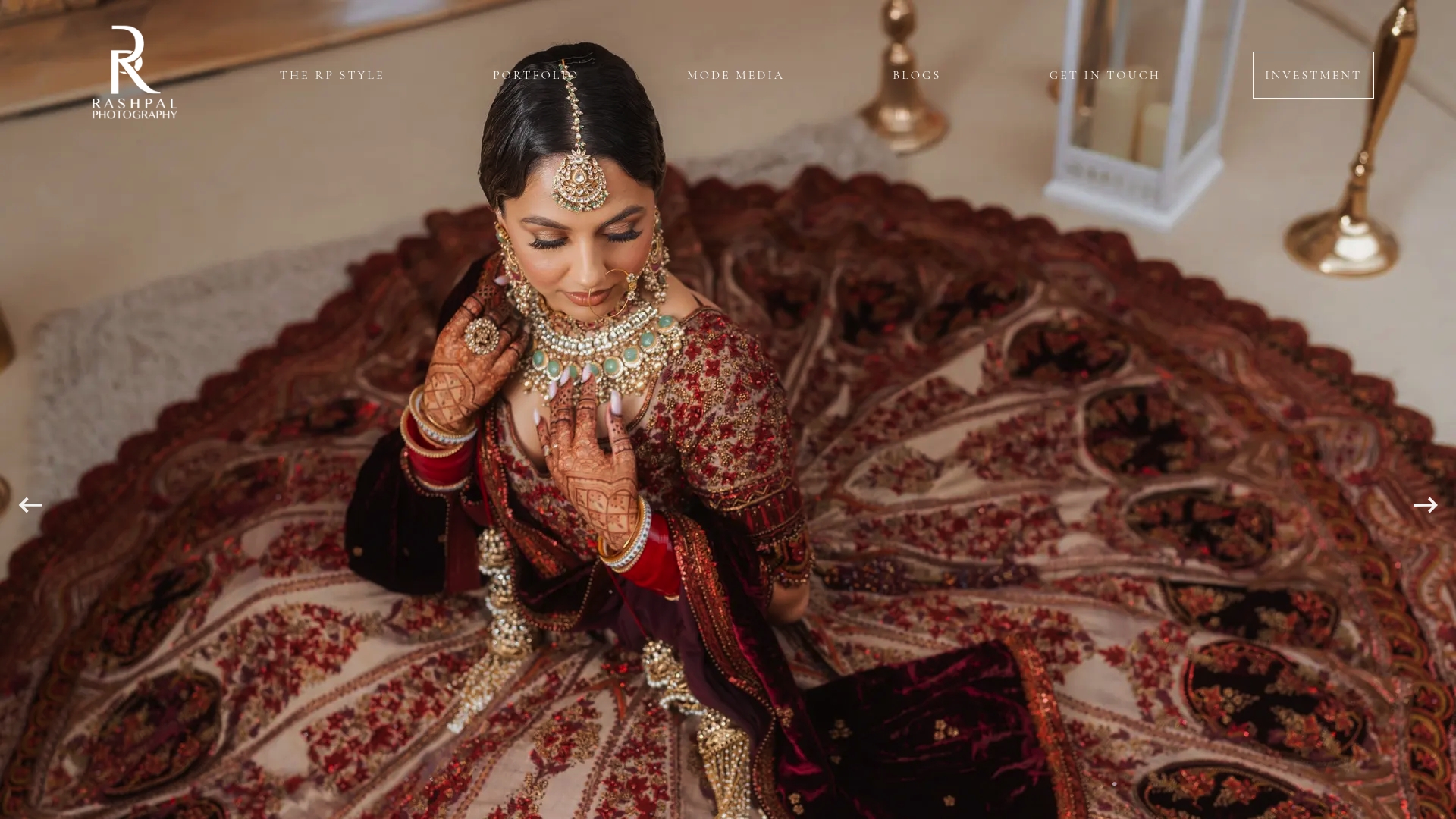
Whether your wedding blends two cultures or honours a single heritage with deep devotion, the Classic Investment package offers fourteen hours of coverage across your wedding day and an engagement shoot, giving you the breadth to document each ritual from arrival to completion. For those with a more focused ceremony, the Minimalist Investment delivers eight hours of artful, attentive coverage. Explore the full range of wedding photography services and find the package that honours your story.
Common questions
Why document wedding traditions rather than rely on memory?
Human memory is reconstructive and selective. Without documentation, specific ritual sequences, spoken blessings, and symbolic meanings are routinely misremembered or lost entirely within one to two generations. Written, photographic, and audio records provide a permanent and accurate foundation.
How do you document wedding rituals from multiple cultures?
Combine written annotations in each original language with short English explanations, video footage of the ritual in sequence, and spoken testimony from elders explaining the meaning. Providing brief programme introductions for each tradition also helps guests understand and connect with what they are witnessing.
What is the best format for preserving wedding documentation long-term?
Structured digital archives with searchable, annotated records offer the greatest longevity and accessibility. Scan physical documents at a minimum of 300 dpi for text and 600 dpi for photographs, with intricate items scanned at 1200 dpi or above for maximum fidelity.
When should you start documenting your wedding traditions?
Begin before the wedding day by interviewing elders and writing down ritual descriptions. Continue during the wedding with professional photography and video, and complete the archive within the first year while details remain vivid and participants are available for follow-up questions.
Can professional wedding photographers help with tradition documentation?
Yes. Photographers who specialise in cultural ceremonies are trained to anticipate ritual moments, capture symbolic details, and work respectfully within the ceremonial space. Their images form a foundational layer of your documentation archive when paired with written and audio records.
Recommended
- How to Save Money on Your Wedding Rashpal Photography | Wedding Photographer Uxbridge, UK
- Weddings Rashpal Photography | Wedding Photographer Uxbridge, UK
- Top Tips For Camera Shy Couples Rashpal Photography | Wedding Photographer Uxbridge, UK
- The Evolution Of Asian Wedding Dresses Rashpal Photography | Wedding Photographer Uxbridge, UK