TL;DR:
- Photography is not merely documentation; its artistry depends on the photographer's deliberate choices and creativity. Mastering visual elements like line, shape, color, and space helps guide viewers and evoke emotion, while intentionality in composition transforms snapshots into art. Balancing beauty and meaning creates powerful images that resonate deeply and establish a distinctive artistic voice.
There is a persistent belief that photography is simply documentation. Point a camera, press a button, capture reality. Yet what makes photography artistic has nothing to do with the camera and everything to do with the person behind it. The difference between a snapshot and a work of art lies in intention, in the deliberate orchestration of visual elements, and in the tension between beauty and meaning. This guide unpacks those forces with clarity, so you can begin seeing, and shooting, with genuine artistic purpose.
Table of Contents
- Key takeaways
- The visual elements that create artistry
- Intentionality: the artistic turning point
- Beauty and meaning: the defining tension
- Developing your unique artistic voice
- Applying artistic principles today
- My perspective on craft becoming art
- Bring your artistic vision to life
- FAQ
Key takeaways
| Point | Details |
|---|---|
| Mastery of visual elements | Line, shape, form, colour, value, space, and texture are the building blocks of every artistically compelling photograph. |
| Intentionality defines art | Deliberate framing, conscious edge control, and thoughtful inclusion or exclusion separate artistic photos from mere snapshots. |
| Beauty and meaning together | Images that hook the eye and reward deeper looking create the most lasting impression on viewers. |
| A personal aesthetic matters | Consistent style across composition, light, and editing makes your photography recognisable and artistically distinctive. |
| Constraints spark creativity | Limiting your gear or technique focuses your creative energy on what genuinely matters in a frame. |
The visual elements that create artistry
The foundation of any discussion about what makes photography artistic begins with the seven universal visual elements: line, shape, form, colour, value, space, and texture. These are not abstract concepts reserved for painters or architects. They are the precise tools through which a photographer guides a viewer's eye, communicates mood, and constructs meaning within a single frame.
Each element does a specific job. A strong diagonal line creates energy and movement, while a horizontal line suggests calm and stillness. Shape simplifies complex subjects into recognisable silhouettes that the brain processes instantly. Form, by contrast, introduces depth and volume through the interplay of light and shadow, transforming flat subjects into three-dimensional presences. Colour carries enormous emotional weight: warm tones evoke intimacy, cool tones suggest distance or contemplation.
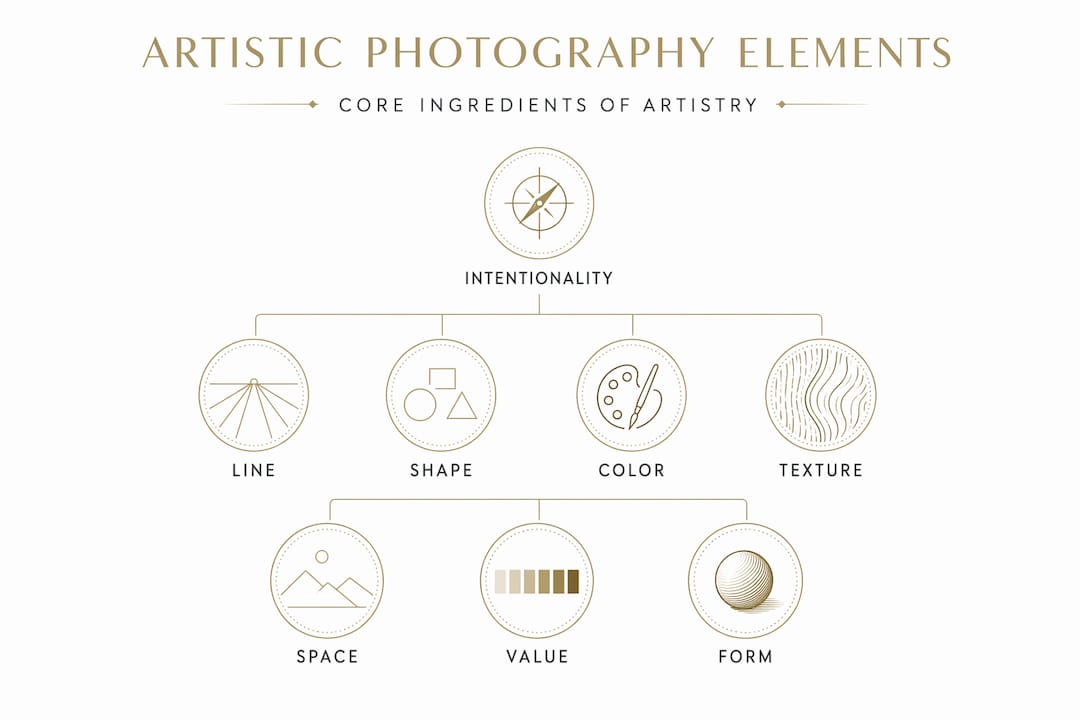
Value, the range from light to dark within an image, establishes contrast and directs attention. Space, both positive and negative, controls breathing room and emphasis. Texture invites a sensory response, making viewers almost feel the roughness of bark or the softness of fabric through a two-dimensional image.
| Element | What it does | Example effect |
|---|---|---|
| Line | Guides the eye through the frame | Curved road leading to a subject creates depth |
| Shape | Defines subjects through outline | Silhouette of a bride against a lit window |
| Form | Adds three-dimensionality via light | Side-lit face revealing bone structure |
| Colour | Carries emotional and tonal meaning | Golden hour warmth suggesting romance |
| Value | Controls contrast and visual focus | Deep shadows isolating a lit subject |
| Space | Creates emphasis through breathing room | Negative space amplifying a solitary figure |
| Texture | Invokes tactile response | Close-up of embroidered fabric or weathered stone |
Pro Tip: Before you raise your camera, scan the frame for at least three of these elements. The conscious act of identifying them shifts your mind from reactive to deliberate, which is precisely where artistic photography begins.
Intentionality: the artistic turning point
Technical knowledge alone does not make a photograph art. What separates the two is intentionality. Artistic photographers analyse edges, remove distractions, and position elements consciously before the shutter releases. Every inch of the frame is considered, not accepted by default.
Pre-visualisation is the practice of forming a clear mental image of your desired photograph before you shoot it. Ansel Adams described it as seeing the finished print in your mind whilst still standing before the scene. You can cultivate this skill through a few deliberate habits:
- Study the edges of your viewfinder before shooting. Anything at the border either supports the image or weakens it.
- Ask yourself what the image is about. If you cannot answer in one sentence, the composition likely lacks focus.
- Remove visual distractions. A bright object in the background, an unwanted shadow, or a cluttered foreground pulls the eye away from your subject.
- Decide consciously whether to follow or break compositional rules. The rule of thirds, leading lines, and negative space are reliable frameworks, but breaking them with clear intent can produce something genuinely arresting.
- Consider your vantage point. Changing your height by even half a metre can transform an ordinary scene into something cinematic.
The key word in all of this is conscious. Artistic photography demands that you make choices rather than accept what the camera finds. Intentional interpretation of reality elevates an image from documentation into expression.
Pro Tip: Try the "one-minute pause" before any shot you want to be proud of. Stand still, observe the light, assess the frame, and only then bring the camera to your eye. The discipline is uncomfortable at first and then becomes instinctive.
Beauty and meaning: the defining tension
What defines artistic photography is not purely its aesthetic appeal. A technically flawless image, exquisitely lit and composed, can still feel hollow. Equally, a photograph charged with emotional significance but visually chaotic can fail to hold the viewer long enough to communicate anything. Beauty hooks viewers, while meaning makes them engage deeply with the image's story or question.
Beauty, in photographic terms, is the immediate visual attraction that arrests attention. It is the quality of light falling across a subject's face, the elegant symmetry of an architectural space, the pleasing harmony of colour in a scene. It draws people in within the first second of viewing. Without it, an image struggles to command attention in a world saturated with visual content.
Meaning, by contrast, is what sustains engagement beyond that first glance. It is the narrative embedded in the image: the unspoken dialogue between subjects, the cultural symbolism encoded in a gesture, the emotional truth revealed in an unguarded moment. Meaning invites the viewer to return, to look again, and to carry something of the image away with them.
"The most enduring photographs hold beauty and meaning in a kind of productive tension, neither overwhelming the other." Beauty vs meaning in photography
The practical challenge is that these forces can pull against each other. Pursuing perfect aesthetic composition sometimes means missing the raw, spontaneous moment that carries emotional truth. Chasing meaning without attention to visual craft produces images that are sincere but difficult to look at. The interplay between beauty and meaning is complex and nuanced, and learning to hold both simultaneously is one of the most rewarding challenges in artistic photography. The photographers who master this balance create images that resonate across contexts, cultures, and decades.
Developing your unique artistic voice
Consistent aesthetic and disciplined style distinguish artistically serious photographers from casual ones. Your visual fingerprint is the sum of every choice you make repeatedly: how you compose, how you handle light, which colours you favour, and how you approach post-processing. It is what makes your work recognisable even without a watermark.
Building that fingerprint is a gradual, intentional process. Here is a practical framework for developing it:
- Audit your existing work honestly. Spread out your fifty or one hundred best images and look for recurring patterns. You will begin to see tendencies in your framing, your preferred light quality, your inclination towards close-up or environmental portraits. These instincts are the raw material of your aesthetic.
- Study photographers you admire, then move away from them. Understanding why a particular body of work moves you deepens your visual literacy. The danger is imitation. Use their work as a mirror that helps you understand your own sensibility, not as a template.
- Restrict your tools deliberately. Limiting creative tools to one focal length, one colour palette, or even one subject for an extended period forces creative discipline. Without the distraction of infinite options, you focus on light, form, and composition. Many of the most celebrated photographic series in history emerged from exactly this kind of constraint.
- Shoot a cohesive series, not isolated images. A portfolio of thematically or aesthetically connected work demonstrates artistic identity in a way that individual images cannot. A series forces you to make consistent decisions across multiple frames, which is precisely how a style solidifies.
- Return to your images after time has passed. The edit you make in the first hour after shooting is emotional. The edit you make three weeks later is considered. Distance reveals which images genuinely reflect your artistic intentions and which were flattering in the moment.
You can explore the Rashpal-photography portfolio for an example of how a cohesive visual identity across wedding and engagement work creates a recognisable, artistically distinctive body of images.
Applying artistic principles today
Understanding artistic principles intellectually and applying them in the field are two different skills. The gap closes only through deliberate, repeated practice. Responsive, handheld observation of spatial rhythm, shifting light, and structural geometry trains your eye faster than any amount of reading.
Here is a practical checklist to carry into your next shoot:
- Observe before you compose. Spend the first five minutes of any session without raising your camera. Watch how light moves, where shadows fall, how subjects interact with their environment.
- Work the frame actively. Move your feet before you change your lens. Shifting your physical position costs nothing and changes everything.
- Hunt for both beauty and meaning simultaneously. Ask: is this frame visually compelling? Is there a story or emotion here worth telling?
- Break one compositional rule on purpose. Deliberately place your subject at the edge of the frame, or use a cluttered background to create context rather than distraction. Notice whether the choice strengthens or weakens the image.
- Limit yourself to one lens for an entire session. The constraint is initially frustrating and ultimately liberating. Technical perfection matters far less than translating your spatial awareness into images that evoke genuine experience.
- Review your work with questions, not just judgements. Instead of asking "is this good?", ask "what is this image saying?" and "what would make a viewer look twice?"
Artistic growth in photography is cumulative. Each session sharpens your eye, refines your instincts, and deepens the dialogue between what you see and what you choose to capture.
My perspective on craft becoming art
I have spent years photographing some of the most visually rich cultural ceremonies in the world, and the question I return to most is not technical. It is: what am I actually trying to say with this frame?
In my experience, the photographers who struggle with artistry are not those who lack skill. They are those who have not yet decided what they care about. Once you know what moves you — light breaking through a coloured canopy, the restraint in a glance between two people, the regal stillness of traditional dress — the camera becomes a means of translation rather than mere recording.
What shifted my own practice most profoundly was learning to be slower than the scene, not faster. Observation before composition, as I learned from studying spatial photography techniques, reveals geometry and rhythm that rushing past a moment will never find. I also found that restricting myself to a single lens for an entire wedding reception forced me to solve problems with position and timing rather than focal length. The images from those sessions are consistently among the strongest I have made.
My honest view is this: the tension between beauty and meaning is not a problem to be solved. It is the engine of artistic photography. Lean too far towards perfect aesthetics and your work becomes decorative. Chase raw meaning at the expense of visual craft and you lose your audience before they can receive what you are offering. Hold both, imperfectly, and you will make photographs worth remembering.
— Rashpal
Bring your artistic vision to life
If reading this has clarified what you want from your photography, the next step is putting those principles into practice within a real, meaningful context. At Rashpal-photography, every wedding and engagement session is built around the precise principles explored here: deliberate composition, responsive observation, and the conscious pursuit of both beauty and meaning in every frame.
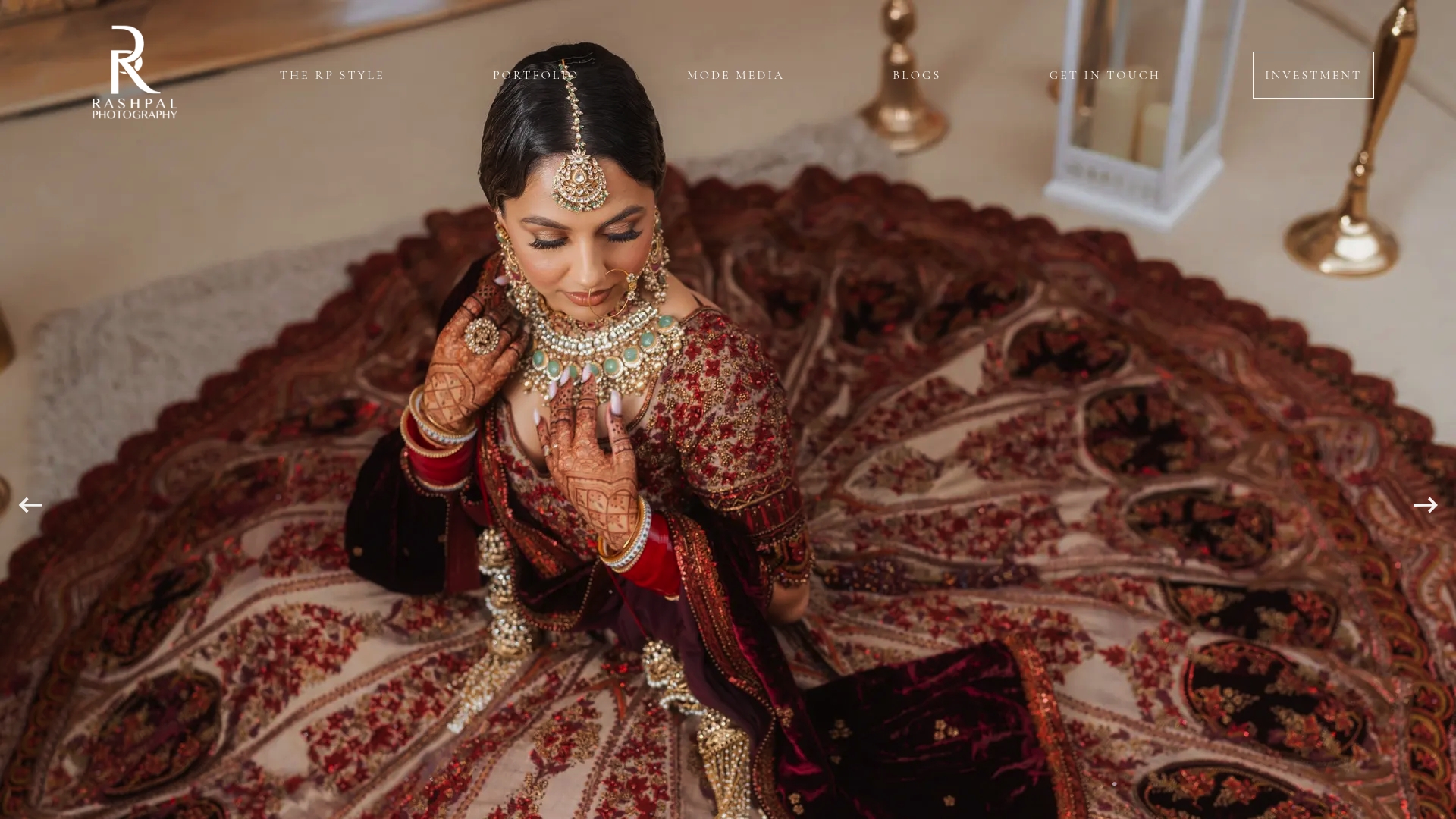
Whether you are a couple seeking imagery that feels timeless and genuinely personal, or a photography enthusiast wanting to see these principles in action across a professional body of work, the Rashpal-photography packages are designed with artistic integrity at their core. The Classic Investment package offers extended coverage with an engagement shoot, giving you the full experience of collaborative, artistically guided photography from preparation through to ceremony. You can also explore the Gold Engagement Shoot for a premium session that blends technical excellence with genuine artistic vision.
FAQ
What makes a photograph art rather than a snapshot?
A photograph becomes art through intentional choices: deliberate framing, conscious use of visual elements, and a clear purpose behind the image. Artistic photographers analyse every element in the frame rather than accepting what the camera happens to find.
Which elements of artistic photography matter most?
Line, shape, form, colour, value, space, and texture are the foundational elements of artistic photography. Mastering how these elements interact within a frame is what separates compelling images from forgettable ones.
How do you develop a personal artistic style in photography?
Auditing your portfolio regularly to identify recurring patterns in composition, light, and colour is the most reliable way to uncover and refine your visual identity. Shooting thematic series and limiting your gear both accelerate the process considerably.
Does artistic photography require expensive equipment?
No. Artistic quality in photography is determined by the photographer's intentional choices in vantage point, timing, and light, not by the cost of the camera. Constraints in gear often sharpen creative focus rather than diminish it.
How do beauty and meaning work together in artistic photography?
Beauty attracts the viewer's attention immediately, while meaning sustains their engagement over time. The most enduring photographs hold both in balance, making them visually compelling and emotionally resonant long after the first viewing.
Recommended
- All Pricing Rashpal Bhachu | Wedding Photographer Uxbridge, UK
- Top Tips For Camera Shy Couples Rashpal Photography | Wedding Photographer Uxbridge, UK
- How The Right Photography Can Make Or Break An Asian Wedding Rashpal Photography | Wedding Photographer Uxbridge, UK
- Common Mistakes Made By Amateur Wedding Photographers Rashpal Photography | Wedding Photographer Uxbridge, UK