TL;DR:
- Guided photography is a thoughtful, director-led style that uses gentle prompts instead of rigid poses to capture genuine emotions. It balances spontaneity with artistic control, making it ideal for engagement, wedding, and lifestyle photography. The technique relies on activity and interaction prompts to evoke authentic expressions and relaxation.
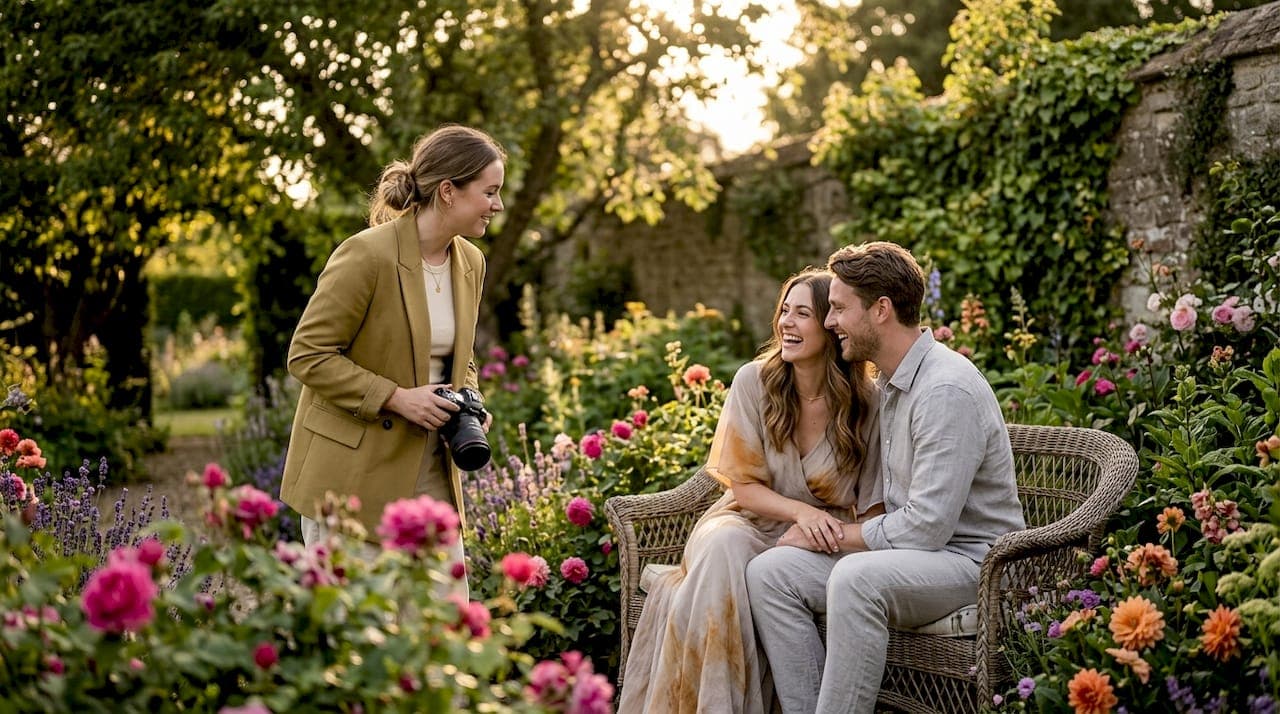
Most people assume guided photography means being told exactly where to stand, how to tilt your chin, and where to look. That assumption misses the point entirely. What is guided photography style, really? It is a thoughtful, director-led approach that uses gentle prompts rather than rigid instructions, coaxing genuine emotion from subjects without sacrificing spontaneity. This article unpacks the core principles behind the style, contrasts it with candid and posed photography, and offers practical techniques that photographers use to produce images that feel both artfully composed and beautifully real.
Table of Contents
- Key takeaways
- What is guided photography style: core principles
- Guided, candid, and posed: knowing the difference
- Guided photography techniques and effective prompts
- Where guided photography style is most powerful
- My honest view on guided photography
- Capture your story with Rashpal-photography
- FAQ
Key takeaways
| Point | Details |
|---|---|
| Guided photography defined | It uses gentle prompts and activities to direct subjects into authentic, natural-looking moments. |
| Prompts versus poses | Prompts shift a subject's attention away from the camera; poses dictate position and expression directly. |
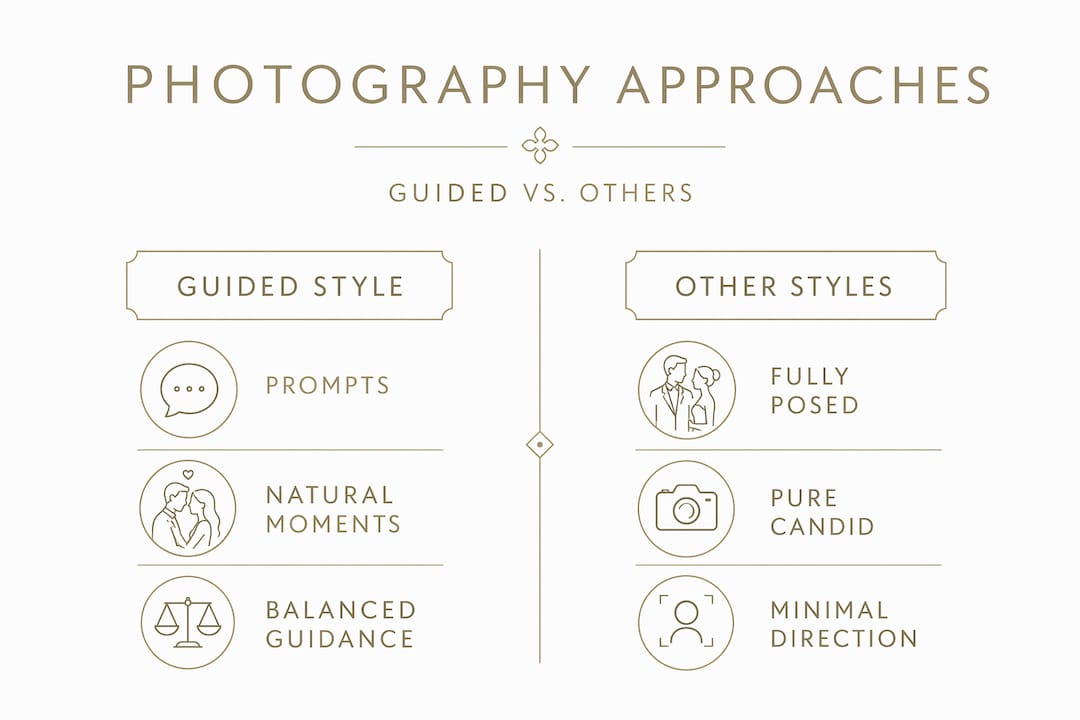
| Spectrum positioning | Guided photography sits between fully candid and fully posed, blending direction with spontaneity. |
| Why prompts work | By focusing subjects on an activity or interaction, prompts reduce self-consciousness and produce genuine expressions. |
| Best applications | This style excels in engagement, wedding, couple, and lifestyle photography where emotional truth matters most. |
What is guided photography style: core principles
The phrase "directed candid" is one of the clearest definitions available. Icon Photography School describes it as giving subjects actions to perform that create natural interactions, rather than telling them precisely where to stand or where to look. The photographer retains creative control over the scene while the subject remains free to respond authentically within that framework.
Understanding what defines guided photography begins with distinguishing between two related but fundamentally different instructions. A pose says: "Stand here, turn your body to the left, rest your hand on his shoulder, and smile." A prompt says: "Walk towards the light together and whisper something that made you laugh this morning." Both instructions create an image. Only one creates a genuine moment.
Research shows that prompts work by changing how subjects think, redirecting their attention from their own appearance towards an interaction or environment. This mental shift is the engine behind the style's effectiveness. When a person stops thinking about how they look, the face relaxes, the body loosens, and micro-expressions emerge that no amount of posing can manufacture.
The movement and connection formula is central to understanding guided photography style. The most effective prompts combine a physical action with an interpersonal cue. Movement alone, such as walking, adjusting a veil, or turning slowly, dissolves physical stiffness. Connection, whether laughter, a whispered secret, or a gentle touch, draws out emotional warmth. Together, they produce portraits that feel timeless and unscripted.
- A prompt is an activity or interaction cue, not a command
- Effective prompts redirect attention from the camera to a shared moment
- The "action plus connection" formula generates believable micro-expressions
- Guided style sits between full direction and pure documentary photography
Pro Tip: Start any session with a simple movement prompt before introducing emotion-based ones. Asking a couple to walk slowly towards you before prompting them to hold hands loosens stiffness naturally, so that later, more emotive prompts feel effortless rather than performed.
Guided, candid, and posed: knowing the difference
Photography sits on a spectrum, and understanding guided photography style becomes far richer when you see where it lives on that spectrum.
At one end is posed photography, which involves full direction: body position, hand placement, facial expression, and precise gaze are all dictated by the photographer. The result is controlled and can be breathtakingly elegant, but spontaneity is largely absent. Family portraits with formal arrangements and bridal party lineups are classic examples of posed work done well.
At the other end is candid photography, where the photographer captures moments as they unfold with minimal or no interference. The subject is unaware of, or unconcerned by, the camera. Documentary wedding photography leans heavily on this approach, producing images of raw, unguarded emotion.
Guided photography occupies the thoughtful middle ground. The photographer creates the conditions for a moment rather than either dictating it entirely or waiting passively for it to happen.
| Style | Direction level | Spontaneity | Best suited to |
|---|---|---|---|
| Posed | High | Low | Formal portraits, bridal groups |
| Guided | Moderate | High | Engagement shoots, couples, lifestyle |
| Candid | Low to none | Very high | Documentary, ceremony moments |
Photographers choose guided style when they need both artistic consistency and emotional authenticity. A posed image guarantees a specific result but can feel cold. A purely candid image guarantees spontaneity but may miss the light, the composition, or the moment the client most wants. Experienced photographers alternate between gentle direction for needed shots and letting moments unfold naturally for that unplanned magic.
The key insight is that genuine interaction cannot be faked. Prompting an activity creates authentic feeling because the subjects are genuinely engaged in something, not merely performing engagement.
Guided photography techniques and effective prompts
Learning how to use guided photography in practice means building a library of prompts that suit different subjects, settings, and emotional registers. The categories below illustrate how photographers structure their direction.
-
Movement prompts. Ask subjects to walk, spin slowly, or approach each other from a short distance. Movement loosens posture instantly and gives the photographer a flowing, dynamic moment to capture rather than a static arrangement.
-
Interaction prompts. "Whisper your favourite memory of each other" or "show me how you two actually say hello" invites subjects to interact meaningfully. The photographer steps back and photographs the unfolding exchange.
-
Environment prompts. "Look out towards the garden and take a breath" or "trace your fingers along that wall as you walk" draws subjects into their surroundings. The image feels grounded in place rather than planted in front of a backdrop.
-
Emotion prompts. These are saved for later in a session, once subjects are relaxed. "Tell her one thing she doesn't know you love about her" can produce an expression no pose ever could.
Starting with movement shifts like walking or adjusting clothing early in a session is a recognised technique. It loosens stiffness progressively, so that when deeper emotion-based prompts arrive, subjects respond with genuine warmth rather than self-conscious effort.
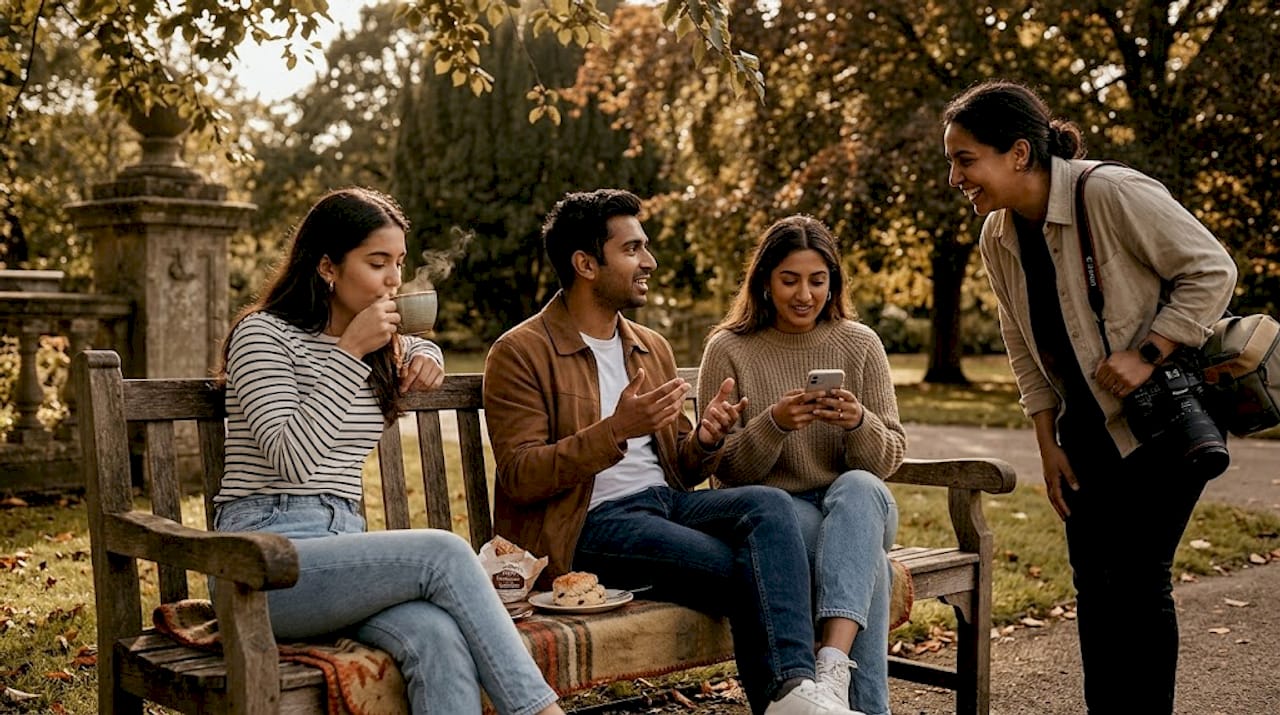
One of the most common pitfalls in guided photography is confusing prompts with commands. True prompts should create moments or activities that draw subjects' attention away from the camera entirely. "Laugh for me" is a command. "Tell him the most embarrassing thing that happened on your first date" is a prompt. The distinction is subtle but the results are worlds apart.
Pro Tip: Read the room before choosing your prompts. Camera-shy subjects respond better to movement and environment prompts first. Outgoing, expressive subjects can often handle interaction and emotion prompts from the start. Tailoring your approach to camera shy couples is one of the hallmarks of an experienced guided photographer.
Prompts that guide emotion without dictating expression help photographers produce natural-looking portraits even within a controlled environment. The subject feels free; the photographer remains in charge of light, framing, and timing.
Where guided photography style is most powerful
Understanding guided photography style is most rewarding when you see the contexts where it thrives.
Engagement and pre-wedding sessions are perhaps the most natural home for guided photography. Couples who have never been photographed professionally often arrive nervous and unsure of themselves. Gentle, playful prompts dissolve that anxiety quickly, producing images of warmth and connection rather than stiff, posed formality. An engagement shoot with guided techniques often doubles as a rehearsal for the wedding day itself, building trust and comfort between couple and photographer.
Wedding days demand a blend of all three styles. Ceremony moments call for pure candid instinct. Family formals require posing. But the golden hour portraits, the quiet moments between speeches, and the couple's first private moments together all benefit enormously from guided technique.
Lifestyle and family photography also relies heavily on this style. Parents and children photographed in the middle of a genuine activity, baking together, reading a story, chasing each other across a garden, produce images that families treasure for decades.
It is worth briefly noting that guided photography style is distinct from guided photography tours, which are multi-day travel experiences organised around shooting in specific locations. The style and the tour format share a word but serve entirely different purposes.
The style's core appeal, across all these applications, is its ability to balance artistic control with emotional spontaneity:
- It gives photographers compositional and tonal control without sacrificing feeling
- It gives subjects a sense of ease and freedom within a structured creative session
- It produces images that look both intentional and alive, which is a rare and prized quality
- It builds client confidence, making subjects feel guided rather than scrutinised
Mixing directed shots with observational moments achieves a portfolio that holds both control and surprise. The best photographers know when to speak and when to wait.
My honest view on guided photography
I have spent years working between the prompt and the shutter, and the lesson that stays with me is this: the technique only works when the photographer genuinely listens.
In my experience, the most beautifully guided sessions are not the ones where I had the cleverest prompts. They are the ones where I read the couple accurately and adjusted my approach in real time. One pair needs ten minutes of movement prompts before they forget I am there. Another arrives already laughing and open, and a single, well-timed prompt produces the image of the day within the first quarter of an hour.
What I find photographers get wrong most often is over-directing. They deliver prompt after prompt, barely pausing to observe, and the session starts to feel like an audition. The power of guided style comes from restraint as much as direction. You set the scene, you offer the prompt, and then you step back and let the moment arrive. I also think there is a misguided belief that this style is only for photojournalists or lifestyle photographers. At Rashpal-photography, we use it throughout our Asian wedding commissions, and the results it produces during the more intimate, in-between moments of a ceremony are some of the most cinematic images in our portfolio. If you have been thinking about posing for wedding photos and wondering how rigid it needs to feel, guided photography is your answer. It does not need to feel rigid at all.
— Rashpal
Capture your story with Rashpal-photography
At Rashpal-photography, every session is built around the guided approach described throughout this article. Whether you are planning a pre-wedding shoot or a full-day wedding commission, the prompts, the timing, and the sensitivity to your particular energy are woven into the process from the very first moment. Our engagement photography packages are designed specifically to introduce couples to this style in a relaxed, beautiful setting before the wedding day. For those seeking a complete experience that blends guided sessions with full-day documentary coverage, the Classic Investment package includes both an engagement shoot and comprehensive wedding-day coverage. Browse all pricing options to find the session that suits your vision, and reach out when you are ready to create something genuinely timeless.
FAQ
What is guided photography style in simple terms?
Guided photography style is a technique where the photographer uses gentle prompts and activities rather than rigid poses to direct subjects into natural, authentic moments. It sits between fully posed and fully candid photography on the creative spectrum.
How does guided photography differ from posed photography?
Posed photography dictates exact body position and expression, while guided photography offers subjects an activity or interaction that allows genuine emotion to emerge naturally within a composed frame.
What are the best prompts used in guided photography techniques?
Effective guided photography techniques include movement prompts such as walking together, interaction prompts like sharing a whispered memory, and emotion prompts such as describing what you admire most about your partner.
Is guided photography suitable for weddings?
Guided photography is particularly well suited to weddings, especially for couple portraits and intimate moments, because it produces images that feel emotionally true without the stiffness that purely posed sessions can create.
Can camera-shy people benefit from guided photography?
Guided photography is especially effective for camera-shy individuals because prompts redirect attention from the camera to an activity or interaction, reducing self-consciousness and producing natural, relaxed expressions.