TL;DR:
- Cinematic wedding films emphasize storytelling through narrative editing, authentic sound, and intentional pacing. They are typically short highlight videos that evoke emotion, unlike traditional lengthy recordings. Couples and filmmakers can enhance their experience by deliberate planning, clear communication, and trusting the observational filmmaking process.
A wedding film cinematic style is a filmmaking and editing philosophy that uses narrative structure, professional sound design, colour grading, and intentional pacing to transform raw footage into an emotionally immersive film. Known formally as cinematic wedding videography or wedding cinematography, this approach treats your wedding day as a story worth telling, not merely an event worth recording. Filmmakers such as Emma Wilson of Story Of Your Day and studios like Aleysa Kaufman Films have shaped the industry's understanding of what this style demands: observational instincts, editorial discipline, and a deep commitment to authentic emotion over staged performance.
How does cinematic wedding videography differ from traditional wedding videography?
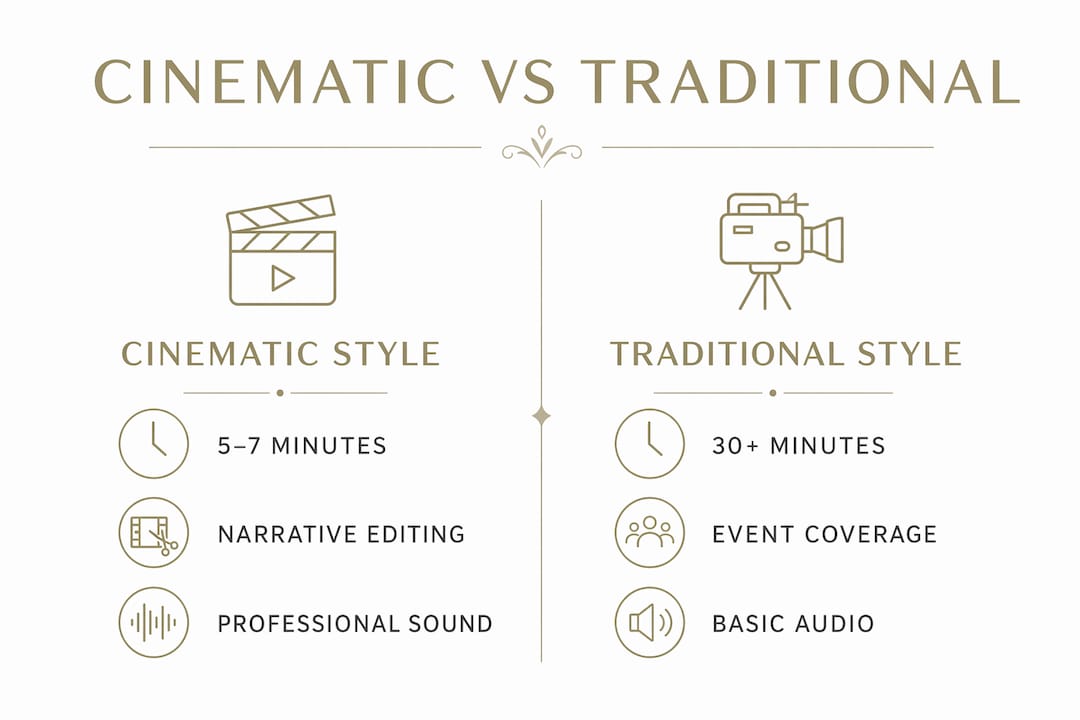
The distinction between cinematic and traditional wedding videography is fundamental, not merely cosmetic. Traditional wedding videography tends to offer chronological, minimally edited footage that can run anywhere from 30 minutes to two hours. Cinematic wedding films, by contrast, are shaped around emotional arcs, mood, and narrative rhythm rather than a simple timeline of events.
The most visible difference is length. Cinematic highlight films typically run 5–7 minutes, crafted to hold emotional attention from the first frame to the last. That brevity is a deliberate creative choice, not a limitation. A well-constructed 6-minute film, scored with care and edited with precision, carries far more emotional weight than an unedited two-hour recording.
| Feature | Cinematic style | Traditional style |
|---|---|---|
| Film length | 5–7 minutes (highlights) | 30 minutes to 2 hours |
| Editing approach | Narrative-driven, emotional arc | Chronological, minimal editing |
| Sound design | Professional audio, music scoring | Basic ambient sound |
| Colour grading | Consistent, film-like aesthetic | Minimal or none |
| Deliverables | Highlight film plus separate ceremony edit | Single long-form recording |
Beyond length, the two styles differ in their relationship to sound. Cinematic films weave real audio from vows, speeches, and ambient moments into a carefully scored soundscape. Traditional recordings often capture audio as it happens, without the post-production refinement that shapes emotional tone. The result is that cinematic films feel more like short films than home videos.
Key differences at a glance:
- Narrative structure: Cinematic films open with intention and build to an emotional peak.
- Music and pacing: Music is chosen to complement the couple's story, not applied as a generic overlay.
- Colour palette: A consistent grade gives the film a unified, artistic look throughout.
- Deliverables: Couples receive a highlight film and, separately, a full ceremony or speeches edit.
What techniques define the cinematic look and feel in wedding films?
Cinematic wedding films are defined more by intentional editing choices around pacing and sound than by on-camera visual effects or staging. The visual beauty you see on screen is the result of decisions made both on the day and in the editing suite.
Lighting and colour grading
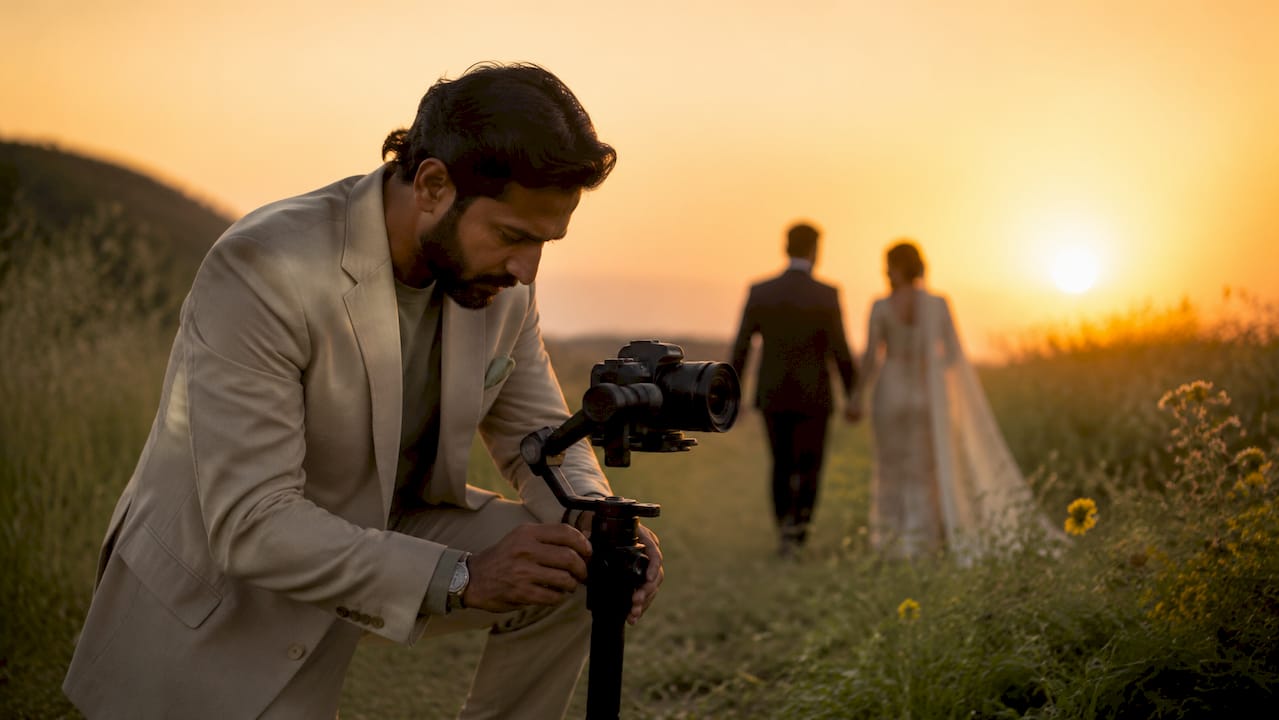
Intentional lighting strategies, particularly the use of natural golden hour light during portrait sessions, are central to the cinematic aesthetic. Golden hour, the soft, warm light in the hour before sunset, produces a quality of illumination that is almost impossible to replicate artificially. Scheduling dedicated portrait time during this window is one of the most impactful decisions a couple can make. Colour grading then refines the footage in post-production, applying a consistent, film-like palette that unifies every scene from the morning preparations to the evening reception.
Sound design and authentic audio
Professional sound capture is what separates a cinematic film from a beautiful slideshow. Real audio from vows, speeches, and quiet exchanges between loved ones creates an immediacy that no music track alone can achieve. Capturing authentic reactions and ambient sounds is central to the cinematic approach, grounding the visual narrative in genuine emotion. Filmmakers like Ana Cinta and Sándor of Vault Films insist on filming closely and naturally, never scripting moments, so that the audio captured is always real.
Framing, movement, and stabilisation
Cinematic framing uses composition principles drawn from narrative film: rule of thirds, leading lines, and deliberate use of foreground and background. Camera movement is controlled and purposeful, using gimbals and stabilisers to create fluid motion rather than the handheld shake associated with amateur footage. Every shot is chosen for what it contributes to the story, not simply to document that a moment occurred.
Pro Tip: Ask your filmmaker how they approach camera movement during the ceremony. A filmmaker who uses a gimbal or slider for key moments, rather than a fixed tripod throughout, will produce footage with a noticeably more cinematic quality.
How can couples and filmmakers apply cinematic techniques practically?
Achieving a cinematic wedding film requires planning from both sides of the camera. Couples who understand what the style demands will make better decisions during booking and on the day itself.
-
Schedule golden hour portraits deliberately. Build at least 30–45 minutes into your day for portraits during the golden hour window. This single decision has a greater impact on the visual quality of your film than almost any other.
-
Clarify your deliverables before signing. Misaligned expectations about cinematic films cause more disappointment than any other issue. Confirm whether your package includes a highlight film, a full ceremony edit, and a speeches edit as separate deliverables.
-
Communicate your storytelling priorities. Tell your filmmaker which moments matter most to you. Is it the first look? A particular speech? A cultural ritual? Cinematic filmmakers shape their edit around the moments you identify as meaningful.
-
Consider a coordinated photo and video team. Hiring a unified team for photography and videography produces consistent colour grading, lighting, and emotional tone across all your wedding media. Mismatched teams often create aesthetic friction that disrupts the narrative cohesion of the final films.
-
Trust the observational approach. Cinematic filmmakers work best when they are given space to observe rather than direct. Resist the urge to orchestrate moments for the camera. The most powerful cinematic sequences are almost always unscripted.
-
Resist expecting a long highlight film. A 5–7 minute highlight film is not a compromise. It is the format that best serves emotional engagement. Longer does not mean better in cinematic storytelling.
Pro Tip: If you are a filmmaker building your cinematic style, study the pacing of short documentary films rather than other wedding films. Directors like Errol Morris use silence and ambient sound as deliberately as music. That instinct translates directly to wedding cinematography.
What are the emotional and storytelling goals behind cinematic wedding films?
Cinematic wedding films are built around a single artistic intention: to let moments breathe. Where traditional recordings capture everything, cinematic films select and shape, choosing which moments carry the story forward and which are best left on the cutting room floor.
"Films are shaped for story, not trends. The goal is to capture real, unscripted moments with intention." — Emma Wilson, Story Of Your Day
The emotional architecture of a cinematic film mirrors that of a short narrative film. It opens with atmosphere, builds through the ceremony and personal exchanges, and resolves with the warmth of the celebration. Post-production decisions around pacing, sound design, music, and structure are what create this immersive emotional experience, not simply beautiful visuals.
The storytelling goals that define this approach include:
- Authenticity over performance: Genuine reactions, overheard conversations, and quiet glances carry more emotional truth than posed sequences.
- Pacing that reflects the wedding's tone: A relaxed, intimate ceremony calls for slower, more contemplative editing. A vibrant, joyful celebration demands energy and rhythm.
- Music as narrative support: The score is chosen to complement the couple's specific story, not applied as a generic emotional trigger.
- Personalised narrative arcs: Cinematic style welds documentary observational filming with post-production narrative shaping, avoiding template-driven storytelling in favour of films that feel specific to each couple.
The result, when executed with skill, is a film that a couple can watch ten years from their wedding day and feel the same emotional immediacy they felt in the room.
Key takeaways
Cinematic wedding videography is defined by narrative editing, professional sound design, and intentional pacing, not by visual effects or staging.
| Point | Details |
|---|---|
| Cinematic vs traditional length | Cinematic highlights run 5–7 minutes; traditional recordings can last 30 minutes to 2 hours. |
| Sound design is central | Real audio from vows and speeches creates emotional depth that music alone cannot achieve. |
| Golden hour scheduling matters | Dedicating 30–45 minutes to golden hour portraits significantly improves the visual quality of the film. |
| Clarify deliverables early | Confirm whether your package includes a highlight film, ceremony edit, and speeches edit as separate items. |
| Unified teams produce better results | Coordinated photo and video teams deliver consistent colour grading and narrative cohesion across all wedding media. |
Why cinematic wedding films have changed how I approach every booking
After years of working with couples across Asian weddings and cultural ceremonies, I have come to believe that the most important thing a cinematic film does is slow time down. Not literally, but emotionally. When a couple watches their highlight film for the first time, the best response is not "that looks beautiful." It is "I forgot that happened." That is the moment when you know the film has done its work.
The blend of documentary instinct and cinematic editorial control is where the real craft lives. I am not interested in staging moments or manufacturing emotion. My role on the day is to be calm, observant, and almost invisible, so that what I capture is genuinely real. The editorial decisions come later, in post-production, where the story is shaped from everything that was observed.
One misconception I encounter regularly is the belief that a longer film is a more valuable one. It is not. A 6-minute film that makes you cry is worth infinitely more than a 90-minute recording you watch once and never return to. Managing that expectation early, and explaining why brevity serves the story, is one of the most important conversations I have with couples during the booking process.
The cinematic approach to wedding films is not a trend. It is a commitment to treating your wedding day as something worth the same artistic care as any other form of storytelling. That commitment is what I bring to every wedding I photograph and film.
— Rashpal
Explore Rashpal-photography's cinematic wedding packages
If you are planning a wedding and want photography and videography that tells your story with genuine artistry, Rashpal-photography offers packages designed for exactly that. The Classic Investment package provides 14 hours of coverage across your wedding day, including an engagement shoot that builds the visual narrative before the wedding itself. For couples seeking extended coverage, the Essentials Investment offers 12 hours of coordinated photo and video storytelling. Every package is built around a unified creative approach, consistent colour grading, and a deep respect for the cultural and personal details that make your wedding uniquely yours. Get in touch to discuss a bespoke cinematic film for your day.
FAQ
What is cinematic wedding videography?
Cinematic wedding videography is a filmmaking approach that uses narrative editing, colour grading, professional sound design, and intentional pacing to create an emotionally immersive film from your wedding day footage. It prioritises storytelling and authentic emotion over chronological documentation.
How long is a cinematic wedding highlight film?
Cinematic highlight films typically run 5–7 minutes. This length is a deliberate creative choice designed to maintain emotional engagement throughout, with longer ceremony and speeches edits delivered separately.
Is cinematic style the same as documentary style?
Not exactly. Documentary style focuses on observational filming with minimal direction. Cinematic style combines that same observational approach with post-production narrative shaping, colour grading, and sound design to produce a more polished, emotionally structured film.
How do I choose between cinematic and traditional wedding videography?
Choose cinematic if you want a short, emotionally crafted film you will return to repeatedly. Choose traditional if you want a comprehensive chronological record of the full day. Many couples opt for both, receiving a cinematic highlight film alongside a full ceremony recording.
Why should I hire a unified photo and video team?
A coordinated team produces consistent colour grading, lighting, and emotional tone across all your wedding media. Separate teams with different aesthetic approaches often create visual and narrative inconsistencies that are difficult to resolve in post-production.
Recommended
- Essentials Investment (12 hours) Rashpal Bhachu | Rp photography Wedding Photographer, Uxbridge, UK
- Silver Engagement Shoot Rashpal Bhachu | Engagement shoots Wedding Photographer, Uxbridge, UK
- Classic Investment (14 Hours, 1 day, Engagement Shoot) Rashpal Bhachu | Rp photography Wedding Photographer, Uxbridge, UK
- Gold Engagement Shoot Rashpal Bhachu | Engagement shoots Wedding Photographer, Uxbridge, UK