
TL;DR:
- A photography portfolio is a strategic, curated collection that showcases your style, technical mastery, and brand identity to attract clients.
- Regularly updating and carefully sequencing your best images enhances credibility and effectively communicates your professional focus.
- Choosing the right format, whether digital or physical, aligns with your target market and strengthens your competitive edge.
A photography portfolio is far more than a random gallery of your favourite images. It is a carefully curated, strategic asset that communicates your style, technical mastery, and creative vision to the people who matter most: your future clients. Many aspiring photographers make the mistake of treating their portfolio as a personal archive, loading it with every shot they feel proud of. What a photography portfolio truly represents, however, is a visual résumé designed to convert viewers into clients. This guide will show you precisely what belongs in a portfolio, how to build it with purpose, and why getting the strategy right from the start makes all the difference.
Table of Contents
- Key takeaways
- What is a photography portfolio and why does it matter
- Curating and sequencing images for maximum impact
- Types of photography portfolios and formats
- Aligning your portfolio to your brand and business goals
- My perspective on portfolios and creative growth
- Discover how Rashpal Photography brings portfolios to life
- FAQ
Key takeaways
| Point | Details |
|---|---|
| A portfolio is a strategic tool | Treat it as a marketing asset that converts viewers into clients, not a personal image archive. |
| Curation is everything | Select only your top 5%–10% of images to maintain focus, quality, and brand clarity. |
| Format matters | Choose between digital, physical, or hybrid presentation based on your niche and target clients. |
| Alignment builds credibility | Every image you include should reflect the work you want to be hired for. |
| Regular updates are non-negotiable | Refreshing your portfolio every 3–12 months keeps it relevant to your current skill level and goals. |
What is a photography portfolio and why does it matter
At its core, a photography portfolio is a curated, strategic collection that functions as your visual résumé. It is not the full breadth of your work. It is the finest, most intentional selection of it. Think of it as the difference between a wardrobe and the outfit you choose for an important occasion: every piece must be deliberate, considered, and precisely right for the moment.
The importance of a photography portfolio cannot be overstated. It performs several critical functions simultaneously.
- Marketing tool: Your portfolio introduces you to potential clients before you ever exchange a single word.
- Conversion asset: It exists to reassure prospective clients that you can consistently deliver the quality and mood they are seeking.
- Brand statement: It signals your aesthetic identity and positions you clearly within your market.
- Business filter: The right portfolio attracts your ideal clients and naturally discourages those who are not a good fit.
In terms of scale, a professional portfolio typically contains 15 to 25 images overall, or 8 to 12 images per genre if you work across multiple disciplines. The discipline here is striking. Fewer, stronger images will always outperform a bloated gallery that dilutes your best work.
The primary purpose of a portfolio is to convert viewers into clients by proving consistent delivery. This means it should be reviewed and refreshed every 3 to 12 months, in line with your evolving skill level and your shifting target market. A portfolio that served you well two years ago may now misrepresent who you are as a photographer.
Curating and sequencing images for maximum impact
Understanding what to include in a portfolio is one thing. Knowing how to arrange it is another matter entirely, and this is where many photographers stumble.
The foundation of effective curation is ruthlessness. Only your top 5%–10% of images should make the final selection. A practical workflow involves reviewing your images within days of a shoot while your emotional distance is still fresh, then completing thorough editing within a week. The discipline of separating your personal attachment from your professional judgement is one of the most powerful skills you can develop.
Sequencing is the art of arranging those selected images to tell a story. Think of it less like arranging photographs and more like composing music. Sequencing should balance impact and allow breathing space, using motifs, consistent lighting tones, and recurring visual elements to create unity throughout. Portfolio sequencing follows principles similar to a three-act narrative: an arresting opening that draws the viewer in, a development section that demonstrates range and depth, and an emotional payoff at the close that lingers in the memory.
Here is a practical approach to sequencing your images effectively:
- Open with your single strongest image. This sets the tonal and stylistic promise for everything that follows.
- Vary your image types. Alternate between wide environmental shots, detail close-ups, and intimate portraiture to demonstrate both range and commercial versatility.
- Maintain a consistent visual mood. Colour grading, tonal palette, and light quality should feel unified, even when subjects differ.
- Place your second strongest image near the end. You want the viewer to leave on a high note, with your work resonating after they have closed the page.
- Remove anything that does not serve the narrative. Curation is a business decision, not an emotional archive.
One of the most common pitfalls is including technically competent images that simply do not align with the clients you are targeting. The photography portfolio for beginners especially suffers from this, as newer photographers tend to include anything they consider technically successful rather than asking whether each image speaks to their ideal client.
Pro Tip: Consistent style elements and motifs act like a photographer's sonic signature. When a viewer scrolls through your portfolio and everything feels distinctly, unmistakably yours, you have achieved something most photographers never do.
Types of photography portfolios and formats
The medium through which you present your work shapes how it is received, and choosing the right format is as considered a decision as any other creative choice.
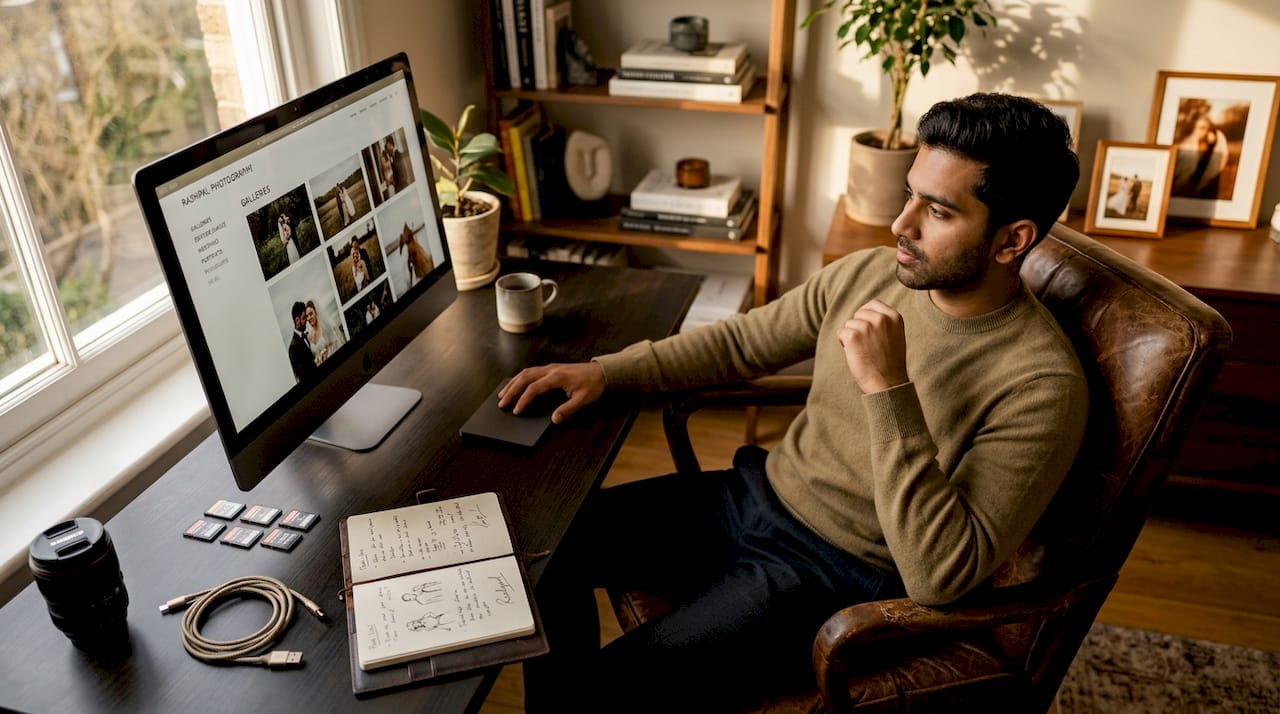
Digital portfolios are the current standard for most photographers. A well-designed website or curated online gallery offers global accessibility, ease of updating, and the ability to attract clients from anywhere. Digital presentation allows you to control the viewing experience through layout, typography, and sequencing. For most photographers starting out, this is the place to begin.
Physical print portfolios represent a different kind of power. Print portfolios create a tactile, memorable experience that digital screens simply cannot replicate. Holding a beautifully crafted portfolio box, turning pages of museum-quality prints, creates a sensory engagement that slows the viewer down and deepens their connection to the work. In high-end markets, particularly within fine art, fashion, or luxury wedding photography, a physical portfolio can be a decisive competitive advantage. Paper quality, print finish, and packaging all contribute to the impression you leave behind.
The table below offers a clear comparison of the most common portfolio formats:
| Format | Cost | Best for | Key advantage |
|---|---|---|---|
| Personal website | Low to medium | All photographers | Accessible, updatable, global reach |
| Online gallery platform | Low | Beginners and hobbyists | Quick to set up, professional appearance |
| Printed portfolio book | Medium to high | High-end and luxury markets | Tactile, memorable, premium positioning |
| Portfolio box with prints | High | Fine art, fashion, editorial | Maximum sensory impact and exclusivity |
Many photographers working at a premium level adopt a hybrid approach: a polished digital presence for initial discovery, supported by a physical portfolio for in-person meetings and consultations. This combination addresses both how clients find you and how they remember you.
Aligning your portfolio to your brand and business goals
A photography portfolio that is not aligned to your business goals is simply decoration. The most striking images in the world will not attract the right clients if they do not speak to the specific problems those clients need solving.
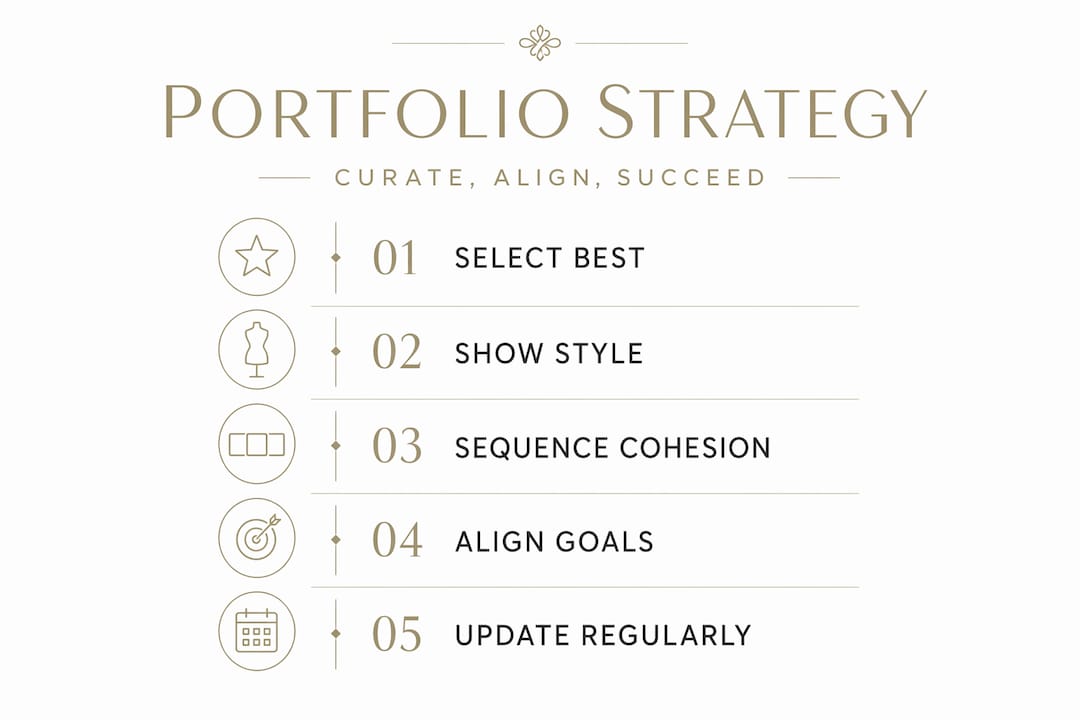
The first step is identifying your target market with precision. Ask yourself: who do I want to hire me, and what do they need to see in order to trust me with their most important moments? Once you have that clarity, every image in your portfolio should be chosen to answer that question. Reviewing how to avoid common portfolio mistakes can sharpen your thinking here considerably.
A strong, brand-aligned portfolio demonstrates the following qualities:
- Repeatability: Clients want evidence that you can consistently produce a specific mood and style, not just that you have occasionally captured something beautiful.
- Reliability: Clients compare on value and business fit rather than price alone, when your positioning is clear and confident.
- Narrative depth: Including short project stories or contextual captions alongside select images communicates the thought and intention behind your work, not just the technical result.
- Commercial maturity: A portfolio that shows you understand your client's experience, not just your own creative preferences, signals a photographer who is ready for serious commissions.
Measure your portfolio's effectiveness by tracking how many of your enquiries are coming from clients who align with your ideal work. If you are attracting clients whose briefs differ significantly from what your portfolio shows, that is a signal to reassess your curation.
Pro Tip: The most effective portfolio improvement you can make is creating new, stronger work. Rearranging existing images will only take you so far. Investing in personal or collaborative shoots designed to fill specific gaps in your portfolio is time spent on your business, not away from it.
One final thought on strategy: overloading your portfolio with unrelated work, even if each individual image is beautiful, tells potential clients that you lack focus. Specificity builds confidence, and confidence closes bookings.
My perspective on portfolios and creative growth
I have reviewed hundreds of photographers' portfolios over the years, and the most common reason they fail has nothing to do with talent. It is the absence of strategy.
I see portfolios filled with technically exceptional images that have no relationship to each other. The photographer has documented everything they find beautiful, and the result is a gallery that communicates no coherent identity at all. A client looking at that portfolio cannot picture what their own shoot would look and feel like. That uncertainty is the moment you lose them.
What changed my own approach was understanding that a portfolio should answer client problems rather than simply display personal taste. The moment I started editing my work through the lens of my ideal client's needs, my enquiries became more targeted, and the conversations I was having were warmer and more aligned from the very first message.
I also learned to stop over-editing my existing work and start creating new images instead. Creating new, stronger work is more effective for portfolio growth than any amount of rearranging what you already have. If there is a mood, a setting, or a style of moment that your portfolio does not yet capture, plan a shoot to fill that gap.
The creative passion that draws us to photography is precious. But pairing that passion with professional discipline, with the willingness to edit ruthlessly and think strategically, is what separates photographers who love their work from photographers who build lasting careers from it.
— Rashpal
Discover how Rashpal Photography brings portfolios to life
If you have been inspired to think more strategically about your own visual storytelling, seeing the principles above applied at a professional level can be enormously clarifying.
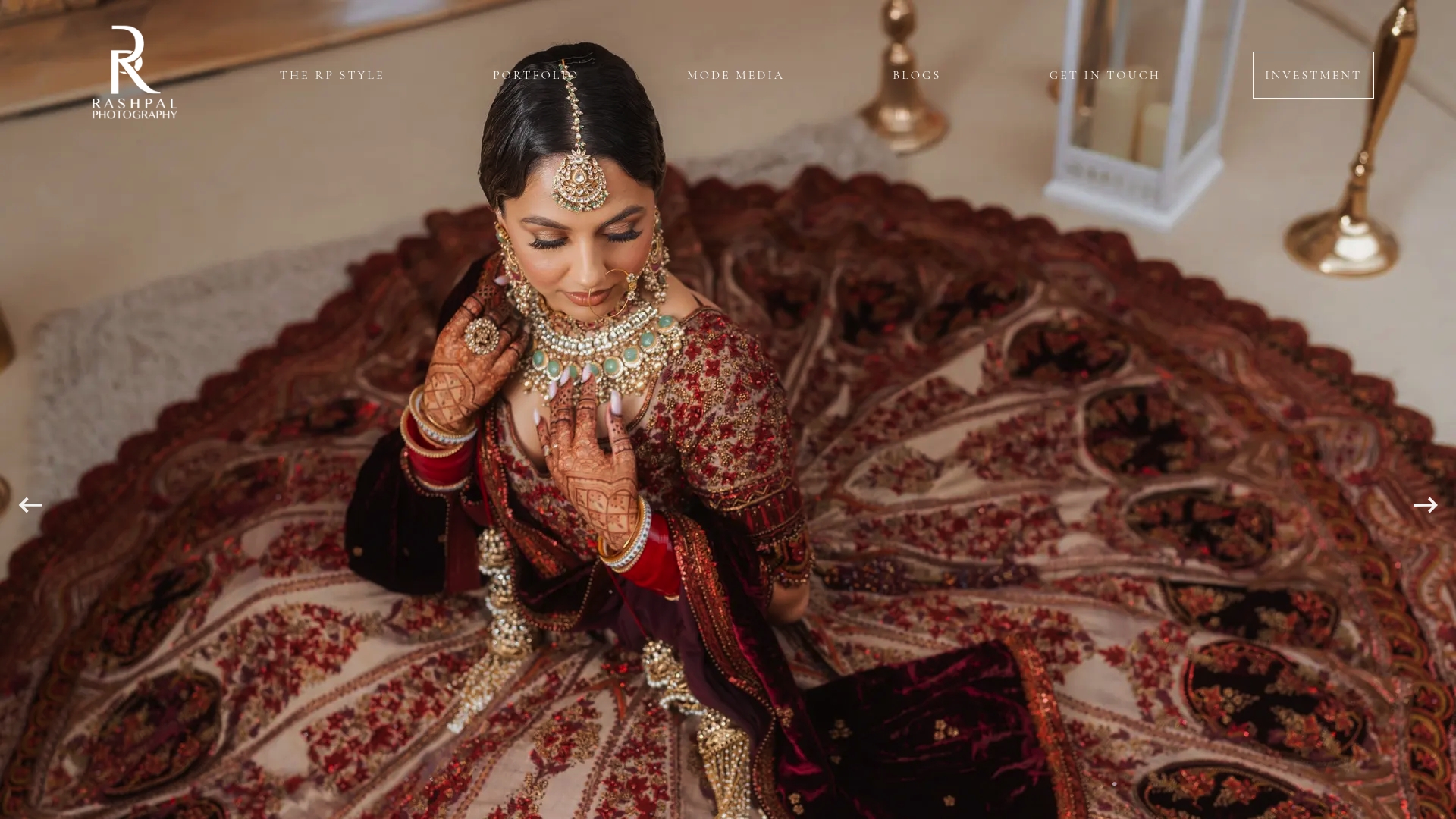
At Rashpal-photography, every image in the portfolio has been curated with the same intentionality this article describes: chosen not merely for beauty, but for the emotional certainty it gives to couples considering their wedding photography. You can see how sequencing, consistent mood, and narrative depth work together in a portfolio built for a specific, high-end audience. If you are also interested in how professional engagement shoots can help build your own body of work, the Classic Investment package offers a full-day, 14-hour experience that generates rich, varied imagery across multiple settings. A portfolio built from that kind of intentional, extended work tells a far richer story than any collection of isolated moments.
FAQ
What is a photography portfolio?
A photography portfolio is a curated selection of your best images, designed to communicate your style, skill, and creative identity to potential clients or employers. It functions as a visual résumé and marketing tool, typically containing 15 to 25 carefully chosen photographs.
How many images should a photography portfolio contain?
Most professional portfolios contain between 15 and 25 images overall, or 8 to 12 images per genre. Quality and cohesion matter far more than volume, and a smaller, sharper selection will always be more persuasive than a large, unfocused gallery.
How often should I update my photography portfolio?
Portfolios should be reviewed and updated every 3 to 12 months to reflect your current skill level and target market. Work that no longer represents your best or most relevant photography should be removed, even if you remain personally fond of it.
What should I include in a photography portfolio?
Include only images that reflect the style and quality of work you want to be hired for, demonstrating a consistent mood, technical excellence, and emotional storytelling. Variety in composition such as wide shots, details, and portraits shows range, while a unified visual tone demonstrates brand maturity.
Why is a portfolio essential for photographers?
A portfolio reduces the perceived risk a client feels when hiring you for the first time. It proves that you can consistently deliver a specific standard and style, which is ultimately what converts an interested enquiry into a confirmed booking.