TL;DR:
- Destination weddings are extended, multi-day celebrations held away from the couple's hometown, involving travel and curated guest lists. Planning requires early organization, cultural awareness, and choosing a photographer experienced in multi-location storytelling to capture the event's full emotional depth. Success depends on balancing location, guest experience, and photography, with thorough preparation ensuring memorable, authentic images.
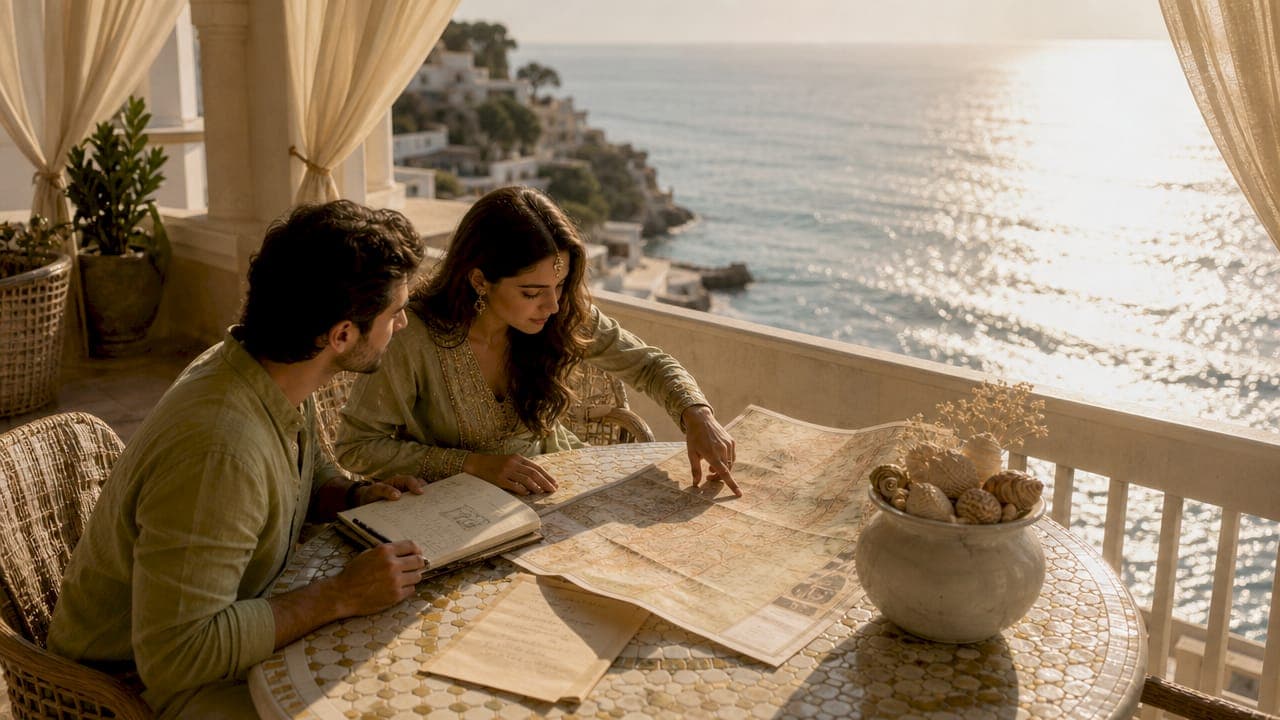
Destination weddings are defined as wedding ceremonies and celebrations held in a location away from the couple's hometown, typically requiring travel and accommodation for both the couple and their guests. Unlike a traditional local ceremony, a destination wedding transforms the occasion into an immersive, multi-day festival where the setting itself becomes part of the story. These celebrations commonly span two to four days, weaving together arrival dinners, the ceremony, and farewell brunches into a single, unforgettable experience. For couples drawn to the idea of exchanging vows against the backdrop of a Tuscan hillside, a Rajasthani palace, or a sun-drenched Caribbean shore, understanding the full scope of what is involved is the first step towards planning with confidence.
What are destination weddings and how do they differ from traditional ones?
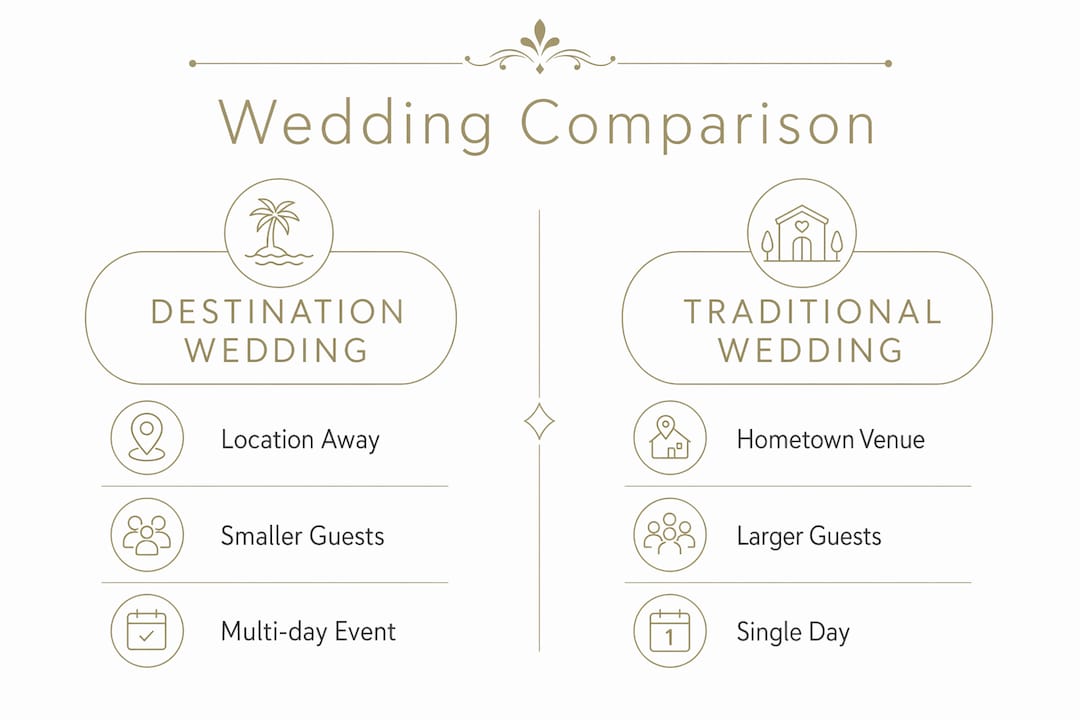
Destination weddings differ from traditional hometown weddings in four fundamental ways: location, duration, guest list size, and the overall atmosphere they create. A local wedding is typically a single-day event held near the couple's residence, whereas a destination wedding asks guests to travel, often internationally, and commit to a longer stay. This shift in expectation changes the entire character of the celebration.
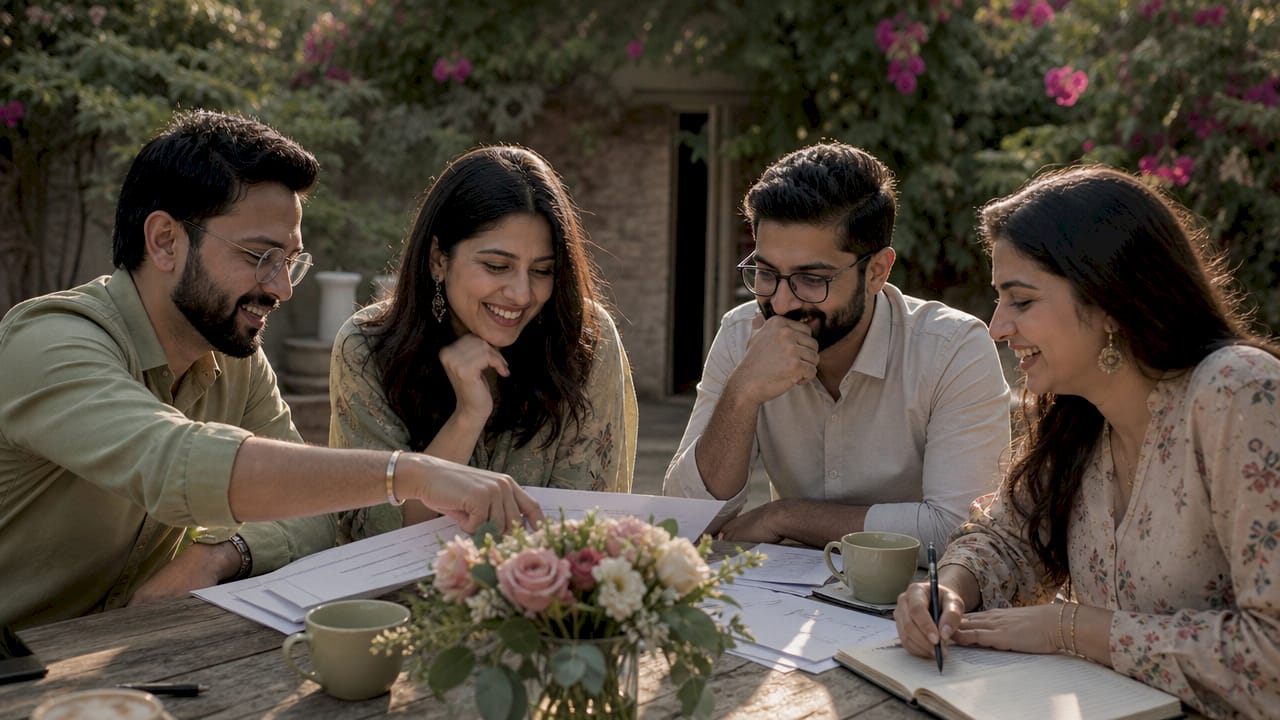
Guest lists tend to be smaller and more deliberately curated, typically ranging from 50 to 250 guests. This is not a limitation but a refinement. Every person present has made a conscious choice to be there, which lends the gathering an intimacy and emotional depth that larger local weddings rarely achieve.
The table below summarises the key distinctions at a glance.
| Feature | Destination wedding | Traditional wedding |
|---|---|---|
| Location | Away from home, often abroad | Couple's hometown or nearby |
| Duration | Two to four days | Single day |
| Guest list | Curated, 50 to 250 guests | Often 150 to 400 guests |
| Atmosphere | Immersive, travel-focused | Familiar, community-centred |
| Accommodation | Guests stay on-site or nearby | Guests travel home same day |
The role of the location itself is perhaps the most significant distinction. In a destination wedding, the venue is not merely a backdrop. It is an active participant in the narrative, shaping the mood, the photography, and the memories that guests carry home. A riad in Marrakech, a clifftop chapel in Santorini, or a forest retreat in the Scottish Highlands each tells a completely different story, and that story belongs entirely to you.
How to plan a destination wedding: key steps and considerations
Planning a destination wedding requires a structured approach that accounts for logistics most local weddings never encounter. The process begins at least 12 to 18 months before the event, giving you sufficient time to navigate legal requirements, secure vendors, and allow guests to arrange travel.
The core planning stages are as follows.
- Choose your location with intention. The destination should reflect something meaningful about you as a couple, whether that is a place you have visited together, a cultural heritage you wish to honour, or simply a setting whose beauty moves you. Accessibility for guests matters equally. A remote mountain retreat is breathtaking, but if elderly relatives cannot reach it, the intimacy you sought becomes an obstacle.
- Build a realistic budget. The average cost of a destination wedding sits at approximately £28,000 to £35,000, covering venue fees, travel, accommodation, and catering. This figure excludes photography, florals, and entertainment, which can add considerably to the total.
- Curate your guest list early. Because travel is involved, you must send save-the-date notices at least 12 months in advance. Some guests will be unable to attend regardless of how much they wish to. Accept this gracefully and plan your numbers accordingly.
- Coordinate local vendors with care. Florists, caterers, hair and make-up artists, and officiants in your chosen destination will have their own working styles, languages, and expectations. A local wedding planner or coordinator is not a luxury here. It is a practical necessity.
- Understand the legal requirements. Marriage laws vary significantly between countries. Some destinations require residency periods before a legal ceremony can take place. Many couples choose to complete the legal paperwork at home and hold a symbolic ceremony abroad, which simplifies the process considerably.
- Design a multi-day itinerary. A well-structured programme might include a welcome dinner on the first evening, the ceremony and reception on the second day, and a relaxed farewell brunch on the morning of departure. Each element should feel considered rather than rushed.
Pro Tip: Book your accommodation block early and negotiate a group rate with the venue or a nearby hotel. Guests appreciate the convenience of staying together, and it creates a natural social atmosphere throughout the extended celebration.
What makes destination wedding photography different?
Destination wedding photography is defined as the specialised practice of documenting a wedding across multiple days and locations, where the setting functions as a storytelling character rather than a passive background. This distinction matters enormously when you are choosing who to trust with your images.
The multi-day nature of destination events allows a skilled photographer to capture a far richer narrative than a single afternoon permits. Arrival moments, candid conversations over dinner, the quiet stillness of a morning before the ceremony. These are the frames that make a wedding album feel genuinely cinematic rather than merely ceremonial.
When selecting a destination wedding photographer, consider the following criteria in order of priority.
- Portfolio depth across multiple days. Ask to see full galleries from previous destination weddings, not just highlight images. A photographer who can sustain quality across three days of varying light and emotion is a different calibre of professional entirely.
- Location scouting practice. The finest destination photographers scout venues at the same time of day and season as the event itself, mapping natural light, identifying shadow traps, and planning contingency positions for unpredictable weather.
- Equipment redundancy. Because reshoots are impossible at a destination wedding, your photographer must carry backup camera bodies and multiple lenses as standard practice. This is non-negotiable.
- Cultural and environmental awareness. Natural lighting conditions vary dramatically across destinations. Mediterranean afternoon sun creates harsh, unflattering shadows, while Scandinavian summer evenings offer an extended golden hour that is extraordinary for portraiture. A photographer unfamiliar with your chosen location may not know how to work with these conditions.
- Local versus fly-in photographer. Hiring a local photographer can reduce costs and often improves results due to intimate venue familiarity. A fly-in photographer brings a consistent style you already know and trust. The right choice depends on your budget, your aesthetic priorities, and how well you connect with the individual.
Photography packages for destination weddings start at around £3,200, with mid-to-high-end packages exceeding £6,500, excluding the photographer's travel and accommodation costs. Understanding what is included in a package before signing is critical. The types of wedding photography packages available vary widely, from single-day coverage to full multi-day documentary contracts.
Pro Tip: When briefing your photographer, share your full event itinerary and any cultural rituals that will take place. The more context they have, the more purposefully they can position themselves to capture each significant moment.
How do cultural and regional differences shape destination weddings?
Cultural and regional context shapes every aspect of a destination wedding, from the timing of the ceremony to the permissible use of photography during sacred rituals. Couples who overlook these nuances risk creating friction with local customs or missing the most meaningful moments of their own celebration.
Cultural differences affect timing, rituals, and photography practices in ways that require adaptable planning. Consider these regional characteristics.
- Mediterranean destinations such as Italy and Greece typically schedule ceremonies in the late afternoon or early evening, with dinners beginning well after 9pm. Italian weddings often involve elaborate multi-course meals lasting several hours, while Greek Orthodox ceremonies may restrict flash photography entirely during certain sacred moments.
- South Asian destinations such as Rajasthan or Goa involve multi-day celebrations by tradition, with pre-wedding rituals including the Mehendi, Sangeet, and Haldi ceremonies each carrying their own visual and emotional significance. The wedding aesthetic of a Rajasthani palace setting, with its intricate architecture and vivid colour palette, demands a photographer who understands how to work within that visual richness.
- Tropical destinations such as the Maldives, Bali, or the Caribbean require careful seasonal planning. Monsoon seasons can render outdoor ceremonies impractical, and humidity affects everything from floral arrangements to the comfort of guests in formal attire.
- Mountain and Nordic destinations offer dramatic, cinematic backdrops but introduce logistical challenges around accessibility, temperature, and the physical demands placed on guests and vendors alike.
Understanding these regional characteristics before you commit to a location allows you to plan a celebration that feels authentic rather than imposed.
Key takeaways
Destination weddings succeed when couples treat the location, the guest experience, and the photography as equally weighted priorities rather than treating the ceremony as the sole focus.
| Point | Details |
|---|---|
| Definition and duration | Destination weddings are away-from-home celebrations typically spanning two to four days. |
| Curated guest lists | Guest numbers range from 50 to 250, creating intimacy that larger local weddings rarely achieve. |
| Planning timeline | Begin planning 12 to 18 months in advance to manage legal, logistical, and vendor requirements. |
| Photography investment | Packages start at approximately £3,200, with multi-day coverage requiring specialist skills and equipment. |
| Cultural awareness | Regional customs affect ceremony timing, ritual photography, and overall event structure significantly. |
Why destination weddings deserve more careful photography planning than most couples realise
From my experience working across cultural ceremonies and travelling to document weddings in diverse settings, the single most consistent mistake I see couples make is treating photography as the last item on the planning list rather than one of the first. By the time a couple has secured the venue, the caterer, and the accommodation block, the photography brief is often rushed, and the photographer is given little context about the cultural significance of what they are about to document.
Destination weddings are not simply local weddings held somewhere prettier. The extended duration, the unfamiliar environment, and the layered cultural rituals create a complexity that demands a photographer who has genuinely prepared. I have seen beautifully planned celebrations where the most emotionally significant moments were missed simply because the photographer did not know they were coming.
My honest view is this: the location will be extraordinary regardless. What separates a good destination wedding album from a truly exceptional one is whether the photographer understood the story before they arrived. Brief them thoroughly. Share your itinerary, your cultural traditions, and the moments that matter most to you. The images that result from that level of preparation are the ones you will return to for the rest of your life.
— Rashpal
Capture your destination wedding with Rashpal Photography
Rashpal Photography specialises in documenting weddings across multiple days and cultural traditions, bringing the same cinematic attention to detail to destination celebrations as to ceremonies closer to home. Whether you are planning an intimate ceremony abroad or a grand multi-day Asian wedding in an international setting, the approach remains consistent: thorough preparation, cultural sensitivity, and imagery that honours the full depth of your story. Explore the full range of wedding photography services available, or review the Classic Investment package for comprehensive multi-day coverage that suits the scale and ambition of a destination celebration.
FAQ
What is the destination wedding meaning in simple terms?
A destination wedding is a wedding ceremony held away from the couple's hometown, typically in a location that requires travel and accommodation for guests, and often spanning two to four days.
How much does a destination wedding typically cost?
The average cost of a destination wedding is approximately £28,000 to £35,000, covering venue, travel, accommodation, and catering, though photography, florals, and entertainment are typically additional.
What is destination wedding photography and why does it differ?
Destination wedding photography is the specialised documentation of a wedding across multiple days and locations, where the setting functions as a storytelling character. It requires location scouting, backup equipment, and cultural awareness that standard wedding photography does not always demand.
How far in advance should you plan a destination wedding?
Begin planning at least 12 to 18 months before your chosen date. This allows time to navigate legal requirements in your destination country, secure local vendors, and give guests sufficient notice to arrange travel.
Should you hire a local or a fly-in photographer for a destination wedding?
The decision depends on budget, style preference, and venue familiarity. Local photographers often know the venue intimately and charge less overall, while a fly-in photographer offers a consistent style you have already seen and trusted across their portfolio.
Recommended
- Weddings Rashpal Photography | Wedding Photographer Uxbridge, UK
- How to Choose the Perfect Wedding Location Rashpal Photography | Wedding Photographer Uxbridge, UK
- 6 Ways To Arrive At Your Asian Wedding In Style! Rashpal Photography | Wedding Photographer Uxbridge, UK
- Newly engaged? Here’s how to start your Asian wedding planning! Rashpal Photography | Wedding Photographer Uxbridge, UK