
TL;DR:
- A well-planned wedding timeline ensures smooth coordination and captures cultural traditions effectively.
- Timing details are crucial for optimal photography, vendor coordination, and overall celebration flow.
- Building the timeline early with buffers reduces stress and allows spontaneous joyful moments to unfold naturally.
Your wedding day will not simply unfold beautifully on its own. That romantic notion, however appealing, is one of the most common misconceptions engaged couples carry into one of the most significant days of their lives. Asian weddings in the UK are rich, layered celebrations involving multiple ceremonies, large families, and intricate traditions, and a well-planned timeline builds in buffer time to handle unexpected delays whilst ensuring smooth vendor coordination. In this guide, you will discover how to build a timeline that protects your joy, enhances your photography, and honours every cultural moment with the grace it deserves.
Table of Contents
- What is a wedding day timeline and why does it matter?
- How wedding day timelines optimise photography and vendor coordination
- The essential steps to creating your perfect wedding day timeline
- Sample Asian wedding day timelines for UK celebrations
- What most couples miss: The timeline is your stress-free foundation
- How we help you capture every moment, seamlessly
- Frequently asked questions
Key Takeaways
| Point | Details |
|---|---|
| Timelines reduce stress | A clear schedule prevents last-minute panic and gives you space to enjoy your wedding. |
| Better photos, every time | Planning allows your photographer to capture each moment in its best light. |
| Vendor teamwork matters | Timelines keep make-up artists, caterers, and officiants seamlessly in sync. |
| Customise for your culture | Build in extra time for important Asian traditions, games, and group shots. |
What is a wedding day timeline and why does it matter?
A wedding day timeline is a detailed, hour-by-hour schedule that maps out every significant event from the moment you begin getting ready to the final dance of the evening. Think of it as the architectural blueprint of your day. Without it, even the most thoughtfully planned wedding can feel like a beautiful building without a foundation.
For Asian weddings in the UK, the stakes are particularly high. A typical celebration might include a Mehndi ceremony, a Baraat procession, the main religious ceremony, a wedding breakfast, and an evening reception, all woven together across one or two days. Each of these moments carries deep cultural weight, and each requires its own allocation of time.
Without a timeline, the consequences can be quietly devastating:
- Vendors arrive without knowing when they are needed
- The photographer misses the golden hour because portraits ran late
- The priest or officiant is left waiting whilst the bridal party finishes hair and make-up
- Family groups for photographs become chaotic, eating into precious celebration time
- Couples feel rushed rather than radiant during their most intimate moments
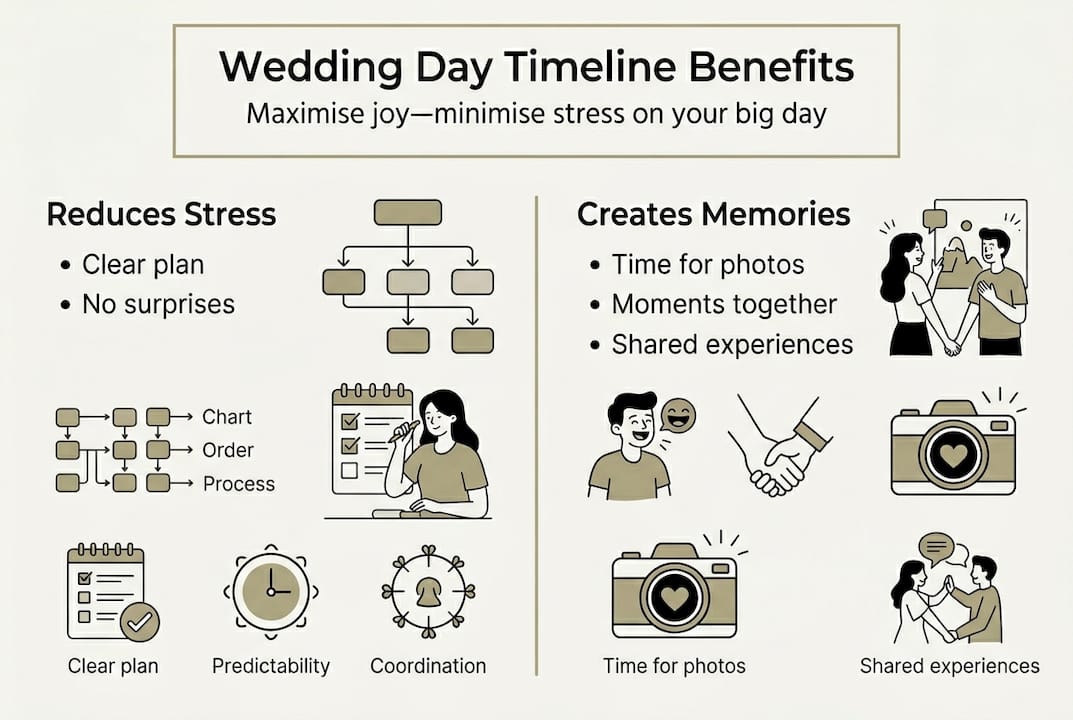
A well-coordinated timeline ensures smooth vendor coordination, prevents delays, and reduces stress across the entire day. It transforms a series of events into a seamless, cinematic experience.
"The timeline is not a constraint on your day. It is the quiet structure that gives every spontaneous, joyful moment room to breathe."
Working with an Asian wedding coordinator from the early stages means your timeline will reflect the specific traditions and flow of your cultural celebration. If you are still in the early stages of planning, understanding how to start your Asian wedding planning will give you a strong foundation before you build your schedule.
The bottom line is simple. A timeline is not bureaucracy. It is the invisible hand that allows everyone, from your family to your florist, to show up fully and joyfully.
How wedding day timelines optimise photography and vendor coordination
Once you appreciate the purpose of a timeline, the next revelation is how profoundly it shapes your photography. Light, timing, and sequence are the three pillars of breathtaking wedding imagery, and a thoughtful schedule governs all three.

Natural light is one of the most powerful tools in a photographer's repertoire. The soft, golden quality of light in the late afternoon, often called the golden hour, produces portraits that feel timeless and romantic. Scheduling your couple portraits during this window, typically 60 to 90 minutes before sunset, is one of the most impactful decisions you can make for your gallery.
Here is how a well-structured timeline supports each key photographic moment:
| Photographic moment | Ideal timing | Why it matters |
|---|---|---|
| Bridal preparations | 2 to 3 hours before ceremony | Captures intimate, unhurried details |
| Couple portraits | Golden hour or post-ceremony | Soft, flattering natural light |
| Family group shots | Immediately after ceremony | Guests are present and attentive |
| Reception details | Before guests are seated | Clean, undisturbed compositions |
| First dance and speeches | Early evening | Warm ambient and venue lighting |
Beyond photography, a shared timeline keeps every vendor operating in harmony. Your make-up artist knows exactly when to finish. Your catering team knows when to begin service. Your priest or officiant arrives knowing the ceremony will start on time.
Key considerations for Asian weddings specifically include:
- Larger family groups require 15 to 20 minutes for formal photographs, not the standard 10
- Longer ceremonies such as a Sikh Anand Karaj or Hindu Saat Phere need generous time allocations
- Multiple outfit changes for the bride must be factored into transitions between events
Pro Tip: Share your timeline with every vendor at least two weeks before your wedding. When everyone works from the same document, the day moves with quiet, elegant precision.
Browsing real wedding galleries will show you exactly how thoughtful timing translates into extraordinary imagery, giving you a vivid sense of what becomes possible when the schedule is crafted with care.
The essential steps to creating your perfect wedding day timeline
Building your timeline is a creative and practical exercise that rewards patience and collaboration. Here is a clear, step-by-step approach tailored to Asian weddings in the UK.
-
Anchor on your ceremony time. Your religious or civil ceremony is the fixed point around which everything else orbits. Anchor your timeline on this moment and work both backwards and forwards from it.
-
Work backwards to plan preparations. Calculate how long hair, make-up, and dressing will take, then add a 30-minute buffer. For Asian bridal looks, which are often intricate and regal, this can mean starting as early as 5 or 6 in the morning.
-
Account for travel and transitions. If your ceremony and reception are at different venues, factor in travel time generously. Traffic, particularly in London and surrounding areas, can be unpredictable.
-
Map out pre-ceremony traditions. The Baraat, Milni, or Jaimala all require dedicated time slots. These are not moments to rush. They are among the most visually and emotionally rich parts of the day.
-
Plan the reception sequence. Work forwards from the ceremony to schedule the wedding breakfast, speeches, first dance, and evening entertainment. Consider fun Asian wedding games as part of your evening programme, and allocate time accordingly.
-
Consult your photographer and coordinator. Share your draft timeline and invite honest feedback. An experienced photographer will immediately spot where time is too tight and where you can afford to breathe.
Pro Tip: Build a private "photographer's copy" of your timeline that includes exact locations for each shoot, lighting notes, and a prioritised list of must-have shots. This transforms your photographer from a reactive presence into a proactive creative partner.
The most elegant timelines are not the most rigid ones. They are the ones that have been thought through so carefully that there is room for spontaneity within the structure.
Sample Asian wedding day timelines for UK celebrations
Sample timelines give you both a practical starting point and a sense of what is genuinely achievable. The key differences between ceremony types in the UK are worth understanding before you begin.
| Ceremony type | Typical duration | Key timing consideration |
|---|---|---|
| Hindu ceremony | 2 to 3 hours | Saat Phere and fire rituals require uninterrupted time |
| Sikh ceremony | 1.5 to 2 hours | Anand Karaj Laavaan are central and cannot be shortened |
| Muslim Nikkah | 30 to 60 minutes | Often combined with a longer reception programme |
A sample one-day Hindu wedding timeline might look like this:
- 6:00 am Bridal hair and make-up begins
- 9:30 am Bridal portraits and detail photography
- 11:00 am Baraat procession arrives at venue
- 11:30 am Milni and welcome ceremonies
- 12:30 pm Ceremony begins
- 3:00 pm Ceremony concludes, family group photographs
- 4:30 pm Couple portraits during golden hour
- 6:00 pm Wedding breakfast and speeches
- 8:00 pm First dance and evening celebrations
For two-day celebrations, the Mehndi or Sangeet on day one deserves its own dedicated timeline, not simply an afterthought. These events offer extraordinary photographic opportunities and should be treated with the same care.
Browsing real wedding stories reveals how couples have adapted these frameworks to their own venues, seasons, and guest sizes, offering genuine inspiration rather than generic advice.
Crucially, build in 10 to 15 minute buffers between every major event. This single habit, more than any other, is what separates a day that flows beautifully from one that feels perpetually behind.
What most couples miss: The timeline is your stress-free foundation
Here is something that rarely appears in planning guides. The most detail-oriented couples, the ones with colour-coded spreadsheets and meticulous vendor lists, often neglect the emotional dimension of their timeline. They plan the logistics but forget to plan for how they want to feel.
Investing just two additional hours refining your timeline, thinking about where you want quiet moments with your partner, where you want to be present with your parents, and where you simply want to dance without worry, saves everyone from avoidable panic on the day itself. We have seen it countless times. The couples who feel most radiant in their photographs are not the ones with the largest budgets. They are the ones who felt unhurried.
Professional photographers and experienced wedding coordinators set time expectations differently from most couples. They build in more time than seems necessary, because they know that beauty, whether in a photograph or a moment, cannot be rushed. You can borrow that professional mindset right now, simply by treating your timeline as an emotional blueprint, not just a logistical one.
How we help you capture every moment, seamlessly
At Rashpal Photography, we understand that an Asian wedding is not a single event. It is a layered, living celebration of culture, family, and love, and it deserves a photographer who arrives prepared, not just present.
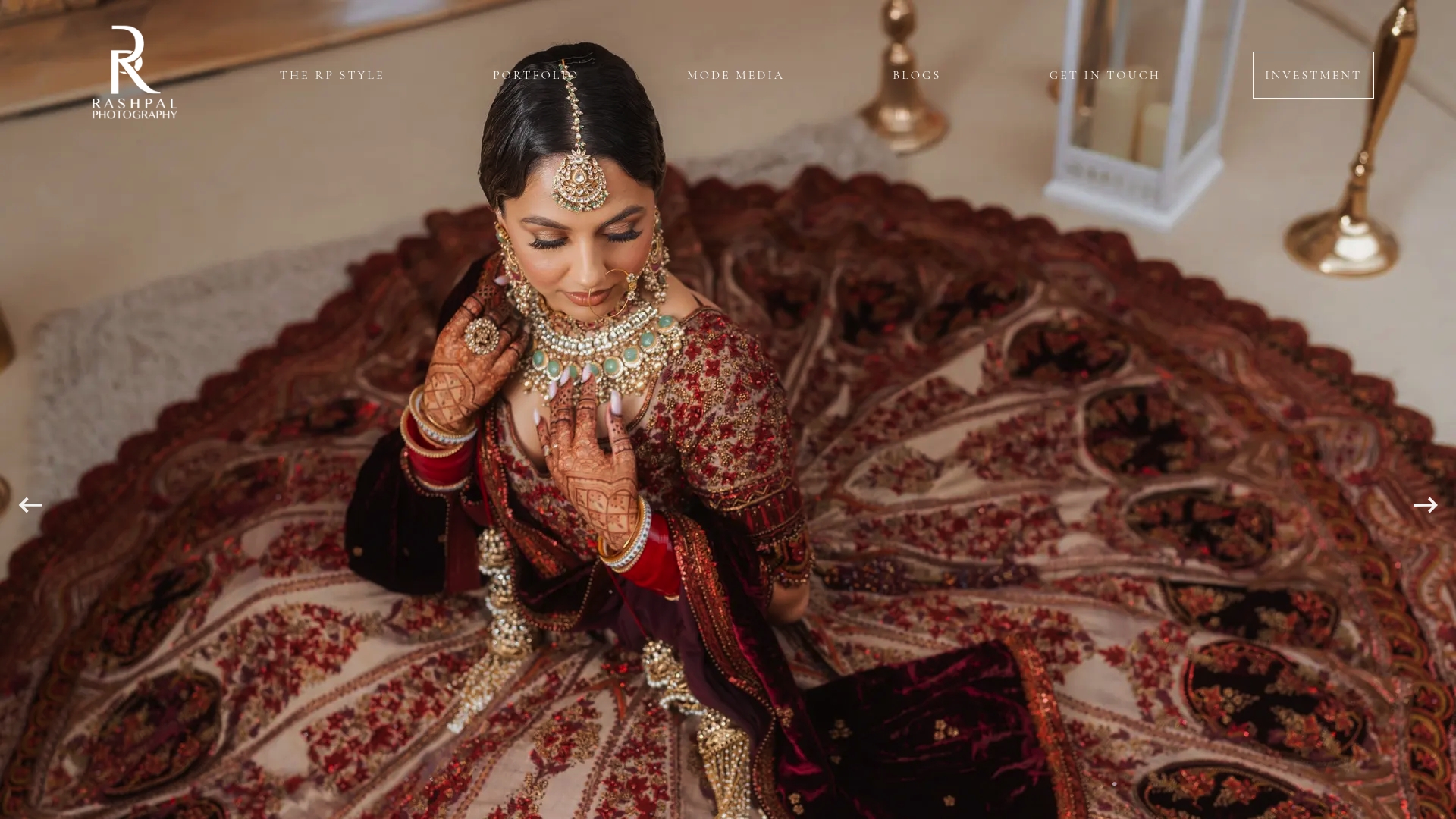
We work with couples during the planning process to review and refine their timelines, ensuring every ceremony, portrait session, and celebratory moment is given the time it deserves. Our Asian wedding photography packages are designed with the complexity of cultural celebrations in mind, offering the flexibility and coverage your day requires. Explore our recent wedding highlights to see what becomes possible with the right plan in place, and visit our transparent pricing page to find the package that fits your vision.
Frequently asked questions
How early should we create our wedding day timeline?
Start building your timeline at least three months before your wedding, then refine it with your vendors as the day approaches. Early planning ensures smooth vendor coordination and reduces last-minute stress considerably.
How do we handle unexpected delays on the wedding day?
Insert 10 to 15 minute buffers between major events so that minor disruptions do not cascade into larger delays, keeping the atmosphere relaxed and joyful throughout.
Should we share the timeline with all vendors, or only the photographer?
You should share your timeline with every key vendor, including your caterer, make-up artist, and officiant, so that everyone can coordinate seamlessly and avoid surprises.
What's the main difference for Asian wedding timelines compared to other weddings?
Asian weddings in the UK typically involve multiple ceremonies, larger family groups, and deeply significant cultural traditions, all of which require more generous time allocations and a more detailed schedule than a standard single-ceremony wedding.
Recommended
- Essentials Investment (12 hours) Rashpal Bhachu | Rp photography Wedding Photographer, Uxbridge, UK
- Classic Investment (14 Hours, 1 day, Engagement Shoot) Rashpal Bhachu | Rp photography Wedding Photographer, Uxbridge, UK
- The Minimalist Investment (8 Hours) Rashpal Bhachu | Rp photography Wedding Photographer, Uxbridge, UK
- Silver Engagement Shoot Rashpal Bhachu | Engagement shoots Wedding Photographer, Uxbridge, UK
- From 'I Do' to 'I Did': A Comprehensive Guide to Wedding Timeline Planning - Adelaide Wedding Venues
- Vegas Wedding Photography Basics: Perfect Day Memories | MyVegasLimoTour