TL;DR:
- Multicultural wedding photography requires cultural knowledge, sensitivity, and multi-day planning.
- Skilled photographers must seamlessly adapt to diverse lighting, rituals, and family dynamics.
- Authentic heritage preservation depends on deep understanding, unobtrusive presence, and detailed preparation.
Every wedding tells a story, but a multicultural wedding tells several at once. When two traditions, two families, and two sets of cherished rituals come together, the photography must do far more than simply document the day. There is a persistent misconception that wedding photography is interchangeable, that any skilled photographer can walk into any ceremony and capture it beautifully. The reality is far more nuanced. Specialised services are increasingly in demand as the UK's wonderfully diverse population of couples seeks authentic representation of their heritage. This guide explores everything you need to know about finding, briefing, and working with a photographer who truly understands your cultural story.
Table of Contents
- What makes multicultural wedding photography unique?
- Essential skills for multicultural wedding photographers
- How to plan your photos: Traditions, stories and personal touches
- Finding and choosing the right multicultural wedding photographer in the UK
- Real stories: How couples are celebrating their heritage through photography
- The truth about multicultural wedding photography most people miss
- Start your multicultural wedding photography journey
- Frequently asked questions
Key Takeaways
| Point | Details |
|---|---|
| Cultural expertise is crucial | Choosing a photographer skilled in multicultural weddings ensures your traditions are honoured authentically. |
| Technical skill matters | Accurate lighting, skin tone editing and unobtrusive presence distinguish great multicultural wedding photography. |
| Planning maximises memories | A thorough shot list and culture-specific brief guarantee every meaningful moment is captured. |
| Early booking is wise | Specialist photographers are in high demand, so secure your preferred choice well in advance. |
What makes multicultural wedding photography unique?
Multicultural weddings are among the most visually rich and emotionally layered events a photographer will ever witness. Unlike a single-tradition ceremony, they may weave together entirely different colour palettes, garments, rituals, and timings across one or even two days. The photographer must understand not only what is happening, but why it is happening, so they can anticipate the decisive moments before they occur.
Consider a British-Asian wedding that combines a Sikh Anand Karaj ceremony in the morning with an evening civil celebration. The lighting conditions, the emotional register, and the symbolic focal points shift completely between these two events. A photographer unprepared for this transition may miss the quiet reverence of the Ardas prayer or the joyful chaos of the baraat procession entirely.
Here is what sets this specialism apart:
- Ceremonial knowledge: Understanding the sequence and significance of rituals such as mehndi, vidai, tea ceremonies, and nikah
- Colour and textile sensitivity: Recognising how bridal red, gold embroidery, and silk fabrics each respond differently to light
- Multi-day coverage: Managing energy and attention across extended celebrations
- Family dynamics: Navigating large, multi-generational families with different expectations
"The wedding album is often the only visual record a family has of their cultural heritage being passed forward. The weight of that responsibility should never be underestimated."
For couples, authentic heritage preservation is not a luxury consideration. It is a legacy decision. The images created on your wedding day will be viewed by your children, your grandchildren, and generations you will never meet. Choosing a photographer who appreciates that significance changes everything about the final result.
Essential skills for multicultural wedding photographers
Understanding the uniqueness is just part of the story. Let's look at the specific skills you should expect from a photographer entrusted with your multicultural wedding.
The competencies required go well beyond technical camera proficiency. Here is what a truly specialist photographer brings to your day:
- Skin tone expertise: Correct exposure and post-processing for diverse skin tones is a distinct skill. Overly brightened or desaturated edits erase the natural warmth and depth of melanin-rich complexions.
- Adaptive lighting: The ability to work in dimly lit mandaps, bright outdoor baraat processions, and candlelit reception halls, often on the same day.
- Cultural fluency: Familiarity with the order, meaning, and visual centrepieces of specific ceremonies, gained through genuine experience and ongoing education.
- Unobtrusive presence: The ability to blend into sacred moments without directing or disrupting them, capturing emotion as it naturally unfolds.
- Clear communication: Coordinating with planners, priests, officiants, and families to anticipate transitions and avoid missed shots.
| Skill area | Why it matters for multicultural weddings |
|---|---|
| Skin tone editing | Preserves natural beauty across all complexions |
| Lighting adaptability | Handles fast-changing venues and conditions |
| Ritual knowledge | Anticipates key moments before they pass |
| Unobtrusive style | Protects the sanctity of sacred ceremonies |
| Family coordination | Ensures group shots honour all traditions |
Pro Tip: During your consultation, ask the photographer to walk you through how they approach editing for your specific skin tone. Their answer will reveal immediately whether they have genuine expertise or are offering generic reassurance. Couples planning a pre-wedding shoot can explore the Gold Engagement Shoot or the Silver Engagement Shoot as an ideal opportunity to assess this skill before the wedding day.
For authentic heritage representation, skin tone editing skills and an unobtrusive approach are non-negotiable criteria when evaluating any photographer.
How to plan your photos: Traditions, stories and personal touches
With an understanding of required skills, it's time to talk about practicalities: how you and your photographer can plan for seamless cultural coverage.
The most beautifully executed wedding photography always begins with thorough preparation. When cultural traditions are involved, this planning becomes even more important, because many rituals are time-sensitive and cannot be re-created once the moment passes.
Start with a detailed shot list organised by tradition. Rather than a generic list of "bridal portraits" and "family groups," break it down by ceremony. Your list might include:
- The application of sindoor during the Hindu wedding ceremony
- The exchange of garlands in a Gujarati vidhi
- The signing of the nikah document with witnesses present
- The bride's entry during a Punjabi ceremony, surrounded by her brothers
- The tea ceremony pouring sequence in a Chinese tradition
- Henna patterns on hands and feet, photographed in natural window light
Family input here is invaluable. Ask your parents and grandparents which moments carry the most meaning for them. Often, the rituals that seem small to younger generations hold profound significance for elders, and vice versa.
"A photographer who asks about your grandmother's favourite ritual before they ask about the venue is a photographer who truly understands their role."
Pro Tip: Send your photographer a written brief at least six weeks before the wedding, covering each ceremony in sequence, who the key participants are, and any restrictions on photography during sacred portions. This turns good intentions into concrete coverage.
Couples seeking full-day cultural coverage should consider the Classic Investment package, which provides the time and flexibility required for multi-ceremony weddings. A photographer who understands heritage preservation will always welcome this level of collaborative planning.
| Planning approach | Outcome |
|---|---|
| Generic shot list only | Key rituals risk being missed |
| Tradition-specific shot list | Full cultural narrative captured |
| Family input included | Emotional priorities are honoured |
| Written brief shared in advance | No last-minute confusion on the day |
Finding and choosing the right multicultural wedding photographer in the UK
Having mapped out your shot list, your next step is to select the best expert with confidence.
The UK's growing cultural diversity means demand for specialist photographers is rising significantly, but supply of truly qualified professionals remains selective. Knowing how to evaluate a portfolio and conduct a meaningful interview will save you from costly mistakes.
Shortlisting: what to look for in portfolios
- Evidence of your specific traditions, not just a general "multicultural" label
- Consistent, well-exposed images across different skin tones and lighting conditions
- Natural, unposed candid moments that show real emotion
- Strong detail shots: jewellery, textiles, ritual objects, and ceremonial setups
Interview questions that reveal genuine expertise:
- Which ceremonies from my tradition have you photographed before, and how many times?
- How do you prepare for rituals you have not personally witnessed?
- Can you describe your editing philosophy for darker skin tones?
- How do you handle situations where family members are directing you during a ceremony?
- What is your process for coordinating with a pandit, imam, or officiant?
Meet your photographer in person if possible. Chemistry matters enormously. You need someone who listens, asks intelligent questions, and makes you feel genuinely understood rather than processed.
"The right photographer does not just ask what time the ceremony starts. They ask what it means to your family."
Red flags include a portfolio that shows only one culture, vague answers about editing skin tones, and resistance to receiving a detailed brief. The Essentials package offers an excellent starting point for couples exploring specialist coverage and gives you a clear framework to compare against other providers.
Real stories: How couples are celebrating their heritage through photography
Now that you know how to find and brief the right photographer, let's see how these principles come to life at actual weddings.
Across the UK, couples are making extraordinary creative decisions to honour the full breadth of their cultural identities through imagery. These are not staged productions. They are deeply personal collaborations between couples, families, and photographers who understand the difference between documentation and storytelling.
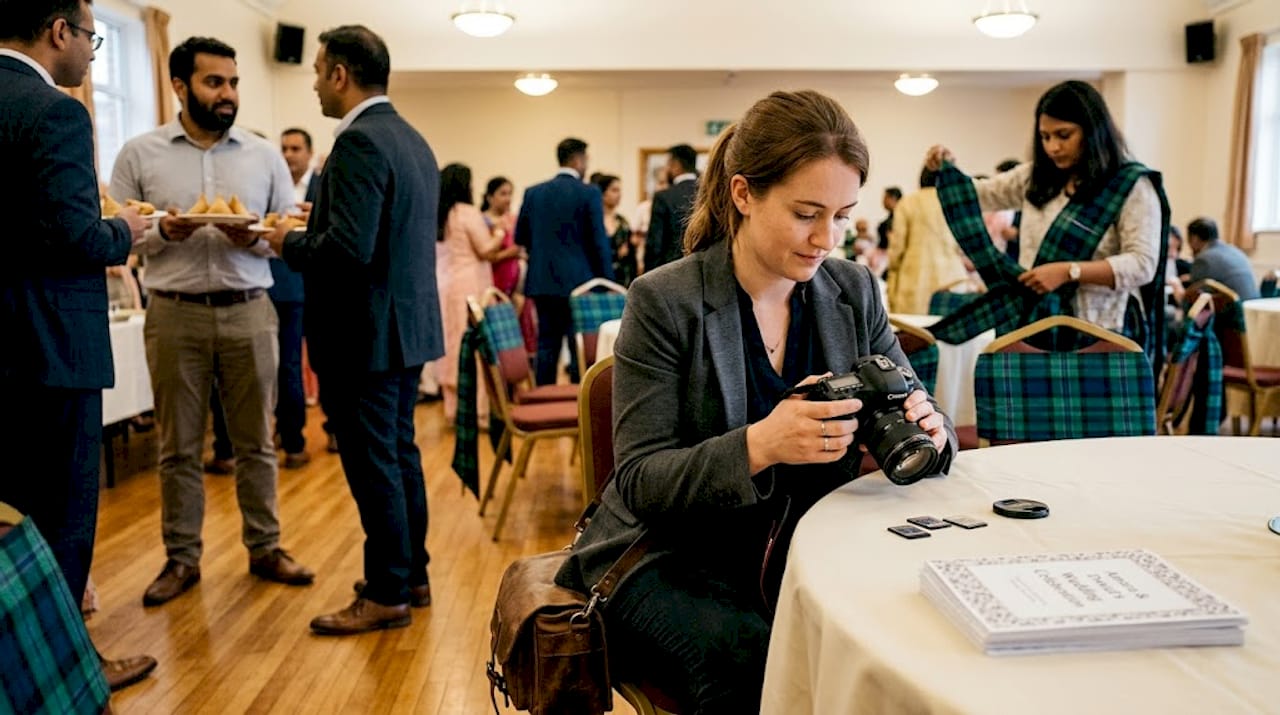
Priya and James, London: Priya's Hindu ceremony in the morning was followed by James's Scottish family traditions in the evening. Their photographer created a visual thread between the two by echoing colour tones in post-processing, ensuring that the gold of Priya's lehenga resonated with the warm candlelight of the evening reception. The result was an album that felt cohesive rather than divided.
Fatima and Wei, Birmingham: A nikah ceremony and a traditional Chinese tea ceremony on the same weekend required meticulous coordination. The photographer worked with both families weeks in advance to understand the significance of each ritual. The images of the tea ceremony, with Wei's grandmother receiving the first cup, became the most treasured photograph in the entire collection.
Amara and David, Manchester: Amara's West African heritage meant that the ceremony included vibrant ankara prints and a deeply joyful atmosphere. David's family brought a quiet Anglican tradition to the reception. Their photographer played a vital role in capturing both moods authentically, never allowing one to overshadow the other.
For couples whose celebrations span multiple days, the Lux Investment package provides the extended coverage these stories deserve.
- Specialist photographers create visual cohesion across very different ceremonies
- Family involvement in planning leads to emotionally resonant images
- Cultural details, textiles, and ritual objects deserve as much attention as portraits
The truth about multicultural wedding photography most people miss
Here is the uncomfortable reality that most couples only discover after the wedding day: a technically gifted photographer who lacks genuine cultural empathy will still produce work that feels hollow. Beautifully exposed, compositionally strong, and emotionally empty.
The most critical skill in this field is not lighting knowledge or camera technique. It is the ability to sit in stillness, observe, and wait. Sacred rituals do not pause for a repositioned tripod. Emotional peaks do not hold while a photographer checks their settings. The photographers who consistently produce breathtaking multicultural wedding imagery are those who have disciplined themselves to be invisible when invisibility is needed and present when presence is invited.
Misunderstandings derail coverage more often than equipment failures. A photographer who assumes the ceremony will follow the programme, or who fails to learn that a particular family observes a moment of silence at a specific point, will be caught repositioning at exactly the wrong moment.
What couples often realise in hindsight is that they wished they had asked harder questions during the booking process. Not about price or packages, but about philosophy. The Platinum destination experience reflects what happens when a photographer and couple invest deeply in that shared understanding before the camera is even raised.
Cultural fluency is not learnt from a checklist. It is earned through genuine curiosity and sustained engagement with the communities being served.
Start your multicultural wedding photography journey
Your cultural story deserves to be told with the care, skill, and artistry it has always warranted. At Rashpal Photography, we bring genuine passion for heritage-focused storytelling to every wedding we document, from intimate ceremonies to breathtaking multi-day celebrations.
Explore our weddings portfolio to see how diverse traditions come to life through our lens. Whether you are beginning your search or ready to book, our Essentials package offers a beautiful entry point, and you can see all pricing to find the coverage that matches your day. We would love to hear about your cultural traditions and discuss how we can honour them in every frame.
Frequently asked questions
What should I ask a multicultural wedding photographer before booking?
Ask about their experience with your cultural traditions, their approach to skin tone editing for diverse complexions, and how they plan for key rituals and ceremony timings.
How far in advance should I secure a multicultural wedding photographer in the UK?
Book at least 12 to 18 months before your wedding, as growing specialist demand means experienced multicultural photographers are secured early, especially during peak seasons.
Can one photographer cover multiple cultures and ceremonies in the same wedding?
Yes, provided they have genuine proven experience with each culture involved and can coordinate effectively with all families, planners, and officiants, as multicultural settings require specialist preparation.
How are cultural traditions protected and showcased through photos?
By collaborating with families on a detailed, tradition-specific shot list, photographers who prioritise heritage preservation ensure that every meaningful ritual and symbolic detail is captured with intention and artistry.
Recommended
- Capturing the beauty of an Asian wedding Rashpal Photography | Wedding Photographer Uxbridge, UK
- Traditional Asian Photography Scenes/Settings Rashpal Photography | Wedding Photographer Uxbridge, UK
- How The Right Photography Can Make Or Break An Asian Wedding Rashpal Photography | Wedding Photographer Uxbridge, UK
- Silver Engagement Shoot Rashpal Bhachu | Engagement shoots Wedding Photographer, Uxbridge, UK
- Enhance your wedding with meaningful wall art in 2026
- Photography's role in Vegas elopements: intimacy and luxury | MyVegasLimoTour