TL;DR:
- Asian weddings are multi-day events emphasizing family, community, and deep cultural rituals.
- Western weddings typically focus on the couple's romantic vows and personal expression in a single day.
- Photography styles vary, with Asian weddings highlighting rituals and family, while Western photography favors candid storytelling.
Weddings are universal celebrations of love, yet the traditions, rituals, and experiences woven into each ceremony differ in ways that can be both surprising and profoundly moving. If you imagine all weddings follow the same format, a single ceremony, a cake, a first dance, and a modest guest list, you may be pleasantly startled by the reality. Asian weddings, in particular, are extraordinary spectacles of colour, community, and multi-generational symbolism, while Western weddings tend to centre on intimacy and individual expression. Understanding these differences helps engaged couples plan with confidence, choose the right photographers, and honour the traditions that matter most.
Table of Contents
- Core traditions: How Asian and Western weddings differ
- Guests, gifts, and scale: Celebrating with loved ones
- Rituals and symbolism: Moments that matter
- Capturing memories: Photography styles and storytelling
- Why understanding these differences leads to a more meaningful celebration
- Find the perfect photographer for your unique celebration
- Frequently asked questions
Key Takeaways
| Point | Details |
|---|---|
| Event structure | Asian weddings often span multiple days with rich rituals, while Western weddings usually happen in a single day. |
| Guest experience | Guest lists and gift traditions differ greatly, impacting the scale and social dynamic of the celebration. |
| Symbolic rituals | Family involvement and symbolic acts are at the heart of Asian weddings, contrasting with the couple-focused nature of Western ceremonies. |
| Photography approach | Cultural traditions shape how memories are captured, from ritual moments to group portraits. |
Core traditions: How Asian and Western weddings differ
With this context in mind, we begin by breaking down the fundamental differences in traditions and structure that shape each celebration from its very first moments.
The most immediate contrast is duration. Asian weddings are typically multi-day events, incorporating pre-wedding rituals such as tea ceremonies in Chinese culture and Mehndi or Haldi celebrations in Indian culture, each carrying rich layers of family and cultural symbolism. A Western wedding, by contrast, is usually a beautifully curated single-day affair, focused on the couple's vows, a heartfelt reception, and the shared joy of close loved ones gathered in one room.
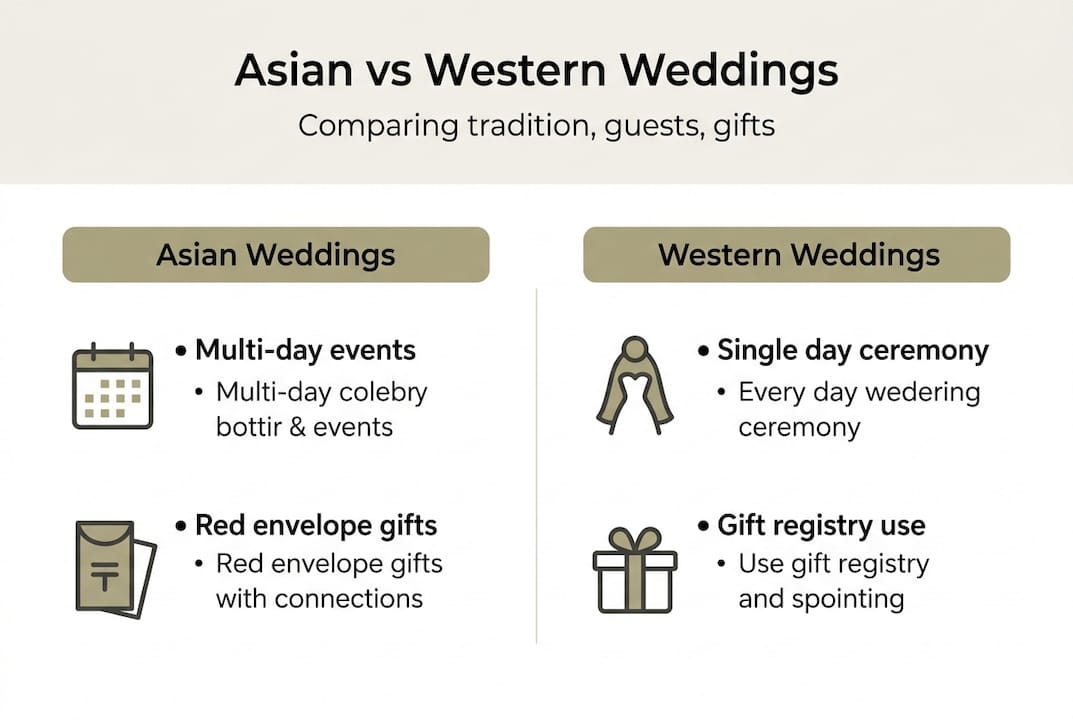
This structural difference reflects a deeper philosophical distinction. Asian wedding traditions are built around the union of families and communities, honouring ancestry, invoking blessings, and marking rites of passage through ceremonial acts. Western weddings, while certainly joyful communal gatherings, tend to prioritise the couple's romantic journey and individual expression, from personalised vows to carefully selected music and décor that reflect the pair's unique personalities.
Here is a side-by-side overview of how these two broad traditions compare:
| Element | Asian weddings | Western weddings |
|---|---|---|
| Duration | Multiple days | Single day |
| Focal point | Family and community union | Couple's romantic commitment |
| Pre-wedding rituals | Tea ceremonies, Mehndi, Haldi, sangeet | Rehearsal dinner, hen/stag parties |
| Ceremony style | Regal, ritually structured | Personalised, often intimate |
| Colour symbolism | Red (luck), gold (prosperity), white (purity) | White (purity), neutral palettes |
| Elder involvement | Central and ceremonial | Respected but less ritually prominent |
What also stands out is the role of colour. In many Asian cultures, red is considered deeply auspicious, symbolising good fortune and marital happiness, and you will rarely find a bride in white at a traditional Chinese wedding. Western brides, of course, have long embraced white or ivory as the hallmark of bridal elegance. These colour traditions extend into floral arrangements, décor, and even the gifts exchanged on the day. To witness the beauty of an Asian wedding through a photographer's lens is to see a living tapestry of meaning woven into every detail.
"The richness of Asian wedding traditions lies not only in their visual splendour but in the centuries of cultural meaning embedded in each ritual, from the precise way tea is offered to an elder, to the intricate patterns of henna on a bride's hands."
For couples planning either tradition, the key is to understand what each ritual signifies, rather than simply performing it. When traditions are honoured with genuine understanding, the resulting ceremony feels timeless rather than theatrical.
Guests, gifts, and scale: Celebrating with loved ones
Diving deeper, the way families invite guests, exchange gifts, and celebrate together reveals even sharper contrasts between Asian and Western weddings.
Scale is perhaps the starkest difference. Indian weddings average guest lists of 300 or more, reflecting the deeply community-centred nature of South Asian culture, where extended family, neighbours, colleagues, and family friends are all warmly included. Western weddings, by comparison, typically invite between 100 and 150 guests, often favouring a more curated, intimate atmosphere where the couple knows every person personally.
This difference in scale shapes everything from the venue to the catering, the entertainment, and even the photography requirements. An Asian wedding with 400 guests demands a very different logistical approach compared to a Western celebration of 120 in a country manor. The social dynamics shift accordingly. At an Asian wedding, the host family's reputation and hospitality are on public display, and the grandeur of the celebration is often considered a mark of respect for the couple and their union.
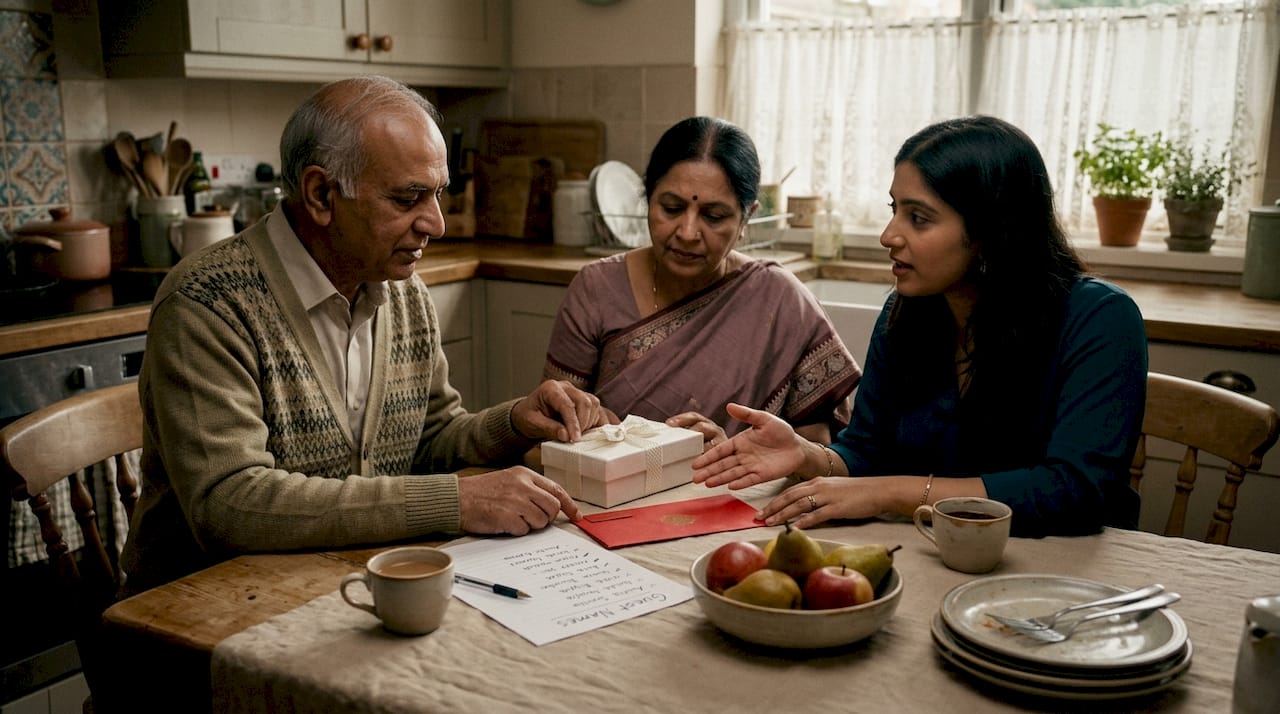
Gift-giving customs also differ considerably. Red envelopes containing cash are traditional in Chinese weddings, while cash or gold jewellery is commonly gifted at Indian celebrations, both considered highly practical and auspicious. Western weddings have largely embraced the gift registry concept, where couples list desired household items or experiences, allowing guests to contribute something personally chosen yet genuinely useful.
Here is a practical comparison of gifting customs:
| Culture | Common gift | Symbolic meaning |
|---|---|---|
| Chinese | Red envelope (cash) | Good fortune and prosperity |
| Indian | Cash or gold jewellery | Blessings and wealth |
| Western | Registry gifts or vouchers | Personalised contribution |
| Japanese | Cash in ornate envelopes | Respect and celebration |
When planning an Asian wedding at scale, the following considerations are essential:
- Venue capacity: Confirm your venue can comfortably accommodate 300 or more guests, including space for ceremonial areas.
- Catering variety: Larger, community-focused celebrations often require diverse menus to accommodate dietary and cultural needs.
- Seating arrangements: Hierarchical seating, with elders and family seated prominently, is customary in many Asian cultures.
- Photography coverage: With more guests and more rituals, ensure your photographer has the experience to document every significant moment without missing key family interactions.
- Budget planning: Larger guest lists naturally increase costs across catering, décor, and hospitality.
Pro Tip: If you are planning an Asian wedding with a substantial guest list, work with an experienced Asian wedding coordinator who understands the cultural dynamics at play. They will help you navigate seating hierarchies, gift-receiving etiquette, and the logistical demands of multi-day events, saving you considerable stress.
Rituals and symbolism: Moments that matter
Beyond logistics and numbers, it is the rich rituals and deep symbolism that truly set these cultures apart, transforming ceremonies into profound, memory-laden experiences.
Asian weddings, across Chinese, Indian, Japanese, and other cultural traditions, are defined by ceremonies that are layered with meaning. These multi-day events include numerous pre-wedding rituals that honour both the couple and their families. In Indian weddings, the Mehndi ceremony sees the bride's hands and feet adorned with intricate henna patterns, each design carrying blessings for the marriage. The Haldi ritual, where turmeric paste is applied to purify and beautify, is both spiritual and deeply joyful, often accompanied by music, laughter, and the warmth of close family.
Key hallmark rituals across cultures include:
- Tea ceremony (Chinese): The couple formally serves tea to elders as a mark of respect, receiving blessings and gifts in return.
- Mehndi (Indian): Intricate henna designs applied to the bride, symbolising love, prosperity, and the bond between couples.
- Haldi (Indian): Turmeric paste applied by family members to bless and beautify the bride and groom before the wedding.
- Sangeet: A pre-wedding musical celebration where families come together to sing, dance, and rejoice.
- Baraat: The groom's grand procession to the wedding venue, often accompanied by a band, dancing, and jubilant family members.
- Exchange of rings (Western): The central symbolic act of the Western ceremony, representing commitment and eternal love.
- First dance (Western): A deeply personal and romantic moment that opens the reception celebrations.
The symbolism embedded in Asian wedding dress evolution is equally significant. Colour, embroidery, and fabric all carry cultural weight, with brides often changing outfits multiple times throughout the celebrations to reflect different ceremonial stages. And arriving in style is itself a meaningful tradition, from the groom's Baraat procession to the bride's carefully orchestrated entrance.
Western ceremonies, while less ritually extensive, carry their own profound symbolism. The exchanging of vows, the reading of personalised promises, the lighting of unity candles, and the first dance are all deeply personal acts that reflect the couple's individual story.
Pro Tip: For fusion weddings that blend Asian and Western traditions, select two or three rituals from each culture that hold the deepest personal meaning for you both. Attempting to incorporate every tradition can feel overwhelming for guests and reduce the emotional impact of each individual moment. Speak with your photographer in advance, so they understand which rituals to prioritise and capture with care.
Capturing memories: Photography styles and storytelling
No wedding would be complete without beautiful memories captured, so let us explore how photography differs across these rich traditions and what that means for your planning.
At Asian weddings, photography is expected to document the full narrative of the celebration, from the pre-wedding rituals to the ceremonial processions, the family group portraits, and the vibrant colour of every moment in between. Asian weddings emphasise family and symbolism, which means multi-generational family portraits are not optional extras but cherished centrepieces of the photographic record. The extended family, elders, and community members all expect to be included, and a skilled photographer must manage these group compositions with grace and efficiency.
The visual language of traditional Asian photography settings tends to be bold and richly saturated, reflecting the vivid colours of ceremonial dress, floral garlands, and ornate décor. Capturing the texture of a hand-embroidered lehenga, the luminous glow of candlelight during a ceremony, or the emotion in a grandmother's eyes as she blesses the couple requires both technical mastery and genuine cultural sensitivity.
Western wedding photography, by contrast, has shifted significantly towards a blend of documentary storytelling and artful portraiture. Couples prioritise candid moments, the quiet glance between the bride and groom, the laughter during speeches, the tears on a parent's cheek. Posed couple portraits in beautiful landscapes or architectural settings remain essential, but the overall approach is often more relaxed and narrative in style.
Key considerations when briefing your photographer:
- For Asian weddings: Share a detailed timeline of all rituals, name key family members to be photographed, and discuss the cultural significance of specific moments so nothing is missed.
- For Western weddings: Communicate your preferred balance between documentary and posed shots, and identify the emotional moments you want prioritised.
- For fusion weddings: Ensure your photographer has genuine experience with both traditions. The right photography can genuinely transform how a fusion wedding is experienced and remembered.
- Album planning: Consider how you want to present both traditions in your final album. Sequencing matters enormously in telling a coherent, beautiful story.
When choosing a wedding photographer, ask specifically about their experience with the traditions present in your celebration. A photographer who has documented numerous Asian weddings will understand the pacing, the rituals, and the family dynamics that Western-focused photographers may find unfamiliar.
Why understanding these differences leads to a more meaningful celebration
In our experience, the couples who create the most extraordinary, emotionally resonant weddings are those who approach their celebrations with genuine curiosity and intention, regardless of whether they are honouring a single tradition or blending two distinct worldviews. Traditional Asian culture tends to view marriage as a union of families, a weaving together of two lineages, while Western tradition centres on individual romantic commitment. Neither perspective is superior. Both carry profound beauty and truth.
Fusion weddings, when approached thoughtfully, can be richer for drawing on both philosophies. The key is authenticity. Choose the rituals that genuinely move you, rather than simply performing tradition for the sake of appearances. Discuss your priorities openly with your photographer and planner so that every creative decision serves the emotional heart of your celebration. A bespoke photography service built around your unique combination of traditions will always produce more meaningful imagery than a generic approach. Authenticity, in celebration and in images, is what endures.
Find the perfect photographer for your unique celebration
If this guide has helped clarify your priorities, here is how you can bring your unique wedding vision to life with photography that honours every tradition, ritual, and cherished moment.
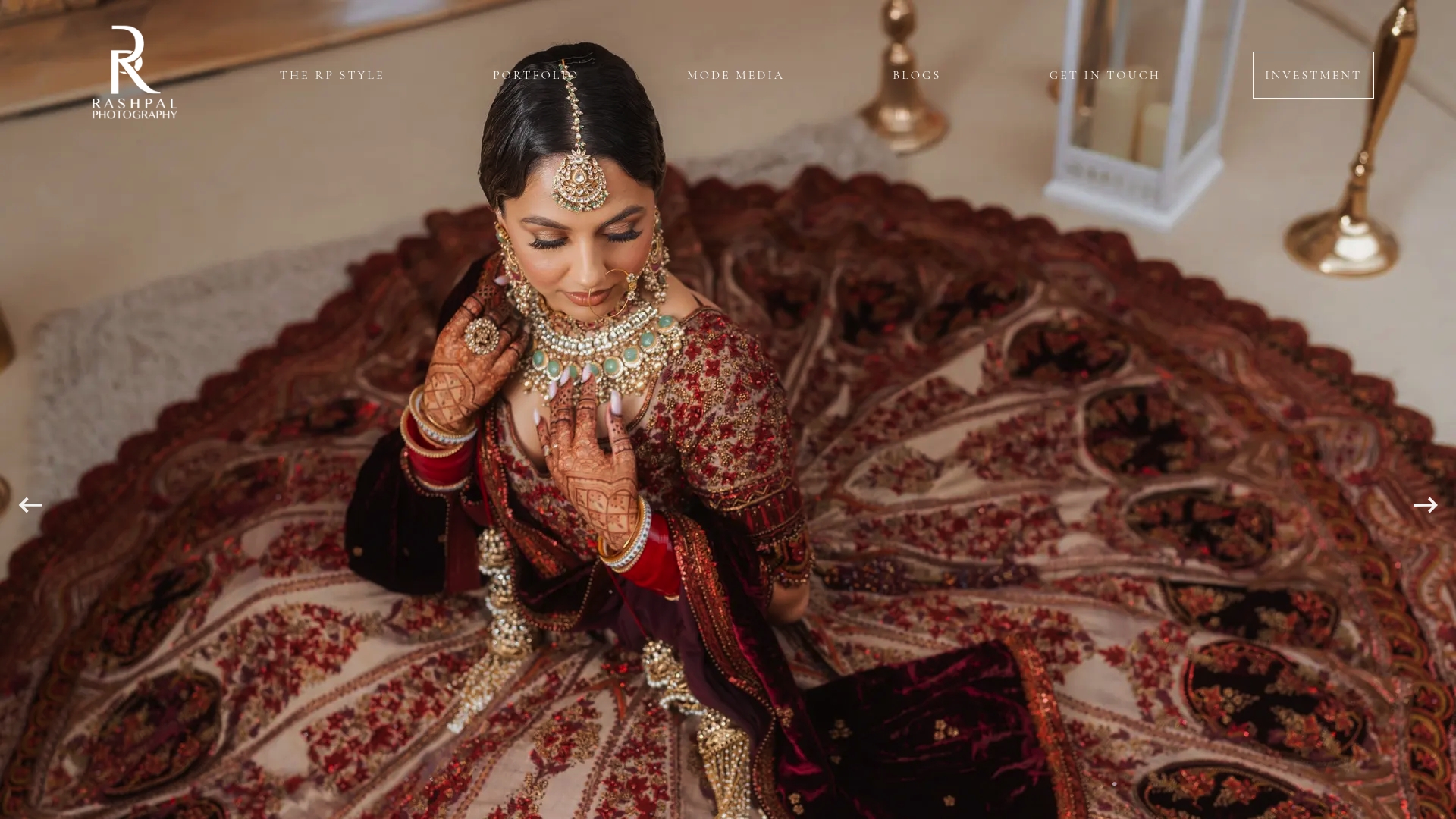
At Rashpal Photography, we specialise in Asian and Western wedding photography that blends photojournalistic storytelling with guided portraiture, capturing the full spectrum of your celebration with artistry and sensitivity. Whether you are planning a grand multi-day Asian wedding, an intimate Western ceremony, or a beautifully layered fusion celebration, our packages are designed to serve your vision. We also offer exquisite pre-wedding shoots to help you feel relaxed and camera-confident before the big day, including our popular Silver Engagement Shoot for couples seeking timeless, cinematic portraits.
Frequently asked questions
What is the biggest difference between Asian and Western weddings?
Asian weddings are typically multi-day affairs with numerous traditions, rituals, and strong family involvement, whereas Western weddings are usually single-day events that focus primarily on the couple's romantic commitment and shared experience.
How do guest lists compare between Asian and Western weddings?
Indian weddings average 300 or more guests, reflecting the community-centred nature of South Asian culture, while Western weddings typically invite between 100 and 150 close friends and family members.
What are popular wedding gifts in different cultures?
In Chinese weddings, red envelopes containing cash are the traditional gift, while Indian couples commonly receive cash or gold jewellery; Western weddings tend to rely on gift registries where guests choose from a curated selection of items.
Do Asian and Western weddings differ in photography styles?
Yes, significantly. Asian weddings prioritise the documentation of rituals and multi-generational family portraits, while Western wedding photography tends to favour candid storytelling and intimate couple portraits in scenic or architectural settings.
Recommended
- The Evolution Of Asian Wedding Dresses Rashpal Photography | Wedding Photographer Uxbridge, UK
- Newly engaged? Here’s how to start your Asian wedding planning! Rashpal Photography | Wedding Photographer Uxbridge, UK
- 6 Ways To Arrive At Your Asian Wedding In Style! Rashpal Photography | Wedding Photographer Uxbridge, UK
- Weddings Rashpal Photography | Wedding Photographer Uxbridge, UK