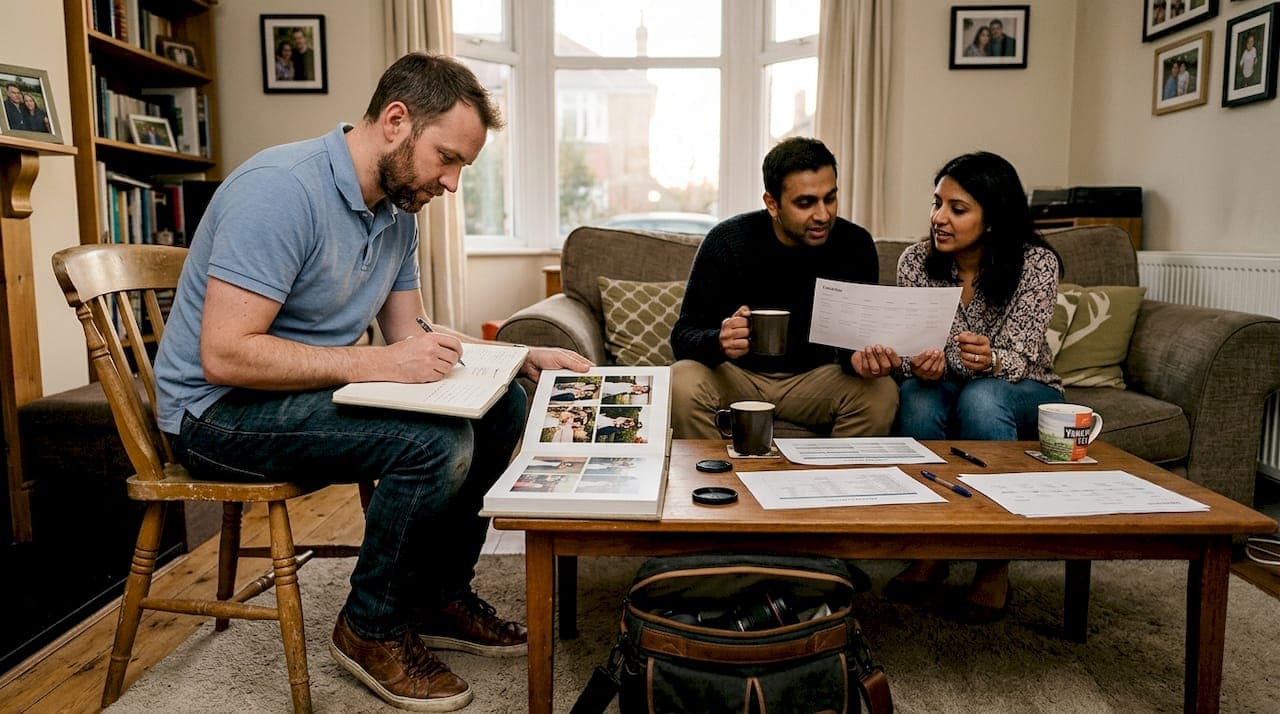
There is a particular kind of anxiety that settles in when you realise, weeks after your wedding, that the moment your grandmother placed the sehra on your groom's head was never captured. Or that the intricate mehndi on your hands, applied over hours the evening before, exists only in your memory. For Asian couples planning culturally significant weddings in the UK, the stakes of photographer miscommunication are extraordinarily high. A thorough, well-structured brief is not merely helpful; it is the single most powerful tool you have to ensure every sacred ritual, every regal detail, and every fleeting emotional exchange is preserved with the artistry it deserves.
Table of Contents
- Why briefing your photographer matters
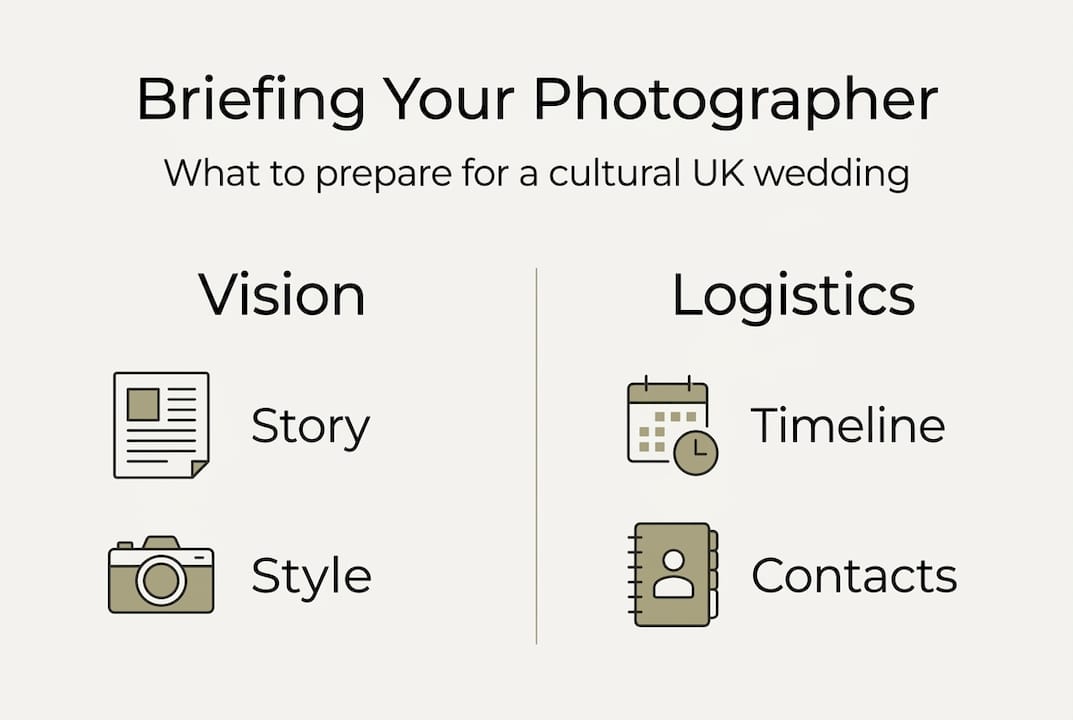
- Gathering your vision and essentials
- Organising the logistics and timeline
- Addressing edge cases and contingencies
- Verifying the brief and expected outcomes
- Connect with the right wedding photographer
- Frequently asked questions
Key Takeaways
| Point | Details |
|---|---|
| Define your vision | Start with a clear written summary that describes your cultural story, desired style, and must-have moments. |
| Share full logistics | Give your photographer complete timeline, location, ceremony details, and a group shots list to avoid missed events. |
| Prepare for contingencies | Discuss backup plans, second shooters, and ceremony protocols to guarantee coverage for every important moment. |
| Verify before the day | Review the brief and approve with your photographer to ensure mutual understanding and avoid miscommunication. |
Why briefing your photographer matters
An Asian wedding is rarely a single afternoon affair. It is a layered, multi-day celebration woven with rituals that carry generations of meaning. The Baraat procession, the Anand Karaj ceremony, the Vidaai farewell, the Nikah, the Mandap exchange of garlands — each of these moments is irreplaceable. A photographer who arrives without a clear understanding of your cultural context may focus on the wrong subject at precisely the wrong moment.
The distinction between must-have shots and candid emotional captures is critical. Must-have shots are the non-negotiable, culturally specific images your family will expect to see in your album. Candid moments are the spontaneous tears, the laughter between cousins, the quiet glance between you and your partner. Both require deliberate planning, and wedding photography styles vary enormously in how they prioritise each.
As one expert source notes:
"Provide a clear written brief including purpose, story/background, style preferences with examples, location/timing, must-have shots, and what to avoid."
This is not bureaucratic box-ticking. It is the foundation of a successful creative partnership. Consider also the financial investment involved. Asian multi-day weddings typically command photography budgets of £1,900 to £6,000, with UK couples generally allocating between £1,000 and £3,500 for photography overall. That investment deserves the protection of a thorough brief.
A strong brief also demonstrates respect for your elders and extended family. When your photographer knows that your maternal uncle must be included in the family portrait, or that your grandmother's blessing during the ceremony is a priority, they can position themselves accordingly. Missed moments cannot be recreated. A clear brief ensures they never need to be.
Key elements every brief should address:
- Cultural rituals specific to your faith and heritage
- Must-have family portraits and the names of key individuals
- Style preferences, from photojournalistic to editorial
- What to avoid, such as unflattering angles or sensitive family dynamics
- Attire details, including jewellery, dupatta, and ceremonial garments
Gathering your vision and essentials
Understanding why briefings matter sets up the essential groundwork. Now, let us organise what you need to tell your photographer.
Begin with your story. Why does this wedding matter beyond the celebration itself? Perhaps your families have a shared heritage spanning two countries. Perhaps your ceremony blends Hindu and Sikh traditions. Articulating this narrative gives your photographer an emotional compass, not just a shot list.
Next, define your visual style. Do you want images that feel cinematic and editorial, or warm and documentary? The difference is significant. Creating mood boards or sharing example images of your desired style, whether documentary for natural moments or traditional posed, helps enormously, particularly when emphasising cultural details like attire, henna, and jewellery. Pinterest boards, saved Instagram posts, and even pages torn from magazines all serve this purpose beautifully.

Here is a simple comparison to help you clarify your priorities:
| Style | Best for | Mood |
|---|---|---|
| Documentary | Candid rituals, emotional reactions | Natural, intimate |
| Editorial | Portraits, fashion-forward imagery | Polished, cinematic |
| Traditional posed | Family groups, formal portraits | Classic, timeless |
| Blended approach | Multi-day Asian weddings | Versatile, layered |
For cultural ceremonies, be specific about the following:
- The sequence of rituals and their approximate timing
- Attire changes throughout the day
- Significant props or ceremonial items, such as the mangalsutra, the kaleere, or the wedding garland
- Any moments that are particularly private or spiritually significant
Review your visual style guide before your first meeting with your photographer, so you arrive with a clear sense of the aesthetic you are drawn to.
Pro Tip: Write a one-page summary of your vision before your photographer consultation. Begin with your story, then list your must-have shots, then attach your mood board. This structured approach ensures nothing is forgotten in the excitement of the conversation.
Organising the logistics and timeline
Once your vision is clear, it is time to address the crucial logistical information that ensures no moment is missed.
Your photographer needs a complete picture of your wedding day, not just the ceremony itself. Sharing a detailed day timeline, including ceremony timings, getting-ready locations, order of service, key people's names, and family group shot lists, is essential to ensuring no moments are missed.
Here is a structured overview of what to include:
| Information category | Details to provide |
|---|---|
| Getting-ready location | Address, start time, key people present |
| Ceremony venue | Address, start time, duration, order of service |
| Reception venue | Address, arrival time, key programme moments |
| Family group shots | Names, relationships, preferred groupings |
| Cultural rituals | Name of ritual, timing, location within venue |
For a multi-day Asian wedding, this table may need to be replicated for each day. Do not assume your photographer will intuitively know the structure of a Mehndi evening or a Walima reception. Spell it out clearly.
The numbered steps for organising your logistics brief:
- Write a full day-by-day timeline with start and end times for each event
- List every venue with its full address and any access instructions
- Name the key people your photographer must prioritise, including parents, grandparents, and the wedding party
- Prepare a family group shot list with specific groupings written out
- Note any moments that require the photographer to be in a specific position or room
For guidance on booking a wedding photographer and understanding how timelines affect coverage, it is worth researching early. You can also browse our wedding photography portfolio to see how different timelines translate into finished imagery.
Pro Tip: Email your logistics summary to your photographer at least four weeks before the wedding. This gives them time to visit venues, ask questions, and refine their approach before the day itself.
Addressing edge cases and contingencies
Logistics covered, let us look at how to safeguard your memories against unforeseen issues.
Even the most meticulously planned wedding encounters surprises. A key family member arrives late. The light in the ceremony hall is far darker than anticipated. A sudden downpour moves the outdoor Baraat indoors. Your brief should include a conversation about how your photographer handles these scenarios.
Key contingency topics to discuss:
- Equipment backup: Does your photographer carry backup camera bodies and lenses? This is non-negotiable for a professional.
- Illness or emergency: What is the plan if your photographer is unwell on the day? Is there a trusted colleague who can step in?
- Venue scouting: If your photographer has not worked at your venue before, arrange a visit in advance so they understand the light, layout, and restrictions.
- Unplugged ceremony: Consider requesting that guests refrain from using phones during key rituals. Guest devices can obstruct sightlines and affect the quality of your images.
For large or multicultural weddings, a second shooter is often invaluable. As one source advises, it is wise to discuss edge cases including backup equipment and illness plans, second shooters for large or multicultural groups, and unplugged ceremony options. A second photographer can cover the groom's preparations simultaneously with the bride's, or capture guest reactions during the ceremony while the lead photographer focuses on the couple.
"A second shooter is not a luxury at a large Asian wedding. It is a safeguard for the moments that happen simultaneously and cannot be recreated."
For couples with extended coverage needs across multiple days and locations, exploring extended event coverage options ensures your photographer has the time and resource to do justice to every chapter of your celebration. You may also find it helpful to review questions for wedding photographers to ensure your contingency conversations are thorough.
Verifying the brief and expected outcomes
Having planned for contingencies, make sure your brief is agreed and you know what to expect.
A brief is only as effective as the confirmation that follows it. Once you have shared your vision, logistics, and contingency plans, the next step is to verify that your photographer has understood everything correctly.
Follow these steps to confirm your brief:
- Ask your photographer to summarise the brief back to you in their own words, either verbally or in writing
- Review their summary carefully and note any gaps or misunderstandings
- Agree on a final written version of the brief that both parties sign off on
- Schedule a pre-wedding call or meeting, ideally two to four weeks before the day, to address any last-minute changes
- Confirm the delivery timeline for your images and the format in which you will receive them
The mechanics of a good brief rely on written communication. Using a written summary or email to avoid miscommunication, and beginning with a vision discussion before moving into details, creates a clear record that both you and your photographer can refer back to.
Our client communication tools are designed to make this process seamless, giving you a dedicated space to share documents, review galleries, and stay connected throughout your journey. For additional guidance on structuring your communication, this resource on clear photographer briefing offers practical frameworks.
Pro Tip: Schedule a dedicated feedback session with your photographer approximately three weeks before your wedding. Use this time to walk through the brief together, confirm all details, and ensure you both feel confident and aligned.
Connect with the right wedding photographer
Your brief is ready. Your vision is articulate, your logistics are organised, and your contingencies are planned. The final step is choosing a photographer whose artistry, cultural sensitivity, and professional approach are genuinely aligned with everything you have worked to define.
At Rashpal Photography, we specialise in capturing the layered beauty of Asian weddings across the UK and internationally. From intimate Nikah ceremonies to grand multi-day Sikh celebrations, our wedding photography services are built around your cultural story. Browse our wedding photography portfolio to see how we translate a thorough brief into timeless imagery, and explore our wedding photography package options to find the coverage that suits your celebration. We would love to hear about your vision.
Frequently asked questions
How early should I book my wedding photographer?
Aim to book your photographer 9 to 18 months in advance, particularly if your wedding falls on a peak summer or bank holiday date. Popular photographers fill their calendars quickly, so early booking protects your preferred choice.
What information should I include in my brief for a multicultural wedding?
List key rituals, attire details, family member names, timing for each event, venue locations, and example images of style preferences. The more specific you are about cultural moments, the more confidently your photographer can plan their coverage.
Should I use a second shooter for a large Asian wedding?
Yes. A second shooter ensures that simultaneous moments across different rooms or locations are all captured. For large multicultural groups, a second photographer is a practical safeguard rather than an optional extra.
How can I communicate my preferred photography style?
Share mood boards, saved reference images, and describe clearly whether you prefer documentary or posed photography. Highlighting specific cultural details such as attire, henna, and jewellery helps your photographer understand the visual language of your celebration.
Recommended
- Top Tips For Camera Shy Couples Rashpal Photography | Wedding Photographer Uxbridge, UK
- How to Choose an Asian Wedding Photographer in London Rashpal Photography | Wedding Photographer Uxbridge, UK
- The RP Style Rashpal Photography | Wedding Photographer Uxbridge, UK
- Capturing the beauty of an Asian wedding Rashpal Photography | Wedding Photographer Uxbridge, UK
- 25 Wedding Photographer Questions to Ask - Creative Media Production LLC