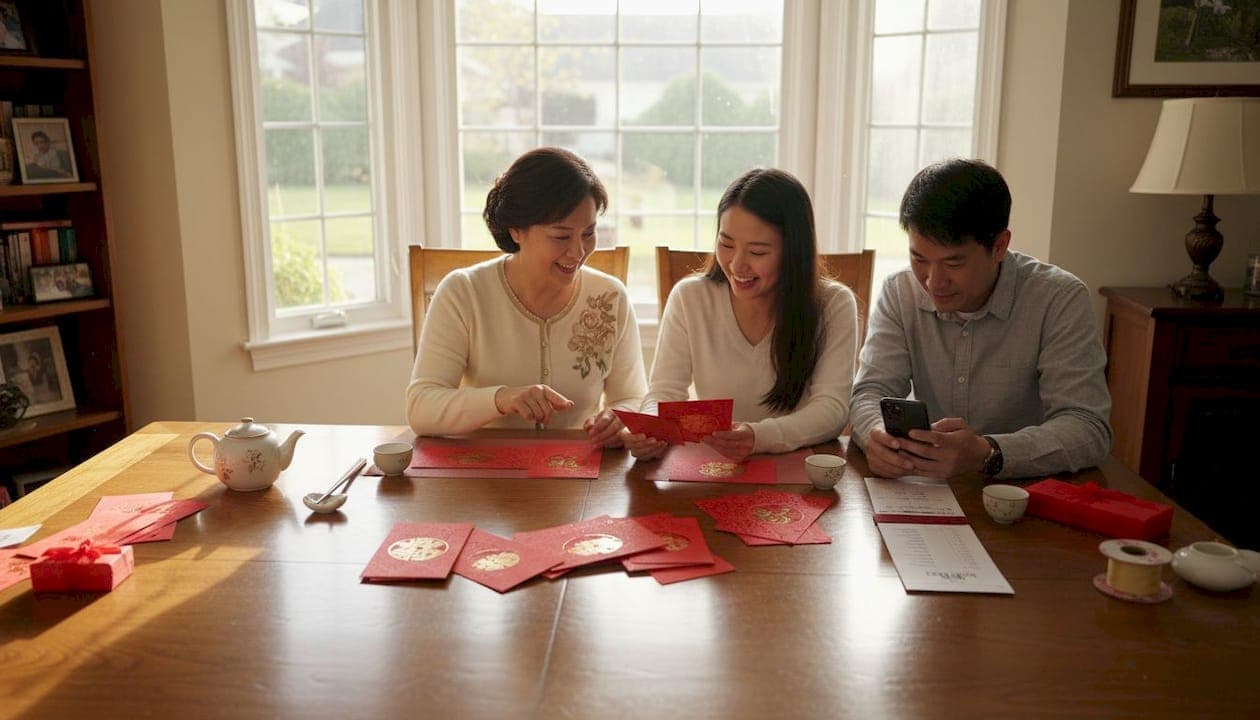
TL;DR:
- Traditional Asian weddings involve multiple rituals, symbols, and family participation across various cultures.
- Capturing each stage with understanding and sensitivity creates meaningful, timeless photographs.
- UK couples should plan with vendors for legal requirements and venue adaptations while preserving cultural significance.
Planning a traditional Asian wedding in the UK is one of the most beautiful and complex undertakings a couple can face. You are navigating centuries of cultural symbolism, family expectations, and intricate ceremony sequences, all while adapting beloved rituals to modern British venues and legal requirements. The result, when handled with care and artistry, is a wedding rich with meaning and breathtaking visual moments at every turn. This guide walks you through the essential stages across Chinese, Indian, Korean, and Japanese traditions, offering photography insights so that every cherished ritual is preserved as a timeless image for generations to come.
Table of Contents
- Common criteria for a traditional Asian wedding
- The main stages of a Chinese wedding
- Key steps in traditional Indian weddings
- The steps in Korean and Japanese weddings
- A photographer's perspective on capturing every stage
- Luxury photography to preserve your wedding story
- Frequently asked questions
Key Takeaways
| Point | Details |
|---|---|
| Cultural variety | Traditional Asian weddings blend different rituals, symbols, and customs depending on family origins. |
| Key stages | Every culture has core stages: betrothal, vows, family ceremonies, and celebrations. |
| UK adaptations | Legal and venue needs in the UK often require combining or modifying rituals. |
| Photography focus | Documenting each stage ensures no emotional or meaningful moment is missed in your wedding album. |
Common criteria for a traditional Asian wedding
Having set the stage, let us clarify what a traditional Asian wedding typically involves. The term "Asian wedding" is broad, spanning an extraordinary range of cultures, values, and ceremonial customs. No single tradition exists; Chinese celebrations centre on family contracts and rich symbolism through the colour red and the tea ceremony, Indian weddings unfold over multiple joyful days around fire vows and henna, while Korean and Japanese ceremonies reflect Confucian and Shinto values through bowing rituals and sake sharing. Understanding these distinctions from the outset shapes every decision you make, from venue selection to your photography brief.
Despite their differences, most traditional Asian weddings share several common pillars:
- Ceremony structure: A defined sequence of pre-wedding, ceremonial, and post-wedding events
- Ritual significance: Symbolic objects, gestures, and prayers that carry spiritual or familial meaning
- Family involvement: Extended family participation as an integral, visible part of each stage
- Dress and adornment: Traditional garments, often with multiple outfit changes throughout the day
- Celebratory gathering: A banquet or reception honouring both families and their communities
For UK-based couples, there is an additional layer of planning. The law requires a legally recognised civil ceremony before or alongside cultural rituals, and many venues may need briefing on specific requirements such as open flames or ceremonial food offerings. Blending customs for interfaith or multicultural couples adds further beautiful complexity. Exploring traditional Asian photography scenes at your chosen venue is a wonderful starting point.
Pro Tip: Brief your photographer thoroughly before the wedding day. Share a detailed schedule of each ritual, explain its meaning, and highlight the moments of greatest emotional significance, from a father's expression during the hair combing ceremony to the quiet exchange of glances during tea.
The main stages of a Chinese wedding
Now, let us take a closer look at one of the most intricate traditions: the Chinese wedding. Traditional Chinese weddings unfold across a multi-stage process that can span several months, weaving together elaborate pre-wedding customs with a spectacular banquet celebration.
The core stages typically follow this sequence:
- Guo Da Li (betrothal gifts): The groom's family presents symbolic gifts to the bride's family, formally sealing the engagement with items such as jewellery, wine, and pastries.
- Auspicious date selection: A fortune teller or family elder selects a propitious wedding date based on the couple's birth charts, a custom taken very seriously.
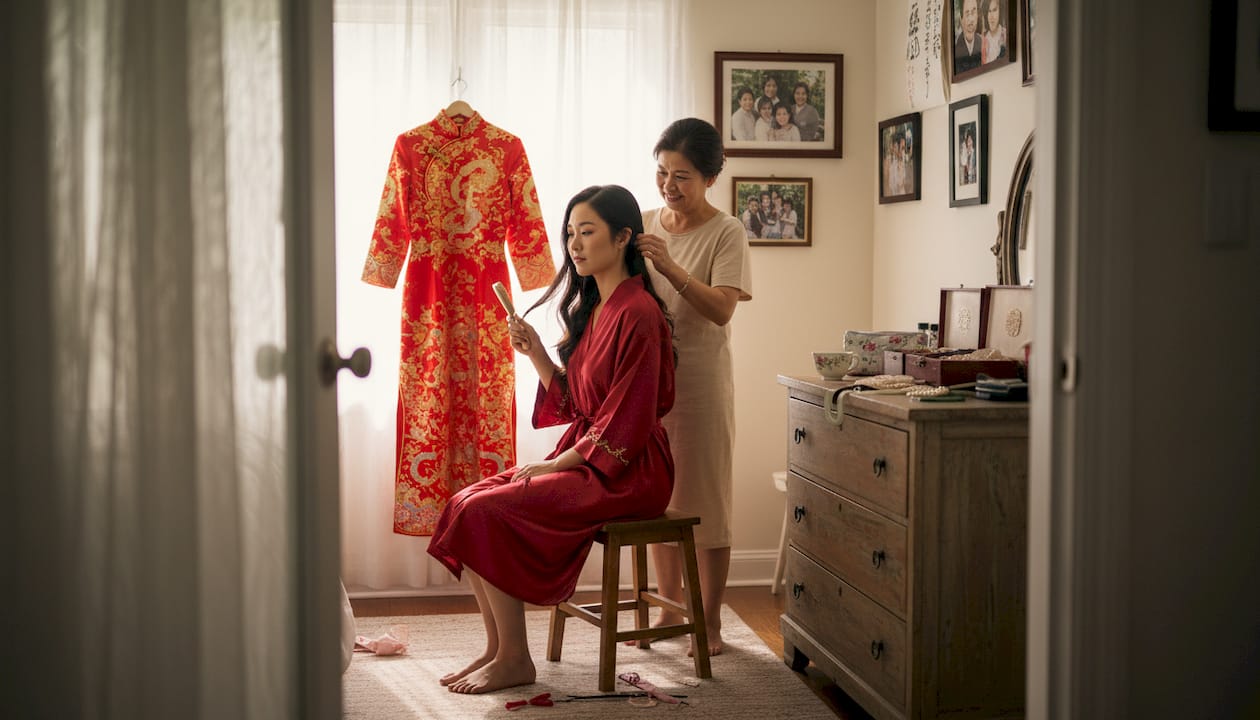
- Hair combing ceremony (Shang Tou): On the eve of the wedding, both the bride and groom undergo a hair combing ritual performed by an elder, symbolising good fortune, longevity, and happiness.
- Door games (Chuang Men): The groom and his groomsmen must complete playful challenges set by the bridesmaids before they are permitted to collect the bride. Laughter fills every frame.
- Tea ceremony: One of the most emotionally profound moments, where the couple serves tea to elders and receives gifts and blessings in return.
- Wedding banquet: A lavish multi-course celebration, often with dramatic outfit changes between a traditional qipao and a Western-style gown.
These stages are woven with deep symbolism and vibrant imagery, each one offering a photographer an entirely different emotional register to capture.
In UK settings, couples often condense the timeline, hosting the hair combing and door games on the morning of the wedding day itself. Understanding how photography shapes the memory of these moments is essential when planning your day.
Key steps in traditional Indian weddings
Moving from Chinese traditions, we explore the dynamic world of Indian weddings. These celebrations are renowned for their colour, joy, and multi-day structure, with each stage carrying deep spiritual and familial significance. Regional variations are considerable, particularly between North and South Indian customs, and modern couples in the UK often condense or blend elements to suit venue capacities and guest travel arrangements.
The principal stages include:
- Mehndi: Intricate henna patterns are applied to the bride's hands and feet, often during a joyful gathering of women the day before the wedding.
- Sangeet: A musical evening of song, dance, and celebration shared by both families, filled with cinematic energy and candid emotion.
- Mandap ceremony: The sacred canopied structure beneath which the couple exchanges vows. The Pheras, or fire vows, see the couple circle a sacred flame, representing their promises to one another.
- Bidai: The deeply emotional farewell as the bride departs her family home, one of the most powerful photographic moments of any wedding.
- Reception: The grand celebration honouring the newly married couple with their wider community.
| Ritual | North India | South India |
|---|---|---|
| Fire vows (Pheras) | Seven circles around the fire | Four or seven, depending on tradition |
| Bride's entrance | Carried in by brothers | Walked in traditionally |
| Key ritual focus | Sindoor and Mangalsutra | Tying of the Thali |
| Duration | Typically two to four days | Often one to two days |
In the UK, open flame restrictions at many venues mean couples must work with their venue coordinator and a photography behind-the-scenes approach to ensure the fire ceremony is both safe and magnificently captured.
Pro Tip: Schedule a dedicated photography session for every outfit change. A bride moving from a deep red lehenga into a reception gown deserves a beautifully lit portrait at each transition.
The steps in Korean and Japanese weddings
Having explored Indian traditions, let us look east to the distinct steps of Korean and Japanese weddings. Both cultures bring extraordinary elegance and intentionality to their ceremonies, with every gesture carrying layered cultural meaning.
Korean traditional wedding (Yukrye)
Traditional Korean weddings follow six structured rites. The groom's proposal (Euihon) initiates the process, followed by Napchae (formal betrothal exchange), Nappae (gift presentation), date selection, Chinyeong (the groom fetching the bride), and the central Gyo baerye ceremony of formal bows and vows. The Paebaek follows, where the bride offers dates and chestnuts to her new in-laws as symbols of fertility and prosperity.
Japanese Shinto wedding (San-san-kudo)
Japanese Shinto ceremonies carry a serene, meditative beauty. The sequence moves through Shubatsu (purification), Norito (prayers offered by the priest), San-san-kudo (the couple share three sips from three sake cups, symbolising their union), formal vows, and the Tamagushi offering of a sacred branch to the gods. Receptions often conclude with a Kagami-biraki, the ceremonial opening of a sake barrel.
| Ceremony stage | Culture | Meaning | UK adaptation |
|---|---|---|---|
| Gyo baerye (bows) | Korean | Formal union and respect | Often held in a hired hall or venue garden |
| San-san-kudo | Japanese | Spiritual bonding through sake | Replicated with symbolic cups indoors |
| Paebaek | Korean | Family blessing and fertility | Condensed into reception programme |
| Tamagushi offering | Japanese | Devotion to the divine | Adapted with symbolic branch or floral gesture |
For couples seeking stunning London venues for Asian weddings that can accommodate these ceremonies, careful venue research is essential.
A photographer's perspective on capturing every stage
Now that we have mapped the key wedding stages, here is what truly separates good photographs from exceptional, heartfelt heirlooms.
There is a common misconception that only the main ceremony deserves serious photographic attention. In reality, the most extraordinary images often emerge in the quieter, transitional moments: a mother adjusting her daughter's veil before the Mandap, a groom laughing helplessly during door games, or the silent weight of the Bidai farewell. Every stage, from the earliest betrothal rituals to the late-night dancing, holds irreplaceable emotional truth.
Working with a photographer who genuinely understands your cultural traditions is not a luxury. It is a necessity. They will know to position themselves for the precise moment the tea cup is offered, or to capture the subtle exchange of a Tamagushi branch without intruding on its reverence. We believe that bespoke Asian wedding photography is built on deep cultural knowledge, patient communication, and an instinct for authentic emotion.
In the UK, navigating hybrid ceremonies and venue constraints demands both flexibility and preparation. Share a full ritual schedule with your photographer weeks in advance. The couples who do this receive a complete visual story, not just a highlight reel.
Luxury photography to preserve your wedding story
Every stage of your wedding, from the intimate hair combing ceremony to the grand banquet finale, deserves to be captured with artistry and intention. At Rashpal Photography, we specialise in bespoke coverage for every ritual, cultural transition, and emotional milestone your celebration holds.
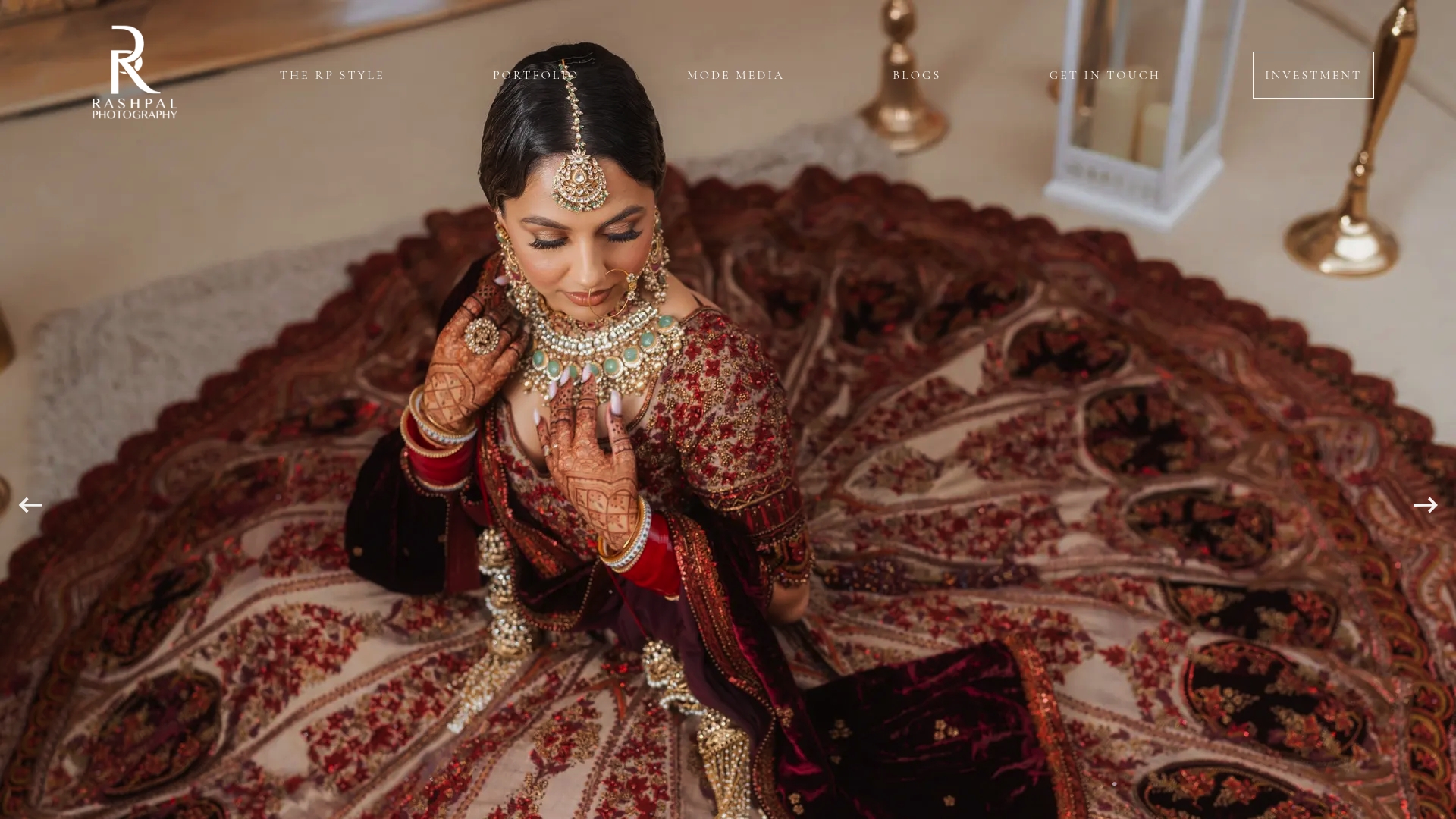
Whether your wedding spans a single day or several, our tailored packages are designed to ensure nothing is missed. Browse our wedding photography portfolio to see how we bring each cultural story to life with cinematic beauty and emotional depth. If you are ready to discuss full-day or multi-day coverage, our Essentials Investment package offers twelve hours of dedicated photography, perfectly suited to the richness of a traditional Asian wedding. We would love to hear about your vision.
Frequently asked questions
How many stages are there in a traditional Asian wedding?
Most traditional Asian weddings include at least five to eight major stages spanning pre-wedding, ceremony, and reception events. Chinese weddings alone can span months of ritual preparation before the banquet day itself.
Why do Asian weddings have multiple ceremonies?
Multiple ceremonies symbolise different blessings, family bonds, and cultural traditions, making each stage meaningful and memorable. Each ritual reflects the distinct values of the culture, whether that is ancestral reverence, spiritual union, or familial joy.
Are there key differences between Chinese, Indian, Korean, and Japanese weddings?
Yes, each culture has distinct stages, rituals, and symbolism, from tea ceremonies to fire vows to sake sharing. Shinto, Korean, and Chinese ceremonies each carry their own unique sequence and spiritual framework.
What UK adaptations should we plan for?
Legal civil ceremonies are required in the UK, and some rituals may need venue adaptations, shorter timelines, or blended customs. UK adaptations prioritise legal registration first, with cultural ceremonies scheduled around it, sometimes on the same day or across multiple days.
Recommended
- 6 Ways To Arrive At Your Asian Wedding In Style! Rashpal Photography | Wedding Photographer Uxbridge, UK
- The Evolution Of Asian Wedding Dresses Rashpal Photography | Wedding Photographer Uxbridge, UK
- Newly engaged? Here’s how to start your Asian wedding planning! Rashpal Photography | Wedding Photographer Uxbridge, UK
- Weddings Rashpal Photography | Wedding Photographer Uxbridge, UK
- Muslim wedding process in the UAE: step-by-step 2026