TL;DR:
- Post-shoot editing consumes 55% of a wedding photographer's time, shaping raw images into artworks.
- Professional editing involves culling, color correction, retouching, and artistic grading to ensure cultural and emotional authenticity.
- Subtle, culturally sensitive editing creates timeless wedding albums that honor each couple's unique story.
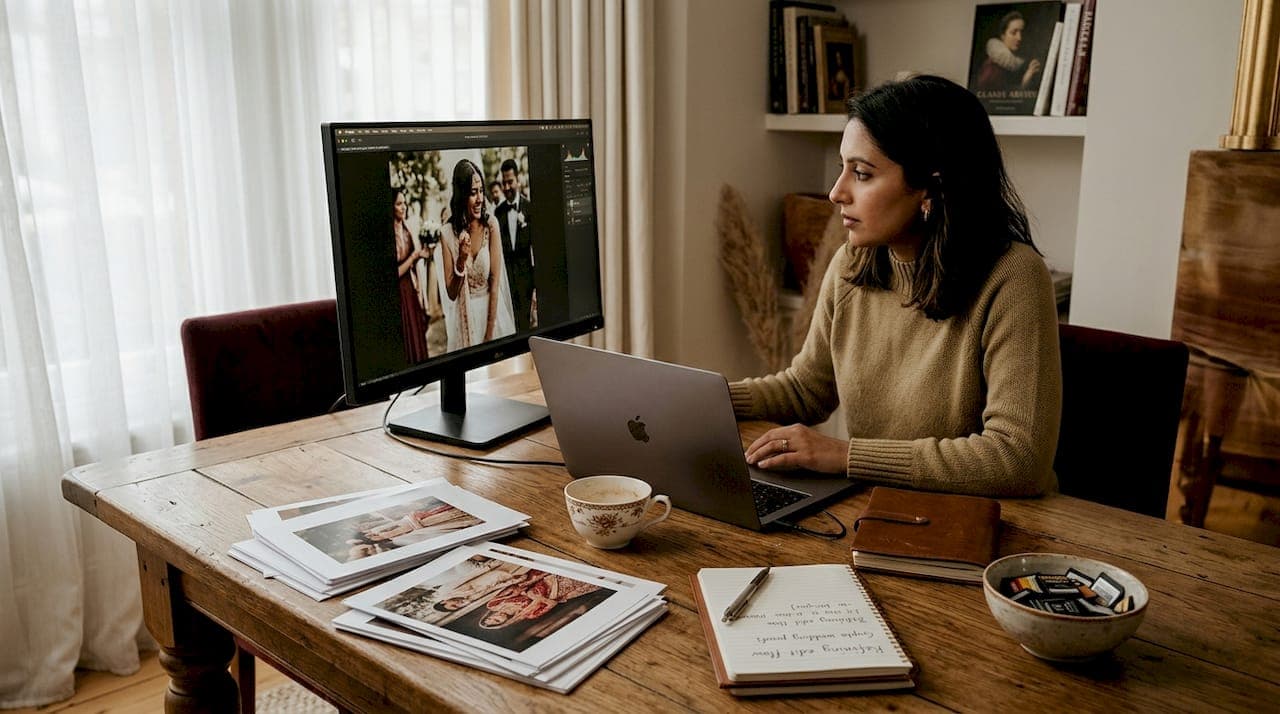
The camera captures the moment, but editing reveals its soul. Most couples are surprised to learn that 55% of a wedding photographer's working time is spent on post-shoot editing, compared to just 4% behind the lens on the day itself. That single statistic reframes everything. The reel of raw files waiting after your wedding is not a finished album; it is raw material, full of potential, waiting for careful, skilled hands to shape it into something truly extraordinary. For couples celebrating Asian and multicultural weddings, where every textile, skin tone, and ceremonial detail carries profound meaning, that shaping process becomes even more essential.
Table of Contents
- What editing really means in wedding photography
- Why editing matters for Asian and multicultural weddings
- Editing for emotion and authenticity: Getting it right
- What couples should expect: The editing journey from shoot to album
- Our perspective: Why subtle editing creates the most timeless wedding albums
- Bring your story to life with professional wedding editing
- Frequently asked questions
Key Takeaways
| Point | Details |
|---|---|
| Editing defines quality | Professional editing is the main reason wedding photos look polished and memorable in every album. |
| Cultural sensitivity matters | Specialised techniques ensure skin tones and attire from Asian and multicultural weddings are accurately and beautifully represented. |
| Subtlety over style | Natural editing maintains emotion and authenticity, outlasting trendy filters or heavy retouching. |
| Patience pays off | Allowing time for editing results in galleries that tell your unique story authentically and beautifully. |
What editing really means in wedding photography
Now that we've highlighted how much time and care go into post-shoot work, what does editing actually involve? Many people picture a few quick slider adjustments or the tap of a phone filter. Professional wedding editing is something far more considered, far more layered, and far more powerful than that.
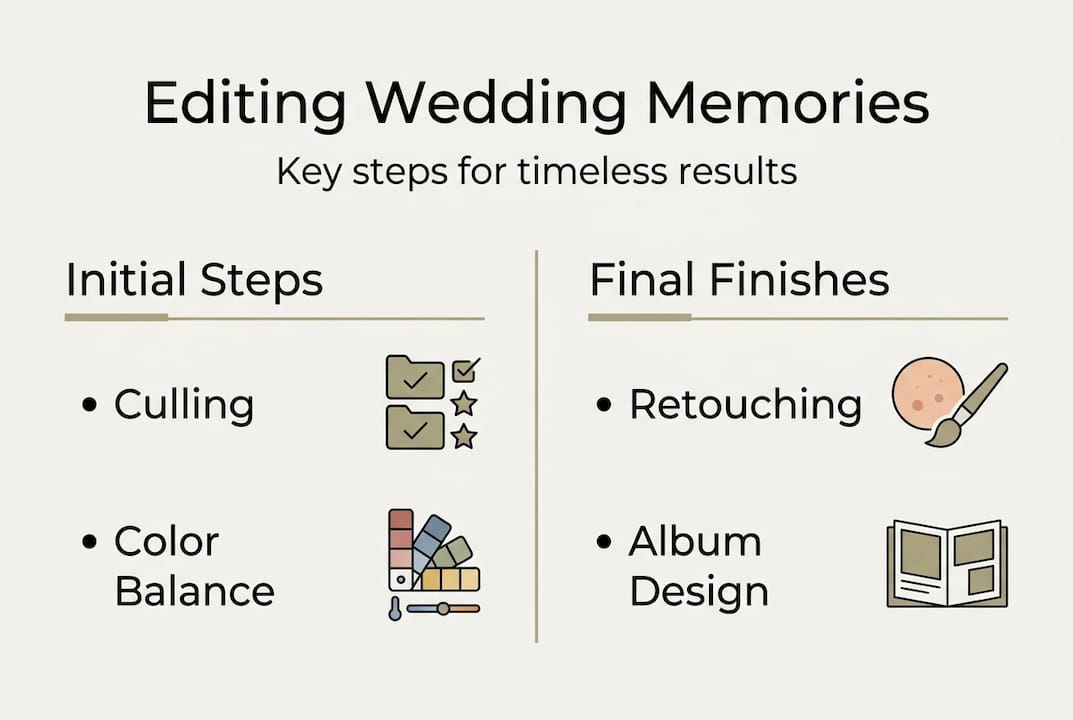
Editing, in its truest professional sense, encompasses several distinct disciplines working together. First comes culling, where the photographer reviews hundreds or even thousands of frames, selecting only those that carry genuine emotional weight or technical excellence. From there, colour correction ensures that every image reflects accurate, pleasing tones that are consistent across the entire gallery. Exposure adjustment brings detail back to shadows and highlights that a camera sensor sometimes struggles to balance in the complex, mixed lighting typical of wedding venues. Beyond those foundational steps, retouching removes distractions such as blemishes or stray hairs, while artistic grading shapes the overall mood and aesthetic of the finished album.
The contrast between phone filters and professional editing is worth dwelling on. A filter applies a uniform, pre-set effect regardless of the scene, the subject's skin tone, or the ambient light. Professional editing, by comparison, is deeply responsive. Each image is treated as its own unique visual problem, approached with craft and intention.
Capturing Asian wedding beauty through editing requires far more nuance than a standard preset can offer. Modern editing tools have evolved enormously, with AI-assisted workflows now allowing professionals to edit full galleries in two to three days without sacrificing artistry. The core editing steps a professional uses include:
- Culling and selection: Choosing the strongest frames from thousands of captures
- White balance and colour correction: Ensuring accurate, flattering, and consistent tones
- Exposure and contrast refinement: Restoring detail in challenging lighting conditions
- Skin retouching: Removing temporary blemishes while preserving natural texture
- Artistic colour grading: Applying a cohesive, intentional aesthetic style
- Cropping and composition refinement: Strengthening the visual story within each frame
| Approach | Tools used | Outcome |
|---|---|---|
| Phone filter | Pre-set, uniform effect | Generic, inconsistent look |
| Basic desktop editing | Lightroom sliders, one pass | Improved but not polished |
| Professional multi-step editing | AI-assisted tools, precision selection, frequency separation | Cinematic, culturally sensitive, timeless |
This level of precision is what separates a gallery of snapshots from a beautifully crafted visual narrative.
Why editing matters for Asian and multicultural weddings
Understanding editing basics, let's look closer at why it is especially important for culturally significant weddings. Asian and multicultural ceremonies are rich with visual complexity: deep jewel-toned lehengas, intricately embroidered sherwanis, cascading gold jewellery, and vibrant floral arrangements that demand careful, skilled handling in post-production.
One of the most critical considerations is skin tone accuracy. Cameras and basic editing tools were historically calibrated with lighter complexions as the default, meaning that deeper, warmer, and more varied skin tones can be rendered inaccurately if the photographer lacks specific expertise. For multicultural couples, this is not a minor technical concern. It is a matter of identity and representation. Editing for Asian wedding details must address this from the very first stage of colour correction.
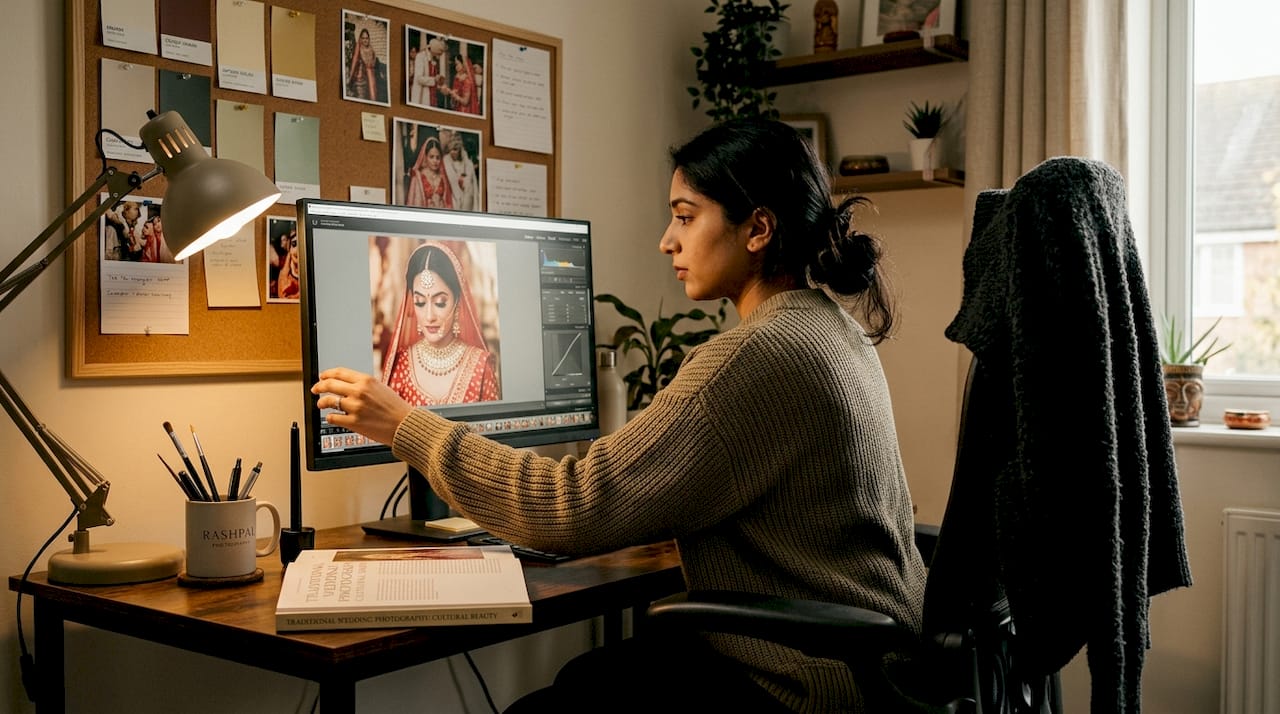
Skilled photographers use advanced techniques such as frequency separation (which separates colour and texture in skin so each can be adjusted independently) and CMYK colour validation to ensure that rich, warm skin tones are preserved with accuracy and warmth rather than being whitewashed or rendered ashy. These are not simply stylistic preferences. They are ethical standards that respect the diversity and beauty of every couple.
Cultural attire presents its own distinct editing demands. A hand-embroidered dupatta, threaded through with gold zari work, deserves editing that honours the craftsmanship woven into its fabric. Deep reds, electric fuchsias, and imperial navy blues must be rendered with vibrancy and accuracy, without becoming oversaturated or losing the subtle tonal variation that makes them so breathtaking in person.
"Every element of a multicultural wedding, from the jewellery to the textiles to the expressions of family gathering, carries layered cultural meaning. Editing that flattens or distorts these elements diminishes the story being told."
Pro Tip: When consulting with your photographer, ask them directly how they handle skin tone correction for diverse complexions. Request to see gallery examples from weddings with similar cultural backgrounds to yours. A skilled, culturally aware photographer will have a clear, considered answer and the portfolio to support it.
| Editing challenge | Cultural significance | Recommended technique |
|---|---|---|
| Skin tone accuracy | Identity, representation | Frequency separation, HSL targeted adjustments |
| Rich jewel tones in attire | Cultural pride, craftsmanship | Selective saturation, CMYK validation |
| Candle and firelight in ceremonies | Sacred ambience | Luminosity masking, warm tone balancing |
| Mixed lighting in large mandap settings | Ceremonial storytelling | Colour calibration per zone |
Editing for emotion and authenticity: Getting it right
Beyond technical perfection, how do editing choices affect the real emotion and authenticity in wedding images, especially for couples who value genuine moments? This is where the artistry of editing becomes most profound and most easily mishandled.
The finest editing does not announce itself. It simply makes the image feel more true. It restores the warmth that the camera missed in a candlelit ceremony. It lifts the detail in a grandmother's expression that was lost in shadow. It creates authentic wedding editing that feels lived-in and human, not sculpted or artificial.
The ethical debate around retouching is real and worth considering carefully. There is a persuasive argument that editing, when done well, actually amplifies authenticity by mimicking how our eyes naturally perceive scenes, adjusting for contrast and colour in ways our cameras cannot replicate automatically. There is an equally important counter-argument: heavy retouching and AI manipulation can erode genuine emotion, alter identity, and misrepresent what actually happened on the day.
For couples celebrating culturally significant weddings, the stakes of over-editing are particularly high. Wedding retouching must never cross into altering body shape, exaggerating or minimising facial features, or lightening skin tones to meet some imagined standard. These actions are not simply poor taste. Over-editing risks creating images that feel artificial, that misrepresent who you are, and that will feel deeply uncomfortable to revisit in twenty years.
The principles of ethical, authentic editing include:
- No body reshaping: Proportions remain as they were on the day
- No skin lightening: Complexions are rendered accurately and with warmth
- No facial structure alteration: Features are preserved, not reimagined
- Blemish removal only: Temporary marks may be softened, but texture and character remain
- Consistent, natural colour grading: The aesthetic choice complements, rather than overrides, reality
Pro Tip: Before your wedding, share a mood board with your photographer that reflects the editing style you love. Reference existing galleries that use a look you admire. This conversation shapes the entire post-production approach and ensures your final album feels like you, not like a trend.
Subtlety is the defining virtue of timeless wedding editing. Fashionable presets and dramatic colour grading may feel exciting in the moment, but they date quickly. Natural, nuanced editing, guided by an intimate understanding of your specific cultural context and personal story, produces albums that feel just as beautiful in thirty years as they do today.
What couples should expect: The editing journey from shoot to album
Now that you understand why and how photos are edited, what should couples expect from their photographers after the celebrations are over? The period between your wedding day and receiving your finished gallery is one that many couples find unexpectedly testing. Understanding what is happening behind the scenes transforms that wait into something you can appreciate rather than endure.
The editing journey follows a clear sequence of stages:
- Culling: The photographer reviews every frame captured on the day, selecting the strongest images. For a full-day Asian wedding, this may mean reviewing 2,000 to 4,000 files.
- Initial colour correction: White balance, exposure, and contrast are adjusted across the selected images to create consistency.
- Individual image retouching: Detailed attention is paid to key portraits, ceremony moments, and detail shots, each treated with precision and care.
- Artistic colour grading: A cohesive, intentional style is applied to give the gallery a unified, beautiful aesthetic.
- Quality review: The photographer reviews the finished gallery as a whole, ensuring consistency, accuracy, and emotional flow.
- Gallery delivery: Images are presented in a secure online gallery for your viewing, often with the option to request refinements.
That 55% of editing time invested by professionals reflects precisely how labour-intensive this process is. Even with the efficiency that AI-assisted batch processing and presets now offer, saving an estimated 30 to 60% of processing time, each wedding still demands many hours of skilled, individual attention.
The most meaningful thing you can do as a couple is communicate your cultural priorities clearly and early. Tell your photographer which ceremonies hold the deepest significance. Explain the importance of particular garments or jewellery. Share your family dynamics so they know whose reactions to capture. This information directly shapes how the wedding photo storytelling process unfolds in editing, allowing the photographer to make decisions in post-production that honour what actually mattered most on your day.
If you receive your gallery and feel that certain images need refinement, a good photographer will welcome the conversation. Approach revision requests with clarity and specificity rather than vague dissatisfaction. Reference a specific image, describe what you feel is missing, and invite a collaborative response. Patience, paired with open communication, produces the most beautiful results.
Our perspective: Why subtle editing creates the most timeless wedding albums
We have spent years capturing Asian and multicultural weddings across the UK and internationally, and the lesson we return to repeatedly is this: subtlety in editing is not a limitation. It is a form of profound respect.
There is a temptation, particularly for younger photographers or those chasing trends, to lean into bold, dramatic editing styles. Heavy grain overlays, faded film looks, hyper-saturated colour grading. These approaches are visually striking, and they photograph beautifully on social media. But we have seen what happens when couples revisit these albums five or ten years later. The trendy aesthetic begins to feel distant, almost foreign, as though the images belong to a different era rather than to their own lived experience.
Timeless Asian wedding photography is created not by applying the most popular style of the moment but by serving the specific truth of that specific day. The deep crimson of a bridal lehenga should look exactly as it did when it caught the light in the mandap. A mother's tearful smile during the vidaai should feel just as raw and real in the photograph as it did in that sacred, private moment. Editing that serves the moment, rather than overwriting it, is editing that creates a genuine legacy.
For couples whose heritage is central to who they are, this matters even more deeply. Cultural authenticity is not a stylistic preference. It is the foundation of the story being told. Heavy-handed editing that flattens skin tones, alters the depth of embroidered textiles, or imposes a generic aesthetic risks quietly erasing the very details that make your wedding story irreplaceable.
Our belief, grounded in years of experience, is that the most extraordinary wedding albums are those that require no explanation. You open them, and the day floods back with full emotional clarity.
Bring your story to life with professional wedding editing
Ready to see how expert editing enhances your own story? At Rashpal Photography, every image we deliver is shaped by years of experience working with Asian and multicultural weddings, guided by a deep respect for cultural detail, skin tone accuracy, and emotional truth.
We invite you to view our wedding photography and discover how carefully crafted editing elevates every image from a captured moment to a cherished memory. Our Classic Investment package is designed for couples who understand that their wedding album is a legacy, one that deserves the most thoughtful, culturally sensitive, and artistically refined approach to editing available. When you are ready to see the full breadth of our work, take a moment to see our wedding portfolio and experience the difference that intentional, expert editing truly makes.
Frequently asked questions
How long does it take to edit a wedding gallery?
Most professional photographers edit a full gallery in two to three days of focused post-production work using AI-assisted workflows, though the total turnaround from wedding day to delivery typically spans two to six weeks.
Why can't photographers deliver photos right after the wedding?
Professional editing requires many hours of careful, skilled work per gallery, and 55% of a photographer's time is spent in post-production, not on the day itself. Quick delivery would mean sacrificing the quality, consistency, and artistry your images deserve.
Can editing personalise my album for my culture?
Absolutely. Skilled photographers use targeted techniques to highlight cultural attire details, preserve accurate skin tones across diverse complexions, and ensure that the unique visual richness of your ceremony is honoured in every frame.
What are the risks of over-editing?
Over-editing can produce unnatural skin textures, artificially altered proportions, and images that feel disconnected from the real emotional truth of your day, particularly damaging for couples whose cultural identity is central to their wedding story.
Recommended
- Classic Investment (14 Hours, 1 day, Engagement Shoot) Rashpal Bhachu | Rp photography Wedding Photographer, Uxbridge, UK
- Essentials Investment (12 hours) Rashpal Bhachu | Rp photography Wedding Photographer, Uxbridge, UK
- The Minimalist Investment (8 Hours) Rashpal Bhachu | Rp photography Wedding Photographer, Uxbridge, UK
- Silver Engagement Shoot Rashpal Bhachu | Engagement shoots Wedding Photographer, Uxbridge, UK